Blossom seasonPeak bloom lasts about ten days, and guided blossom and garden walks sell out inside that window.
Affiliate links: we may earn a commission at no extra cost to you. Prices and availability are always confirmed on the partner site.
Stay22 · live rates
Where to stay in Vancouver
In Vancouver the price depends on the neighbourhood far more than on the star rating. Compare live hotel and rental rates side by side before you lock your dates.
🏨 Hotels and rentals on one map💵 Live nightly prices📍 See what is actually walkable
Vancouver Cherry Blossom Guide: Best Spots and Peak Bloom Times
Vancouver has roughly 43,000 ornamental cherry trees, and the bloom does not arrive all at once: it moves through the varieties in waves from mid-March to late April, so which street is at its peak depends on what was planted there. That is why timing matters more than location for this one. Below is the sequence — what opens when, where each variety stands, and how to land on a peak week rather than a bare branch.
We'll dive deep into the best locations, the nuances of bloom times, and all the practicalities you need to know, from getting around to understanding local customs and even a quick note on currency for our American friends. So, pack your camera, prepare for some striking scenery, and let's get you ready for Vancouver's most beautiful season.
Understanding Vancouver's Cherry Blossom Season: Timing is Everything
Predicting peak bloom is an art, not a science, largely dependent on the fickle Pacific Northwest weather. However, generally speaking, Vancouver’s cherry blossom season stretches from late February to late April, with the most spectacular displays typically occurring from mid-March to mid-April. We have a remarkable diversity of cherry tree species, each with its own bloom schedule, which means you can often find blossoms throughout this entire window.
- Early Bloomers (Late February - Early March): Look for 'Prunus x incam 'Okame'' and 'Prunus campanulata' (Taiwan Cherry). These are often the first to appear, signaling the season's start. They tend to have darker pink, bell-shaped flowers.
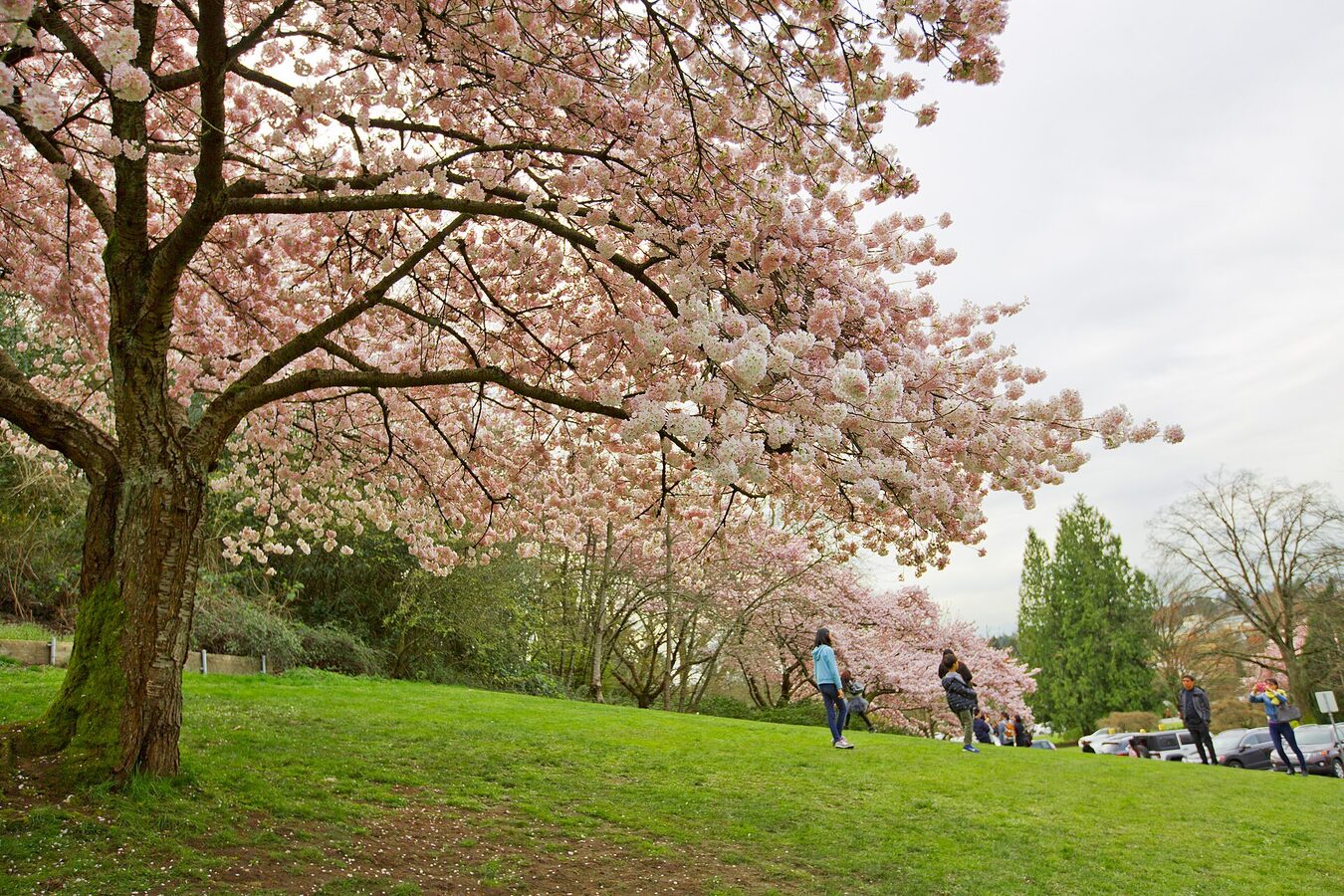
- Mid-Season Bloomers (Mid-March - Early April): This is often the sweet spot. 'Prunus serrulata 'Akebono'' (light pink, single-petaled) and 'Prunus x yedoensis' (Yoshino, white to pale pink) dominate. These create the famous "pink cloud" effect.
- Late Season Bloomers (Mid-April - Late April): 'Prunus serrulata 'Kanzan'' (deep pink, double-petaled) is the showstopper here, known for its lively, dense clusters. 'Shirofugen' (white, aging to pink) also makes a late appearance.
My best advice? Keep an eye on the Vancouver Cherry Blossom Festival Bloom Map. It's updated regularly and is the most reliable source for real-time bloom status. Don't rely solely on historical data; a warm winter or late cold snap can shift things by a week or two.
Famous Blossom Hotspots: My Top Picks for Views
While blossoms can be found on almost every street, some locations offer immersive and photogenic experiences. These are my go-to spots, tried and tested over many seasons.
Queen Elizabeth Park: Panoramic Views & Diverse Varieties
Queen Elizabeth Park is worth going out of your way for, not just for blossoms but for its great horticultural displays year-round. During cherry blossom season, it's particularly magical. The park is home to numerous varieties, ensuring a prolonged display.
- What to see: You'll find a fantastic mix, from early Akebono to later Kanzan varieties. The areas around the Bloedel Floral Conservatory are excellent, as are the pathways leading up to the highest points of the park. The views of the city skyline framed by pink trees are unparalleled.
- Peak Bloom: Mid-March to Mid-April, depending on the specific tree variety.
- Getting There: Easily accessible by TransLink. Take the Canada Line SkyTrain to Oakridge-41st Avenue Station, then it's about a 15-minute walk east, or a short bus ride (routes 15, 33). If driving, parking is Park Board pay parking and fills up on sunny weekends — the kiosk shows the current rate for the lot before you pay.
- Cost: Park entry is free. Bloedel Floral Conservatory admission is $9.50 CAD for adults.
Stanley Park: Seawall Strolls & Historic Charm
While Stanley Park is famous for its seawall and rainforest, it also is home to some beautiful cherry tree groves, particularly around the Vancouver Aquarium and the Japanese Canadian War Memorial.
- What to see: The area near the Japanese Canadian War Memorial (near the Rose Garden) is particularly poignant and beautiful. Here, you'll find mature Akebono trees that create a great canopy. Further into the park, around the Vancouver Aquarium, there are also some lovely specimens. Consider renting a bike (~$25-$40 CAD for 3-4 hours) and cycling the seawall, stopping at various points.
- Peak Bloom: Late March to Early April for the Akebono varieties.
- Getting There: Bus routes (19, 246, 240) serve the park entrance. It's also a pleasant walk from downtown. If driving, numerous pay parking lots are available (~$3.75/hour, ~$14/day).
- Cost: Park entry is free. Aquarium admission starts at $39.95 and climbs to about $55 on the busiest days - $50.00 CAD for adults.
VanDusen Botanical Garden: Curated Collections & Peaceful Retreat
For a more structured and comprehensive viewing experience, VanDusen Botanical Garden is exceptional. Their extensive collection means you'll see a wide array of cherry blossom varieties, often with informative signage.
- What to see: Explore the entire garden. The Sino-Himalayan Garden often has early bloomers, while the main pathways showcase later varieties. It's a photographer's dream with meticulously maintained landscapes.
- Peak Bloom: Spans the entire season, from early March to late April, with different sections peaking at different times.
- Getting There: Bus routes 17 and R4 stop near the garden entrance. Parking is available (~$3.75/hour).
- Cost: Admission is seasonal, typically ~$10 - $13.00 CAD for adults during spring.
Burrard SkyTrain Station: Urban Canopy & Commuter Beauty
This might seem an unconventional choice, but for an urban blossom experience, the area around Burrard SkyTrain Station is spectacular. The trees lining the street create an impressive tunnel effect.
- What to see: As you exit the station, look up and around. The trees along Burrard Street, particularly towards Georgia Street and Robson Street, are magnificent. It's a packed area, offering a unique contrast between urban architecture and delicate blossoms.
- Peak Bloom: Late March to Early April (Akebono variety).
- Getting There: Take any SkyTrain line to Burrard Station. You're already there!
- Cost: Free to view. SkyTrain fare varies by zone, typically ~$3.50 - $6.70 CAD for a single adult fare.
UBC (University of British Columbia): Academic Ambiance & Lesser-Known Gems
UBC's sprawling campus is not just for students; it’s a beautiful place to explore, especially during blossom season. The sheer number of trees here, often less crowded than downtown spots, makes it a tranquil option.
- What to see: The main Mall and pathways around the UBC Botanical Garden are excellent. Also, explore the Nitobe Memorial Garden, a traditional Japanese garden that often features cherry blossoms (though its main draw is its calm design). The area around the Museum of Anthropology is also worth a look.
- Peak Bloom: Mid-March to Mid-April, with various species.
- Getting There: Numerous bus routes (R4, 4, 14, 44, 84, 99 B-Line) serve UBC. Parking is available in various parkades (~$4 - $8.00/hour, ~$18 - $25.00/day).
- Cost: Campus viewing is free. UBC Botanical Garden admission is ~$10 - $12.00 CAD for adults. Nitobe Memorial Garden admission is ~$7 - $9.00 CAD for adults.
Beyond the Main Attractions: Neighbourhood Gems
Don't limit yourself to the big parks! Many residential streets transform into striking blossom avenues. A leisurely walk or bus ride through these neighbourhoods can yield some of the most pretty and intimate viewing experiences.
- Kitsilano: Particularly along West 7th Avenue, West 12th Avenue, and around Kitsilano Beach Park. The trees here are mature and create incredible pink tunnels.
- Fairview/South Granville: Streets like West 16th Avenue and West 10th Avenue offer beautiful canopies.
- Shaughnessy: Known for its grand homes and wide, tree-lined streets. Explore areas around Angus Drive and The Crescent for an opulent blossom experience.
The beauty of these neighbourhood spots is their accessibility. Hop on a local bus, get off when a street catches your eye, and just wander. This is where Vancouver shines in spring.
Practicalities for US Visitors: Border, Currency & More
For our American friends, a few quick notes to ensure a smooth trip.
- Border Crossing: The Peace Arch crossing is the most common land route. Have your passport ready. NEXUS cardholders can use dedicated lanes for faster processing. Check border wait times online before you travel.
- Currency: Canada uses the Canadian Dollar (CAD). While many places accept USD, you'll get a better exchange rate using your credit card or withdrawing CAD from an ATM. As of early 2024, 1 USD is roughly 1.35 CAD, so your dollar goes further here! Prices mentioned here are in CAD.
- Tipping: Standard in Canada for service industries (restaurants, taxis, etc.) is 15-20%.
- Sales Tax: Expect 5% GST (Goods and Services Tax) plus 7% PST (Provincial Sales Tax) on most goods and services in BC, for a combined 12%.
- Cell Service: Check with your provider for international roaming plans. Many US plans now include Canada, but verify to avoid surprise charges. Local SIM cards are available from providers like Telus, Bell, and Rogers if you plan a longer stay.
Getting Around Vancouver: Transit & Transportation Tips
Vancouver has an excellent public transit system, TransLink, which includes buses, SkyTrain (our automated metro), and the SeaBus (a passenger ferry across Burrard Inlet). It's often the best way to get around, especially during peak tourist season when traffic and parking can be challenging.
- Compass Card: This reloadable card is your best bet for transit. Purchase one at any SkyTrain station or London Drugs for a ~$6 CAD refundable deposit, then load it with stored value or a day pass (~$12.55 CAD for an adult 1-zone day pass). You can also tap your contactless credit card (Visa, Mastercard, American Express) or mobile wallet directly at fare gates and on buses.
- SkyTrain: Efficient and scenic. The Canada Line connects the airport (YVR) to downtown and then south to Richmond. The Expo and Millennium Lines serve other parts of Vancouver and the surrounding municipalities.
- Buses: Extensive network. Pay with a Compass Card, contactless credit card, or exact cash fare (~$3.50 - $6.70 CAD depending on zones and time). Note: drivers do not give change.
- SeaBus: Connects Waterfront Station (downtown) to Lonsdale Quay in North Vancouver. Offers great harbour views.
- Ride-Sharing: Uber and Lyft operate in Vancouver. Taxis are also readily available.
- Cycling: Vancouver is very bike-friendly with numerous dedicated lanes. Renting a bike is a fantastic way to explore, especially Stanley Park and Kitsilano.
Responsible Blossom Viewing: Leave No Trace
A quick but important note: please respect the trees and their surroundings. The cherry blossoms are beautiful, but they are also delicate.
- Do not pick blossoms or break branches. Leave them for everyone to enjoy.
- Stay on pathways. Avoid trampling roots or garden beds.
- Dispose of trash properly. Keep our parks and streets clean.
- Be mindful of others. Especially in popular spots, try not to block pathways for extended periods for photos.
Let's keep Vancouver beautiful for years to come.
Conclusion: Embrace the Pink Haze
Vancouver in spring is a sensory delight, and the cherry blossoms are undoubtedly the star of the show. From the grand avenues of Queen Elizabeth Park to the intimate streetscapes of Kitsilano, there's a unique blossom experience waiting for every visitor. By understanding the bloom cycles, knowing where to go, and utilizing our excellent public transit, you're set for a trip. So, come, give yourself time in the pink haze, and discover why Vancouver earns its reputation as one of the world's most beautiful cities when spring awakens its well-known cherry trees.
 English
 Español
 Français
 Deutsch
 Українська