What Americans Need to Enter Canada in 2026: Your Essential Guide for a Vancouver Adventure
US visitors ask this constantly, and the answer changed in the last few years. If you are planning a weekend getaway to Gastown, a ski trip to Whistler, or an island hopping adventure, understanding the entry requirements is paramount. While the process is generally straightforward for our neighbours to the south, a few key details can make all the difference between a seamless arrival and an unexpected delay. Forget the old wives' tales and outdated advice; this guide, updated for 2026, cuts through the noise to give you the concrete, practical information you need to confidently plan your Canadian escape.
The good news? For most U.S. citizens, entering Canada remains relatively simple. However, the world of international travel is dynamic, and ensuring you have the correct documentation well in advance is the golden rule. Let's look at what you'll need to know to ensure your 2026 Vancouver adventure starts off without a hitch.
The Cornerstone: Passport, Passport, Passport (or Equivalent)
For U.S. citizens, a valid U.S. Passport is, without a doubt, your best and most straightforward document for entering Canada by any mode of transport (air, land, or sea). It's universally accepted and streamlines the process. However, depending on how you plan to cross the border, you might have other options.
- U.S. Passport Book: This is the gold standard. Ensure it's valid for the entire duration of your planned stay in Canada. While Canada doesn't officially require six months of validity beyond your departure date (unlike some other countries), it's always a good practice to have at least that much remaining to avoid any unforeseen issues.
- U.S. Passport Card: A more compact and less expensive alternative to the passport book, the passport card is specifically designed for land and sea travel between the U.S., Canada, Mexico, and the Caribbean. It's perfectly acceptable for driving across the Peace Arch or taking the ferry from Seattle to Victoria. However, it is NOT valid for air travel. If you're flying into Vancouver International Airport (YVR), you'll need the passport book.
- Enhanced Driver's License (EDL): Available in a handful of U.S. states (Michigan, Minnesota, New York, Vermont, and Washington), an EDL serves as proof of identity and U.S. citizenship for land and sea travel to Canada. Like the passport card, it is NOT valid for air travel. If you live in one of these states and frequently cross the border by car, it's a convenient option.
- NEXUS Card: This is the ultimate fast-track option for frequent travelers. A NEXUS card allows pre-approved, low-risk travelers to speed through dedicated lanes at land borders and use kiosks at major airports like YVR. We'll look at NEXUS in more detail below, but if you have one, it covers your entry requirements for all modes of travel.
Practical Tip: Always carry original documents. Photocopies or digital images are generally not accepted as primary identification for border crossing. Also, ensure the name on your travel document matches the name on any flight tickets or hotel reservations.
Crossing the Land Border: Driving Up to Vancouver
Driving to Vancouver from the U.S. is a popular choice, offering scenic routes and the flexibility to explore beyond the city core. The main land border crossings into British Columbia are south of Vancouver, with the Peace Arch and Pacific Highway crossings being the busiest. Here's what to expect and what you'll need:
- Required Documents: As mentioned above, a U.S. Passport Book, Passport Card, Enhanced Driver's License (if applicable), or NEXUS card will suffice. Ensure all occupants of the vehicle have appropriate documentation.
- Vehicle Documentation: You'll need your valid driver's license, vehicle registration, and proof of auto insurance. Most U.S. auto insurance policies extend to Canada, but it's wise to contact your insurer beforehand to confirm coverage and request a Canadian Non-Resident Inter-Province Motor Vehicle Liability Insurance Card (often called a "yellow card" or "pink card"). While not always requested, having it can prevent delays.
- The Border Crossing Experience: Be prepared for potential wait times, especially on weekends, holidays, and during peak summer months. You can check estimated wait times online via the Canada Border Services Agency (CBSA) website. When you approach the primary inspection booth, turn off your radio, lower your windows, and have your documents ready. Be honest and polite when answering the border services officer's questions about your purpose of visit, duration of stay, and what you're bringing into the country.
- Bringing Goods: Be aware of restrictions on certain items like firearms, cannabis (even if legal in your state, it's illegal to bring across the border), and excessive amounts of alcohol or tobacco. There are also limits on the value of goods you can bring into Canada duty-free. For personal use, generally, you can bring in up to 1.5 litres of wine OR 1.14 litres of spirits OR 24 x 355 ml cans/bottles of beer per person, and up to 200 cigarettes, 50 cigars, 200 grams of manufactured tobacco, and 200 tobacco sticks.
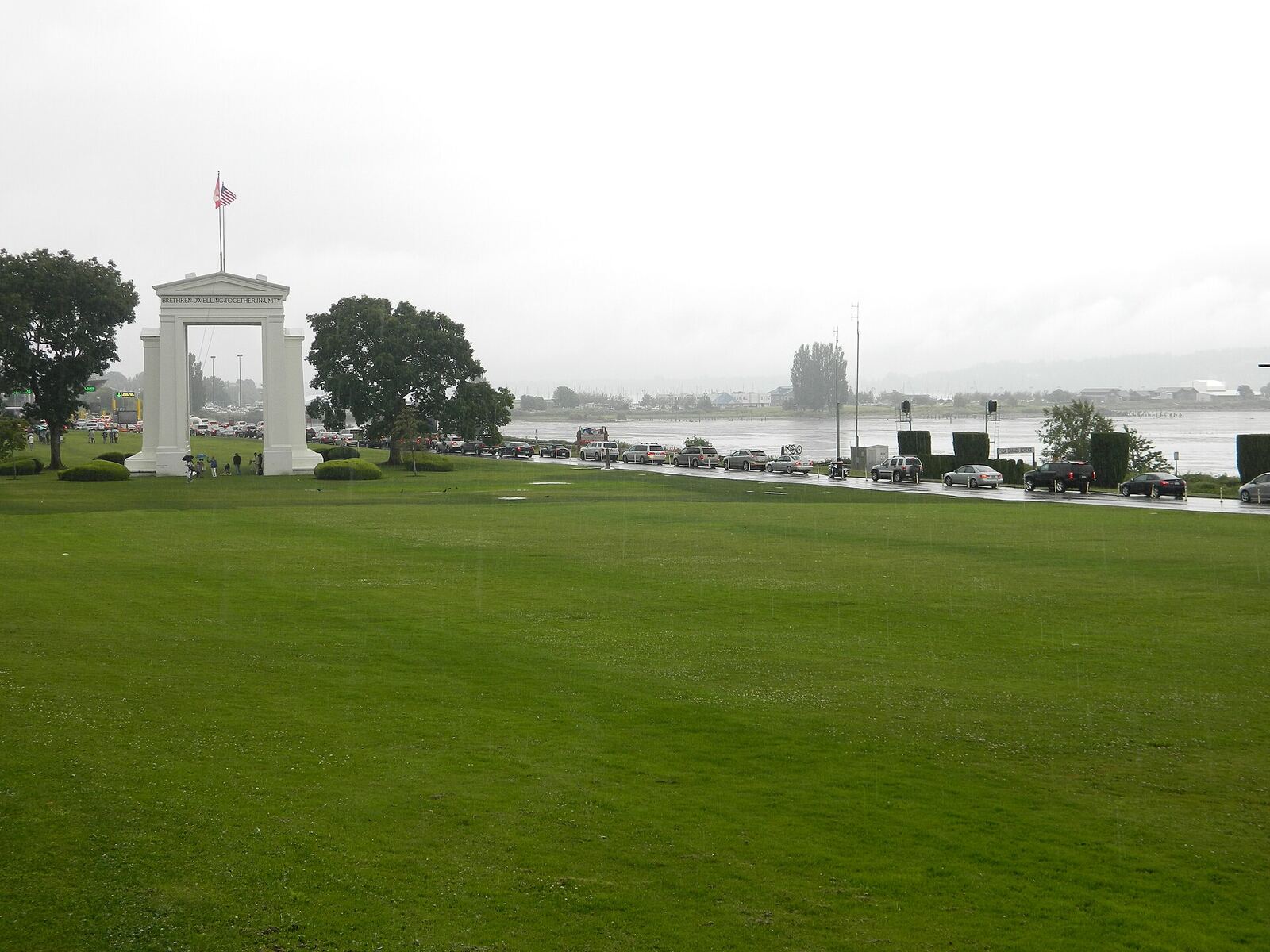
Peace Arch vs. Pacific Highway: The Peace Arch crossing is famous, with its beautiful park on both sides of the border. It can get very busy. The Pacific Highway crossing (also known as "Truck Crossing") is just a few miles east and often has shorter wait times for passenger vehicles, especially during off-peak hours. It's always worth checking both.
NEXUS Lanes: If you have a NEXUS card, use the dedicated NEXUS lanes at either crossing. This can drastically reduce your wait time, often allowing you to pass through in minutes while others wait for hours.
Flying into Vancouver International Airport (YVR): What to Expect
For many, flying directly into YVR is the most convenient way to reach Vancouver. YVR is consistently ranked among the best airports in North America, offering a smooth arrival experience if you're prepared.
- Required Document: A valid U.S. Passport Book is mandatory for air travel into Canada. Passport Cards and EDLs are not accepted.
- Customs and Immigration: Upon arrival at YVR, you'll proceed to Canada Border Services Agency (CBSA) for customs and immigration. You'll use self-service kiosks (Primary Inspection Kiosks or PIK) to declare your goods and verify your identity. After using the kiosk, you'll present your receipt and passport to a CBSA officer for a brief interview.
- ArriveCAN App (as of 2026): While the mandatory use of the ArriveCAN app for COVID-19 related declarations has been lifted, it's possible that a similar digital declaration system could be implemented for other purposes by 2026. Always check the official CBSA website closer to your travel date for any new digital entry requirements. For now, it's not required, but keeping an eye on official channels is prudent.
- Connecting Flights: If you're connecting to a domestic flight within Canada (e.g., to Kelowna or Victoria), you'll clear customs and immigration at YVR before proceeding to your next gate.
Practical Tip: Fill out your customs declaration accurately. Misrepresenting what you're bringing into the country can lead to fines, confiscation of goods, and even refusal of entry. If in doubt, declare it.
Cruising to Canada: Sea Entry Requirements
Many U.S. visitors arrive in Vancouver via cruise ship, especially popular during the Alaskan cruise season. The requirements for sea entry are similar to land entry, but with a few nuances.
- Required Documents: A U.S. Passport Book is highly recommended for all cruise travel, even if it's a "closed-loop" cruise (starting and ending in the same U.S. port) that technically allows other WHTI-compliant documents. While a Passport Card or EDL might be acceptable for closed-loop cruises, having a Passport Book simplifies any unforeseen circumstances (e.g., needing to fly home unexpectedly from a foreign port due to an emergency).
- Cruise Manifest: Your cruise line will provide a passenger manifest to CBSA prior to your arrival. You'll still go through a customs and immigration process upon disembarking in Vancouver, typically on the ship or at the Canada Place cruise terminal.
Canada Place: Vancouver's best-known cruise ship terminal at Canada Place is a hub of activity. Once you clear customs, you're right in the middle of downtown, steps away from the SkyTrain (Waterfront Station), Gastown, and the Vancouver Seawall.
NEXUS: Your Fast Pass to Canada (and Back)
If you're a frequent traveler between the U.S. and Canada, a NEXUS card is an invaluable investment. It's a joint program between the CBSA and U.S. Customs and Border Protection (CBP) designed to expedite border crossings for pre-approved, low-risk travelers.
- How it Works: After a rigorous application process that includes background checks and an in-person interview (which can be done at enrollment centers on both sides of the border, including near the Peace Arch crossing), you receive a NEXUS card. This card allows you to use dedicated NEXUS lanes at land crossings, kiosks at airports (including YVR), and to make phone declarations when arriving by boat.
- Benefits: Significantly reduced wait times, especially at busy land borders and airports. It's a game-changer for regular commuters or those with family on both sides of the border.
- Cost & Validity: As of 2026, the application fee is likely to be around ~CAD $50-60 (USD ~$35-45) for a five-year membership. The cost is the same for adults and children.
- Application Process: Apply online through the CBP website. The process involves an application, background checks, and an interview. Start well in advance, as processing times can vary, often taking several months.
Local Tip: If you apply for NEXUS, consider scheduling your interview at the Peace Arch Enrollment Center. It's easily accessible from the U.S. side, and you can combine it with a day trip to explore White Rock or Crescent Beach afterwards.
Currency, Costs, and Connectivity: Practical Notes for U.S. Visitors
Beyond border documents, a few practical considerations will enhance your Vancouver experience:
- Currency Exchange: Canada uses the Canadian Dollar (CAD). While many businesses in tourist areas might accept U.S. dollars, they will often do so at an unfavourable exchange rate. It's best to pay in CAD. ATMs are widely available, and credit cards (Visa, MasterCard, American Express) are universally accepted. As of 2026, the exchange rate typically hovers around 1 USD = ~1.30-1.40 CAD, meaning your U.S. dollar goes further here!
- Tipping: Tipping customs are similar to the U.S. In restaurants, bars, and for services like taxis or haircuts, a tip of 15-20% is standard for good service.
- Sales Tax: Expect to pay sales tax on most goods and services. In British Columbia, this includes a 7% Provincial Sales Tax (PST) and a 5% Goods and Services Tax (GST), for a combined 12% on many items. Some items, like basic groceries, are exempt.
- Cell Phone & Data: Check with your U.S. carrier about international roaming plans. Many offer affordable options for Canada. Alternatively, consider purchasing a local SIM card (from providers like Telus, Bell, Rogers, or Freedom Mobile) upon arrival at YVR or in the city. A basic plan with data might cost around ~CAD $40-60 per month. Free Wi-Fi is widely available in cafes, restaurants, and public spaces throughout Vancouver.
- Getting Around Vancouver: Vancouver has an excellent public transit system (TransLink) including the SkyTrain (our automated metro), SeaBus (ferry to North Vancouver), and an extensive bus network. A Compass Card is your best bet for seamless travel; you can purchase one and load it with cash value or day passes at SkyTrain stations and convenience stores. A single-zone adult fare is $2.85 with stored value on a Compass Card, or $3.50 if you tap a contactless bank card; two zones cost $4.20 and $5.10. Every trip started after 6:30 p.m. on weekdays, and everything on weekends, is charged as one zone. An all-zone DayPass is $12.55. Taxis, ride-sharing (Uber, Lyft), and car rentals are also readily available.
- Accommodation Costs: Vancouver is a popular destination, and hotel prices can vary widely. Expect to pay anywhere from ~CAD $150-300+ per night for a decent hotel room in downtown or popular neighborhoods like Gastown or Yaletown. Budget options like hostels or Airbnbs outside the immediate city center might be ~CAD $70-150.
Final Checks and Resources
Before you depart, always perform a final check:
- Official Sources: Bookmark and consult the official websites for the Canada Border Services Agency (CBSA) and the U.S. Department of State for the most up-to-date entry and exit requirements.
- Travel Insurance: While not mandatory for entry, comprehensive travel insurance is highly recommended. Your U.S. health insurance may not cover medical emergencies in Canada, and the costs can be substantial.
- Emergency Contacts: Have a list of emergency contacts, including the U.S. Consulate General in Vancouver (located downtown at 1075 W Pender St).
Conclusion: Your Vancouver Awaits!
Entering Canada from the U.S. is, for the vast majority, a straightforward process. By ensuring you have the correct, valid documentation, being honest with border officials, and understanding a few key practicalities, you'll set yourself up for a fantastic trip. Vancouver is a city of unparalleled natural beauty, busy culture, and delicious food, and we can't wait to welcome you. So, get those documents in order, pack your bags, and prepare to discover why so many of us are proud to call this impressive corner of the world home. See you soon!
 English
 Español
 Français
 Deutsch
 Українська