Vancouver areas to avoid, mapped: what six blocks of the Downtown Eastside actually mean for visitors, safe walking routes at night, and where to stay.
Home›Explore BC›Vancouver Safety Map: Areas to Avoid & Best Areas to Stay
Safety habits that matter
Share live location with a friend on hike days.
Don’t leave bags visible in cars.
At night stick to busy streets after bars.
Know your hotel address offline.
Published 2026-07-13 · FanVancouver Travel Desk
Vancouver is one of the safest big cities in North America — violent crime against tourists is rare, and you can walk most of the city at any hour. But it has one infamous problem area that shocks unprepared visitors, and a couple of practical crime patterns (car break-ins above all) that are easy to avoid once you know them. Here is the honest picture, with a map.
The interactive safety map
Green = great areas to stay and walk. Yellow = fine by day, stay alert late at night. Red = skip it, especially after dark. Tap any zone for details.
What is the Downtown Eastside?
The blocks of East Hastings Street around Main St (roughly between Abbott St and Gore Ave) are Canada's most concentrated zone of homelessness, open drug use and street disorder. It is a humanitarian crisis, not a war zone — people there are overwhelmingly not aggressive toward passers-by — but walking through is distressing, and petty theft is common. Practical rules:
Never book a hotel on or near E Hastings because it looked cheap online. Suspiciously cheap “downtown” hotels (under ~C$120 in summer) are usually there — check the exact address on the map above before booking.
The area sits between two tourist zones (Gastown and Chinatown), so it is easy to wander in by accident. Walking one block south to Pender St or along the waterfront gets you around it.
If you do pass through by day: keep your phone in your pocket and keep moving. Transit through the area (bus 14/16/20 on Hastings) is normal and safe.
The #1 actual tourist crime: car break-ins
Leave nothing visible in a parked car — ever. Not a jacket, not a charging cable, not an empty bag. Smashed rental-car windows are the most common tourist police report in Vancouver.
Highest-risk parking: trailhead lots (Lynn Canyon, Quarry Rock, Cypress), beach lots and downtown parkades late at night. Take valuables with you or leave them at the hotel.
Bikes: use two locks and remove lights/computer; bike theft is endemic. Hotels will usually store bikes.
From safety questions to a trip you can plan
Find a starting point for your Vancouver stay
Choose what matters most. Compare two areas, check how you will arrive, then save a short booking checklist. These are editorial starting points, not safety scores or a search for the cheapest hotel.
Below is the first-visit starting point. Choose your options and build a shortlist.
West End / English Bay
Start here for Stanley Park and the beach side of the downtown peninsula.
Before you choose: Check the final walk or bus connection from your arrival station; a West End address does not mean the hotel is beside SkyTrain.
Compare this for restaurants and False Creek walks, with a Canada Line station serving the area.
Before you choose: Check the actual hotel entrance and room-facing street; a neighbourhood label does not tell you night-time noise or walking distance.
The map opens Vancouver; pan to your chosen area. It is not filtered by this shortlist. Some booking links earn us a commission, at no extra cost to you; confirm the final price with the provider.
How the shortlist works · sources
Editorial starting points based on neighbourhood character and trip purpose, not a safety ranking, hotel availability search or price comparison. Confirm the exact property and route before booking.
Area and transport references checked 2026-10-07. Hotel prices, availability, room facilities and the final route are not verified by this tool.
The calmest bases for a first visit — the West End, Coal Harbour, Yaletown and Kitsilano — are also the most walkable. Compare live hotel and rental rates by neighbourhood before you book.
🏨 Hotels and rentals on one map💵 Live nightly prices📍 See what is actually walkable
Where to stay (and where not to)
Area
Who it suits
Before booking
West End / English Bay
Stanley Park and beach-side plans
Check the final transit connection, room-facing street and total property price.
Yaletown / Coal Harbour
Restaurants, False Creek or waterfront plans
Compare the actual entrance with your station, venue and route; prices vary by property and date.
Olympic Village / Kitsilano
Compare for family or beach-centred plans
Confirm room facilities, the daily journey and the last connection for your specific address.
Richmond / Metrotown / North Vancouver near stations
Compare a wider range of bases
Check the station or branch, return service and total transport cost. There is no automatic hotel-price saving.
Granville Street entertainment area
Evening plans
Read recent reviews for room noise and confirm your return route; a district label is not a safety guarantee.
East Hastings / Main & Hastings / Oppenheimer area
Check the exact block and entrance
Use the street-level advice above and recent property information; conditions vary by block and time.
📊 Checking a specific area? Our Vancouver crime by neighbourhood guide ranks every VPD neighbourhood on a full year of police data (September 2025 to August 2026). The quietest were Shaughnessy, Arbutus Ridge and Dunbar–Southlands; it also gives straight answers for Gastown, Yaletown and East Van, down to the busiest blocks.
Other things worth knowing
Granville strip at closing time (Fri–Sat ~1:00–3:00) is drunk and rowdy — annoying rather than dangerous. Taxis are easiest one block off the strip.
Beaches: do not leave phones/wallets unattended while swimming; thefts happen on busy summer afternoons.
On trails: the real hazards are wildlife and weather, not people — see our hiking guide for bear basics.
Transit is safe at all hours; every SkyTrain car has a yellow emergency strip and Transit Police can be texted at 87-77-77.
Numbers: emergency 911 (police/fire/ambulance); Vancouver Police non-emergency 604-717-3321; 24/7 mental-health/street crisis line 310-6789 (no area code).
Cannabis smell on the street is legal and normal; public drinking is not (fines).
Bottom line: pick any green zone on the map, treat parked cars as glass boxes, and Vancouver will feel — because it is — very safe. Planning: trip costs · save money · best months · quieter sights.
Some links on this page are affiliate links. We may earn a commission at no extra cost to you. Prices and availability are always confirmed on the partner site.
Vancouver right now
📡 Live — rebuilt 16 October 2026, 00:03
Air qualityAQHI 2 at Vancouver (North West) — Low risk — no reason to change any plan.
ConditionsClear sky, 14°C downtown. Sunset 6:19pm — on the North Shore trails it is dark under the canopy a good half hour before that.
CampfiresNo prohibition in force in the Coastal Fire Centre, which covers Vancouver, the North Shore and the Sunshine Coast.
TransitRunning normally on every mode.
Air quality from Environment and Climate Change Canada, campfire prohibitions from the BC Wildfire Service, transit from the operators' own notices. Each figure is rebuilt every half hour; if a source goes quiet this block says so rather than repeating an old number.
Everything below is the part of Vancouver safety that guidebooks skip. Not because it is alarming, but because it is specific: the mountains behind the city hurt far more visitors than the city does, the water is colder than it looks, and the thing most likely to ruin your week is a car window in a trailhead parking lot. The strip at the top is live and rebuilt every half hour from public data.
Vancouver car break-ins, by the numbers
📊 Vancouver Police reported-crime data · 12 months to Sep 2026
5,684reported theft-from-vehicle incidents citywide, Oct 2025–Sep 2026 · +3.6% vs the year before · about 16 a day. It is Vancouver's single most-reported crime type.
Reported theft-from-vehicle, by full year
20237,381
20245,947
20255,593
to Sep 20265,684
Down from 7,381 in 2023 to 5,593 in 2025; the most recent twelve months have ticked back up. (Vancouver Police changed records systems in 2022, so that year is missing from the open data and is left out here.)
About 39% happen downtown or in the West End — the two places visitors park most.
They cluster in the evening (roughly 5 pm–11 pm), not overnight — about 42% of the ones with a recorded time.
Neighbourhood
Reports
vs prior yr
Central Business District
1,789
▼ 8.7%
Strathcona
435
▲ 27.2%
West End
416
▼ 9.8%
Kensington-Cedar Cottage
382
▲ 33.6%
Renfrew-Collingwood
292
▲ 70.8%
Mount Pleasant
262
▲ 8.3%
Grandview-Woodland
241
▲ 8.1%
Hastings-Sunrise
225
▲ 5.6%
How to read this. These counts track where cars are parked and where foot traffic is highest, not where you are personally in danger. Downtown leads because it has the most parked cars, and a busy area with a falling number can still see more break-ins than a quiet one that is rising fast. Read it as “take everything out of the car and park in a staffed lot,” not “avoid this neighbourhood.” Violent crime against visitors is rare and is a different question.
Source: FanVancouver analysis of Vancouver Police Department open crime data (GeoDASH) (geodash.vpd.ca/opendata). Counts are “Theft from Vehicle” incidents for the twelve months ending Sep 2026, compared with the twelve months before. Neighbourhood names are VPD’s own. Retrieved October 2026; refreshed monthly. Figures are reported incidents, which undercount real break-ins because many go unreported.
Cite this:“Vancouver recorded 5,684 theft-from-vehicle reports in the 12 months to Sep 2026, up 3.6% year-on-year — FanVancouver analysis of Vancouver Police open data.”
Driving in Vancouver: cameras, roads and the rules visitors miss
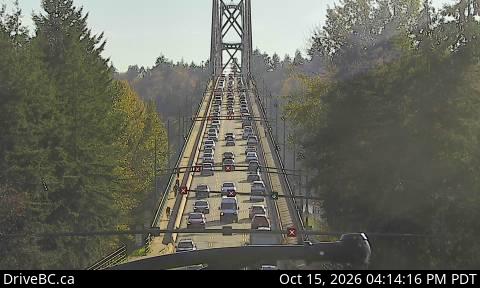
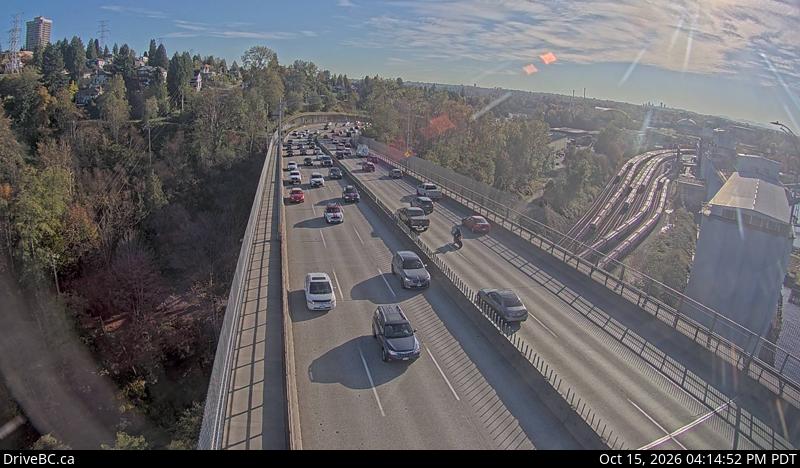
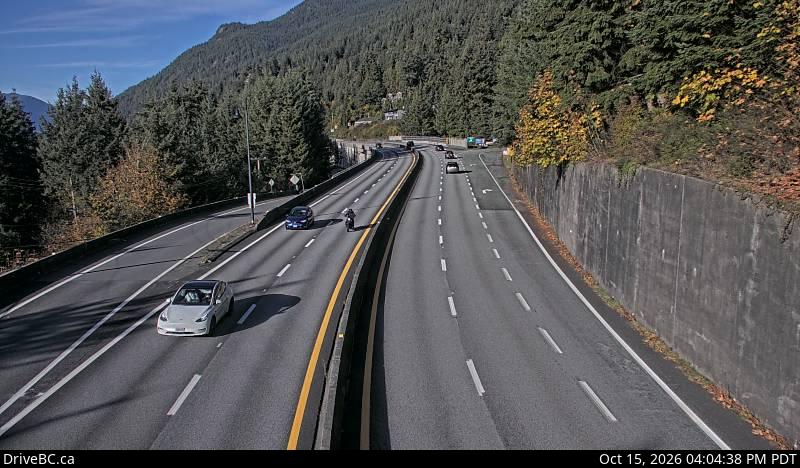
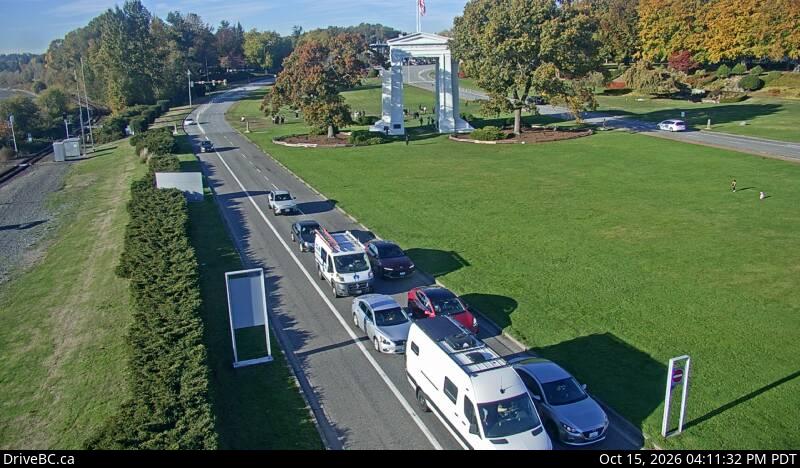
On the road, what goes wrong for visitors here is rarely a crash. It is a jammed Lions Gate causeway, a long queue at the Peace Arch, a ticket for a rule that does not exist at home, or summer tires on the Sea-to-Sky after the first of October. Look at the cameras before you leave, and know the eight rules below.
Live stills from DriveBC, the Province of British Columbia's highway cameras (Open Government Licence – British Columbia), reloaded each time you open this page. Tap a frame for every camera on that route.
From 1 October most signed B.C. highways, the Sea-to-Sky to Squamish and Whistler included, require winter tires: the M+S or three-peak mountain snowflake mark and at least 3.5 mm of tread. Most routes run to 30 April, some lower-snow ones to 31 March. Ignoring the sign is a $121 ticket. Ask the rental desk what is on the car before you head for the mountains.
Phone in hand$368 + 4 points
Holding a phone while driving is $368 and four penalty points, and that includes holding it at a red light. Mount it and set the route before you move.
Speedkm/h
Limits are in km/h: 50 km/h in towns and cities unless a sign says otherwise. School zones are 30 km/h from 8 a.m. to 5 p.m. on school days, playground zones 30 km/h from dawn to dusk every day.
Right on redAllowed
You may turn right on a red light after a full stop, unless a sign prohibits it. Yield to pedestrians first; downtown there are a lot of them.
Flashing greenNot an arrow
A flashing green light is a pedestrian-controlled signal, not a protected left turn. Go only if the way is clear, and expect someone to press the button and turn it red.
Lions Gate counterflowWatch the signals
The Lions Gate Bridge has three lanes and the middle one changes direction with the rush hour. Follow the overhead lane signals, not the car in front.
No tollsSince 2017
There are no bridge or road tolls in Metro Vancouver; the Port Mann and Golden Ears tolls ended in 2017. Parking is where the money goes.
Visitor licenceUp to 6 months
Visitors can drive on a valid licence from home for up to six months. An International Driving Permit helps if yours is not in English.
Parking at a trailhead or a beach? The break-in numbers above are why nothing should be visible in the car, not even a charging cable.
The mountains are the real risk, not the city
Search and rescue teams on the North Shore run roughly a hundred and thirty calls a year, and most of them are not mountaineers. They are people who rode the Grouse gondola up in a t-shirt, walked past the resort boundary because the trail looked flat, and found themselves in the dark on wet granite an hour later. Vancouver is the only major city in Canada where you can be in genuine wilderness twenty minutes after leaving a coffee shop, and that proximity is exactly what catches people out.
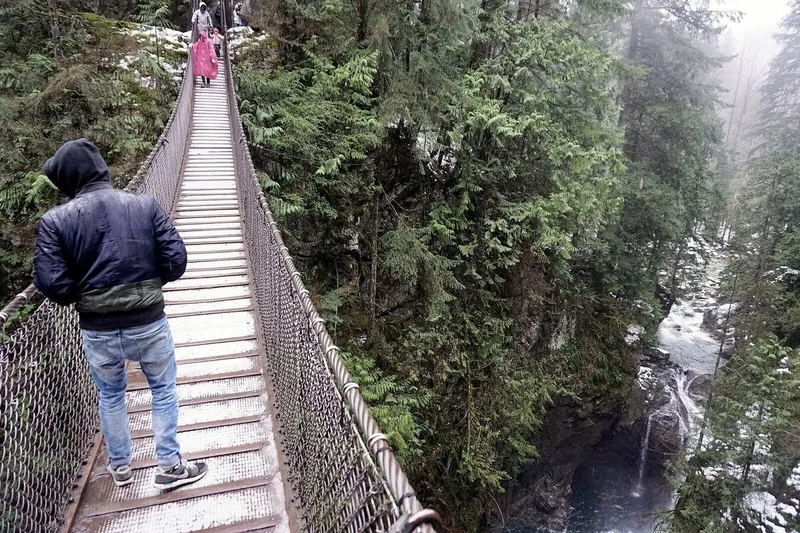
Three specific traps come up again and again. The first is the Grouse Grind: it is not a hike, it is a two-point-nine-kilometre staircase gaining eight hundred and fifty-three metres, and it is one-way. You cannot walk back down it. If you are not buying a gondola ticket for the descent, you are not finishing. The second is Crown Mountain and Hanes Valley, reached by walking a few hundred metres past the top of Grouse — signed, unmaintained, and the single most common origin point for rescues on the North Shore. The third is Lynn Canyon, where the suspension bridge is free, the pools below look inviting, and the water has killed swimmers who underestimated the current and the cold.
If you take one thing from this page
Daylight is the constraint. Under the North Shore canopy it is effectively dark thirty to forty minutes before the sunset time on your phone. Work backwards from that, not from how you feel at the trailhead, and turn around at the time you decided on before you started.
Carry a headlamp even on an afternoon walk, take more water than feels sensible, and put a warm layer in the bag — the temperature at the top of Seymour routinely runs eight to ten degrees below downtown, and the fog arrives from the west without warning. Cell coverage exists on the Grind and near the resorts and disappears entirely in Hanes Valley and on the back side of Seymour. If something goes wrong, call 911 and ask for North Shore Rescue; the service is free, volunteer-run, and they would far rather come for you at four in the afternoon than at midnight.
In winter the same trails need snowshoes, an avalanche forecast from Avalanche Canada, and the knowledge to read it. If you do not have that, the three local ski areas are genuinely enough mountain for a visit, and nobody has ever regretted staying inside the boundary.
North Shore Rescue, by the numbers
🏔️ North Shore Rescue · volunteer mountain rescue · as of September 2026
140North Shore Rescue callouts in 2025 — one of the busiest volunteer search-and-rescue teams in Canada, on call 24 hours a day, 365 days a year; free to the person rescued; the team is volunteer-run.
139
callouts in 2024
10,000+
volunteer hours (2024)
~42%
of 2025 calls used a helicopter
42×
helped other BC teams (2025)
Why people get rescued
Running out of daylight is the single most common cause of overdue-hiker callouts — under the dense North Shore canopy it goes dark 30 to 40 minutes before the sunset time on your phone.
The team deals with unprepared hikers every week: people who carry none of the Ten Essentials and never told anyone where they were going or when to expect them back.
Team leader Scott Merriman said 2025 brought a number of mountain fatalities and critical injuries he could not remember being matched in any prior year — several from falls and slides on Mount Seymour, Cypress, Grouse and Mount Strachan, some on late-season ice.
How to read this. Almost no one NSR rescues set out to do anything extreme. They are ordinary day-hikers who started too late, stepped past a boundary, or were not dressed for the temperature drop after dark — each one preventable with a headlamp, a warm layer, a charged phone, and a turn-around time set before you start. It is the point this whole page keeps returning to: the biggest safety risk to a Vancouver visitor is underestimating the very accessible mountains behind the city, not downtown crime.
Cite this:“North Shore Rescue ran 140 callouts in 2025, one of Canada's busiest volunteer rescue teams — as reported by North Shore News.”
You have just been robbed or broken into. Do this.
The most common crime against visitors in Vancouver is theft from a parked car, and the second is a bag taken from the back of a chair. Neither is violent, both are demoralising, and what you do in the first hour decides whether your insurance pays and whether your trip continues.
File the report, and do it online The Vancouver Police non-emergency line is 604-717-3321, and for theft with no suspect and no injury their online reporting system is faster and gives you the same file number. No insurer anywhere will pay a claim without that number. Call 911 only if it is happening now or anyone is hurt.
Kill the cards before you do anything else Every bank has a twenty-four-hour number on its app. This takes four minutes and it is the difference between an annoyance and a fraud case.
Passport goes to your consulate, not the police Most consulates in Vancouver are downtown and most will issue an emergency travel document within a day or two. They will want the police file number.
Photograph the damage before you tidy anything Broken glass, the empty space where the bag was, the parking sign showing where you were. Rental car companies and insurers both ask for this and neither accepts a description.
Check the pawn and resale listings for two weeks BC pawn shops report inventory to police, and stolen bikes in particular surface on local resale sites within days. Bikes registered with a serial number are recovered far more often than unregistered ones.
A note on car break-ins specifically, because it is the thing that will most likely happen to you: thieves here work trailheads, beach lots and the Sea-to-Sky pullouts in daylight, and they check the boot. Leaving nothing visible is not enough; leave nothing in the car at all. An empty car with the glovebox open and the boot cover off is read as not worth the glass.
Cold water, and why the beaches are deceptive
On a hot August afternoon the water off Kitsilano or English Bay looks like an invitation. It sits somewhere between fourteen and eighteen degrees at the surface and colder a metre down. That is not the temperature the beach looks like, and the gap is what causes trouble: cold shock makes you gasp involuntarily in the first minute, and gasping while your head is under is how strong swimmers drown.
Enter slowly and let your breathing settle before you swim out. Lifeguarded beaches — Kitsilano, Second, Third, English Bay, Sunset, Jericho, Trout Lake — are staffed roughly from late May to early September, and swimming outside those dates or hours means swimming alone regardless of who else is around. The city posts water-quality advisories when bacterial counts rise after heavy rain; they appear on signs at the beach and are worth reading rather than ignoring.
The rivers are a separate and more serious matter. The Capilano, the Seymour and the Lynn look like swimming holes and behave like mountain rivers: snowmelt cold, deceptively fast, with undercut rock. Levels can rise quickly when water is released upstream. People drown in these canyons most summers, and almost all of them were locals or visitors who saw a pool and jumped.
The scams that actually run in Vancouver
Vancouver does not have the aggressive street-scam culture of southern Europe. What it has is quieter, and mostly aimed at your card rather than your pockets. Four are worth knowing before you arrive.
Fake parking-meter texts and QR codes Someone sticks a QR sticker on a PayByPhone meter, or you get a text saying your parking session expired. Both lead to a convincing payment page that harvests your card. The real system never texts you a payment link. Use the app you downloaded yourself, or the meter's own keypad.
The stranded-traveller ask Usually around Waterfront, Robson, or the cruise terminal. A well-dressed person needs cash for a taxi, a train ticket, a hotel. The story is detailed and the amount is specific. It is the oldest script in the city and it runs daily in summer. Giving is your call, but you are not helping with an emergency.
Rental listings that do not exist The apartment is beautiful, the price is thirty percent under market, the owner is working overseas and needs a deposit by e-transfer before you can view it. Every part of that sentence is the scam. Never send an e-transfer for a place you have not stood inside. E-transfers are effectively irreversible.
Ticket resale outside the stadium Around BC Place and Rogers Arena on event nights. Screenshot barcodes get sold to several people at once; only the first through the gate gets in. Buy through the official exchange or walk away.
One local quirk worth knowing: British Columbia's liquor, cannabis and casino sectors are heavily regulated and licensed, so the illegitimate version of each is what you find on the street. An unlicensed cannabis shop is not a bargain, it is a shop with no product testing behind it.
Solo travellers, women, and getting home at night
Vancouver ranks well for solo travel, and the practical experience matches the ranking: walking alone in the West End, Yaletown, Kitsilano, Mount Pleasant or Commercial Drive at eleven at night is unremarkable. That said, the city has its own geography of comfort, and it is not the one a map would suggest.
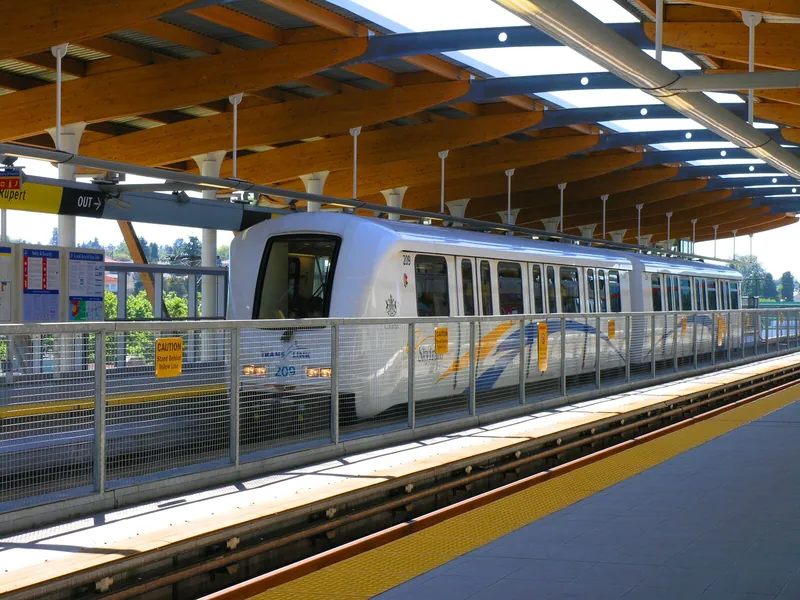
SkyTrain runs until roughly one in the morning on weekdays and later on Fridays and Saturdays, and it is well lit, well used and monitored. Every platform has a yellow designated waiting area under a camera, and every train has a silent alarm strip. The last hour of service on a weekend is louder and drunker than the rest, particularly on the Expo Line heading east, but loud is not the same as dangerous.
The Granville strip between Robson and Davie between about midnight and three on a Friday or Saturday is the one part of central Vancouver where ordinary trouble concentrates. It is alcohol, crowds and a taxi queue, not crime aimed at visitors, and the fix is simply to not be standing in it at closing time. Walk two blocks in any direction and the city is calm again.
Rideshare and taxis both operate here. Always match the plate before you get in, sit in the back, and share your trip. If a bus driver or SkyTrain attendant is the nearest person in uniform, they are a legitimate place to go for help — transit staff here are trained for exactly that.
Vancouver is one of the most openly LGBTQ+ friendly cities in North America, with Davie Village as its heart. Public affection draws no attention in the central neighbourhoods. As anywhere, that comfort thins out in the far suburbs late at night, but within the city itself it is genuine rather than performative.
The drug crisis, and what it means for you
British Columbia has been in a declared public health emergency over the unregulated drug supply since 2016, and Vancouver is its epicentre. Most visitors experience this only as something they see: people using in public, particularly around East Hastings. It is distressing to witness and it is almost never a threat to you. The people most harmed by this crisis are the people living through it.
Two practical points. First, if you see someone unresponsive, call 911. Canada's Good Samaritan Drug Overdose Act protects both you and the person you are helping from simple drug-possession charges when emergency services are called. Nobody gets arrested for asking for help. Second, naloxone kits are free at almost every pharmacy in the province without a prescription, and using one on someone who turns out not to be overdosing causes no harm.
If you use anything recreationally while you are here
The unregulated supply in BC is contaminated with fentanyl and benzodiazepines as a matter of routine, including in stimulants and in counterfeit pressed pills. Tolerance from anywhere else in the world does not transfer. Free drug checking is available in the city, and never using alone is the single change that saves lives.
Earthquakes and tsunamis, without the drama
Vancouver sits above the Cascadia subduction zone, and the honest summary is this: a major earthquake is a real possibility on a geological timescale and a very unlikely event during a one-week visit. It is worth ten minutes of your attention, not a moment of your anxiety.
If the ground shakes, the instruction is drop, cover, hold on. Get under a table, stay away from windows, and do not run outside — falling glass and façade material is what injures people in a city of towers. Modern Vancouver high-rises are engineered for this and are among the safest places to be. Wait until the shaking stops, then leave calmly by the stairs, never the lift.
Tsunami reality for the city itself
Downtown Vancouver, the West End, Kitsilano and the whole inner harbour are shielded by Vancouver Island and the Strait of Georgia. The city is not in a tsunami evacuation zone. Tofino, Ucluelet, Port Alberni and the open west coast of the Island genuinely are, and they have marked routes and sirens. If you are day-tripping to the outer coast, look for the blue and white signs and know which way is uphill.
Alerts arrive on your phone automatically through Alert Ready on any Canadian network, with no app and no signup. A roaming foreign SIM may or may not receive them, which is one small argument for a local eSIM if you are here for a while.
Numbers worth having before you need them
911Police, fire or ambulance emergencies. Call when someone is in immediate danger or a crime is in progress.
604-717-3321Vancouver Police non-emergency. Report a crime that is over when there is no immediate danger and no suspect present; use 911 for an emergency.
811HealthLink BC for non-emergency health information. Registered nurses are available 24 hours a day; translation is available in more than 130 languages.
1-800-567-8911Poison Control, toll-free in BC, for a possible poisoning or toxic exposure. If the person is unconscious, not breathing or having a seizure, call 911.
211211 British Columbia connects people with community, social and government services, including housing and other support.
Do not send an ordinary text message to 911. Text with 9-1-1 (T9-1-1) is for the deaf, deafened, hard-of-hearing or speech-impaired community. Register with your wireless provider first; a voice call to 911 starts the registered service.
These are Vancouver/BC contacts. For a non-emergency outside Vancouver, use the local police service’s contact number.
Read before comparing: neighbourhood rows are a subset, not a full city breakdown or a safety ranking. Counts have no denominator for people, parked cars or time spent in an area. Calendar years and rolling windows cover different periods. The last included month is chosen by a coverage heuristic; VPD has not certified it complete.
FanVancouver rebuilds the aggregate weekly; the timestamp records that build, not an official publication or independent verification date. Records may be revised. VPD all-offence reporting differs from Statistics Canada reporting.
Citation you can copy
North Shore Rescue: its annual call statistics are a separate, manually curated series with dated news sources. They do not share the VPD refresh schedule. See the sources there or read the curated JSON.
Written from twelve years of living here, checked against North Shore Rescue call statistics, DriveBC, ICBC, the BC Coroners Service reporting on the unregulated drug supply, Vancouver Police reported-crime data and Emergency Info BC. Nothing on this page is a substitute for calling 911.
Prices on this page are estimates for planning and can change — check the operator, venue or booking site before you pay.
FAQ
Questions travellers ask most
Is downtown Vancouver safe at night? +
The West End, Coal Harbour, Yaletown and the Robson and Burrard corridors are busy and fine late at night. Take extra care around Granville St's bar strip at closing time, and avoid East Hastings between Abbott St and Gore Ave after dark.
Is Gastown safe? +
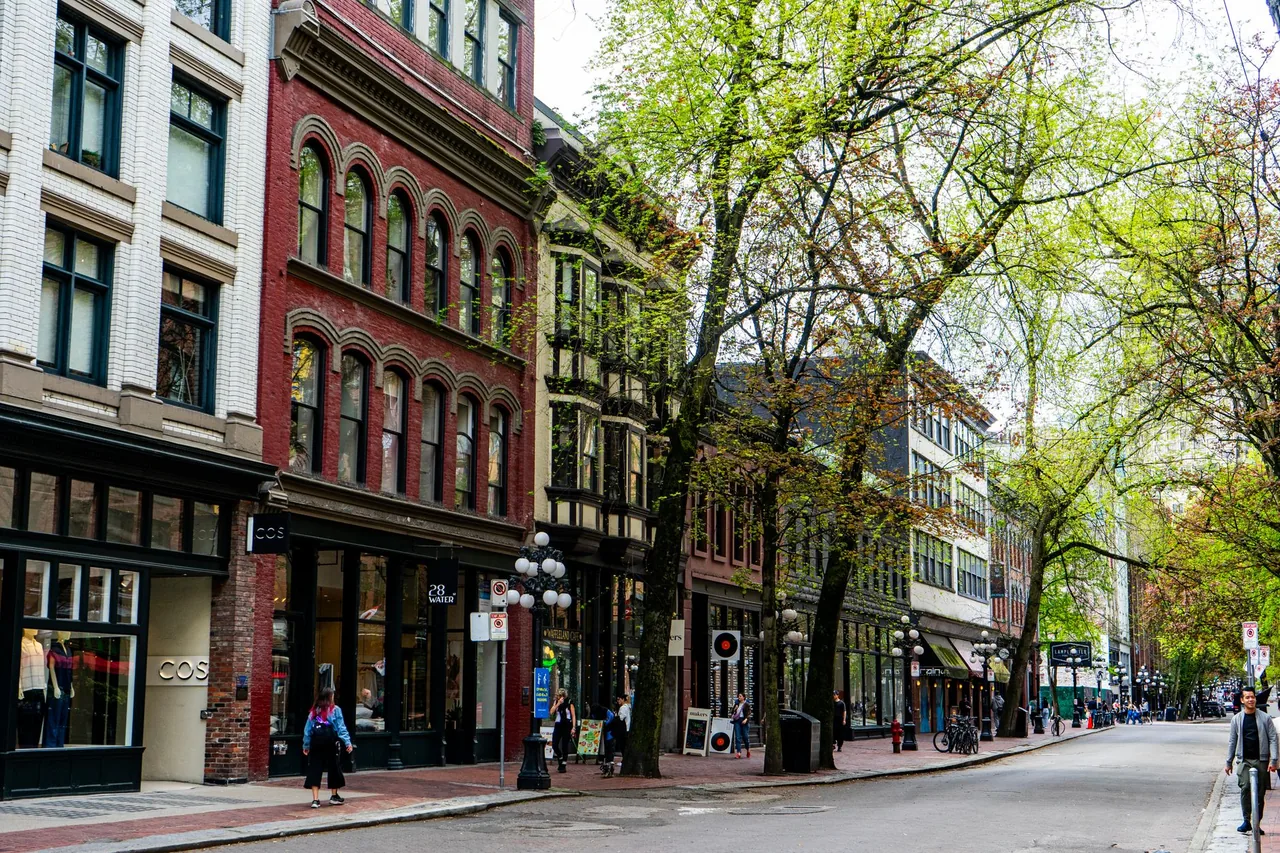
Gastown itself (Water St, Cordova St and the Steam Clock area) is safe and busy, day and evening. Its eastern and southern edges border the Downtown Eastside, so after dark keep to Water St and the waterfront rather than cutting south to Hastings.
What areas should tourists avoid in Vancouver? +
Only one: East Hastings St around Main St, roughly Abbott St to Gore Ave, plus the side blocks between Hastings and Pender. It is disorder rather than danger, but do not book a hotel there. Pender St or the waterfront gets you around it.
What is the most common crime against tourists in Vancouver? +
Theft from vehicles. Leave nothing visible in a parked car, not even a cable or an empty bag, especially at Lynn Canyon, Quarry Rock, Cypress, beach lots and downtown parkades overnight.
Is Vancouver safe for tourists? +
Yes. Violent crime against visitors is rare and you can walk most of the city at any hour. The two things that catch tourists out are the Downtown Eastside blocks of East Hastings around Main St, and car break-ins at trailheads, beaches and parkades.
Biggest practical risks? +
Weather on trails, traffic, and petty theft from cars — more than dramatic scenarios.
The Elephant in the Room: Downtown Eastside (DTES)
You’ve probably heard about the Downtown Eastside. It’s often painted in stark terms, and for good reason: it is the epicenter of Vancouver's homelessness, addiction, and mental health crises. I won't pretend it's not a challenging area. You'll see visible drug use, open-air drug markets, and a significant population experiencing severe poverty and mental health issues.
Where it is: Roughly bordered by Main Street to the east, Gastown/Water Street to the north, Richards Street to the west, and Hastings Street to the south. The core of the DTES is around Main and Hastings, extending a few blocks in each direction.
Why visitors should exercise caution: While violent crime against tourists is rare, petty theft, panhandling, and aggressive solicitation are more common. The atmosphere can be unsettling, and for many, it’s simply not a pleasant place to be, especially after dark. There's also a significant risk of stepping on discarded needles or other hazardous waste.
Should you avoid it entirely? For most tourists, yes, I recommend avoiding walking through the heart of the DTES, particularly if you’re not familiar with the area. There’s nothing of significant tourist interest there that you can’t find elsewhere in the city. Gastown, which borders the DTES to the north, is a popular tourist area with historic charm, shops, and restaurants. You can absolutely enjoy Gastown without venturing south into the DTES. Just be mindful of your surroundings, especially as you approach its eastern edges.
Practical Tip: If you find yourself near the edges of the DTES, stick to well-lit, busy streets. Keep your wits about you, avoid engaging with aggressive panhandlers, and don't display expensive belongings. Trust your gut. If a street feels off, turn around.
Granville Street at Night: More Annoyance Than Danger
Granville Street, particularly the entertainment district between Robson Street and Drake Street, transforms after dark. It’s home to many nightclubs, bars, and late-night eateries. During the day, it's a crowded commercial street, but at night, it can get rowdy.
What to expect: Drunken revelers, long lines for clubs, street performers, and a noticeable police presence. You'll encounter a mix of locals and out-of-towners looking for a good time. The energy is high, sometimes bordering on chaotic.
Why exercise caution: While not inherently dangerous, the concentration of intoxicated people can lead to altercations. Fights occasionally break out, and petty theft (pickpocketing, phone snatching) can occur, especially when people are distracted or inebriated. Aggressive panhandling or attempts to sell things are also common.
Is it worth visiting? If you’re looking for nightlife, absolutely. Many popular venues are here. Just be aware of your surroundings. If you're not interested in the club scene, there's little reason to linger on this stretch of Granville after 10 PM. You'll find more relaxed evening atmospheres in areas like Yaletown, Gastown, or the West End.
Practical Tip: Travel in groups if possible. Keep an eye on your drinks and personal belongings. Don't engage in arguments or confrontations. If you feel unsafe, step into a well-lit business or hail a taxi/rideshare. Expect surge pricing for rideshares on weekends, potentially ~CAD$30-50 for a short trip across downtown.
The Overwhelming Majority: Where Vancouver Shines (and is Very Safe)
Let's talk about where you should spend your time, because this is the vast majority of Vancouver. These neighborhoods are not just safe, but they offer incredible experiences, striking beauty, and a welcoming atmosphere.
Gastown & Waterfront
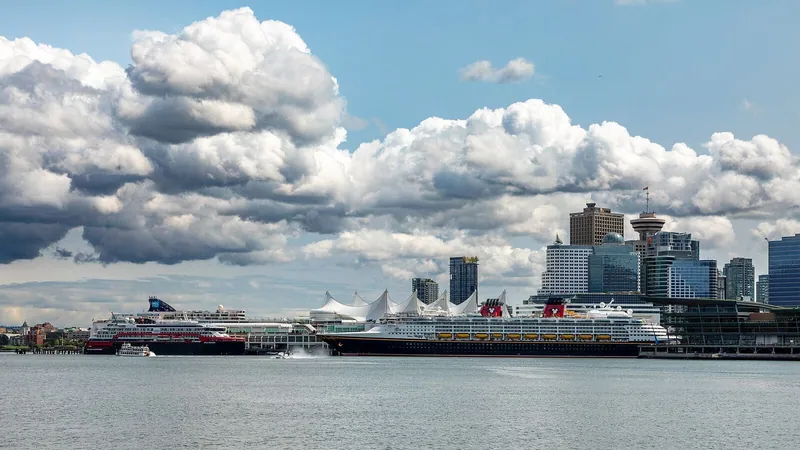
Historic, cobblestoned, and full of character. Gastown is worth the trip for its unique shops, restaurants, and the famous Steam Clock. Waterfront Station is a major transit hub. While it borders the DTES, the area itself is busy, well-patrolled, and very safe for tourists. Just be mindful as you approach the eastern edges around Main Street.
What to do: Explore boutique shops, enjoy an excellent meal, grab a coffee. Walk along the waterfront.
Evening safety: Very safe, but like any urban area, keep an eye on your belongings.
Yaletown
Trendy, upscale, and buzzing with activity. Yaletown is known for its converted warehouse lofts, chic restaurants, and lively patios. It’s a fantastic place for dining, people-watching, and enjoying the seawall.
What to do: Dine al fresco, walk the seawall, enjoy the marina views.
Evening safety: Extremely safe, even late into the night.
West End (English Bay, Denman, Robson)
This is classic Vancouver. Residential, diverse, and right on the doorstep of Stanley Park. English Bay offers striking sunsets, Denman Street is packed with diverse eateries, and Robson Street (while extending into downtown) is a prime shopping destination.
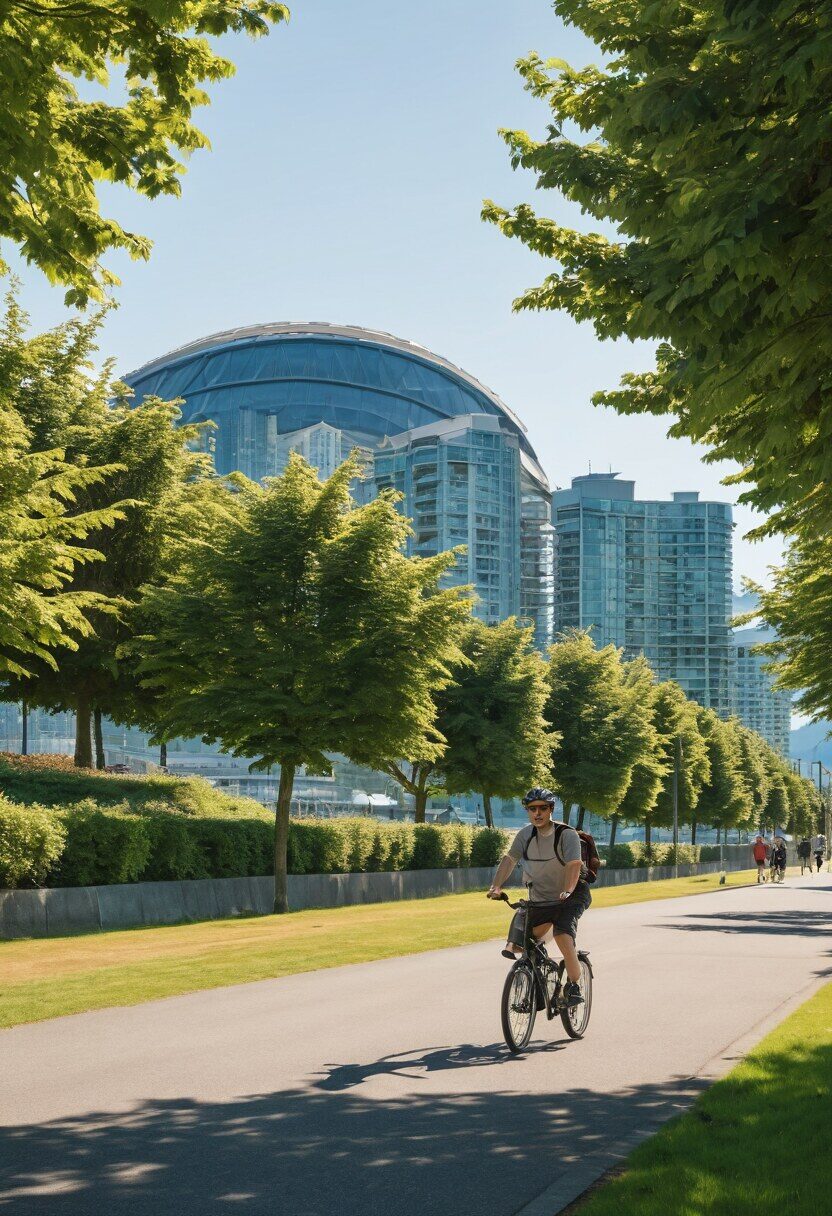
What to do: Beach time at English Bay, explore Stanley Park, rent bikes for the seawall (~CAD$20-40/day), dine on Denman, shop on Robson.
Evening safety: Very safe and lively. A fantastic place to stay.
Kitsilano (Kits Beach, West 4th Ave)
Laid-back, beachy, and health-conscious. Kitsilano is famous for Kits Beach, its outdoor saltwater pool, and West 4th Avenue’s independent shops and cafes. It’s a beautiful residential area with a youthful, active vibe.
What to do: Beach activities, swimming, paddleboarding, yoga, boutique shopping, healthy eating.
Evening safety: Very safe and relaxed.
Mount Pleasant & Main Street
A lively, artsy, and increasingly trendy neighborhood known for its independent shops, craft breweries, and diverse restaurants. It’s a bit further south from downtown but easily accessible by bus.
What to do: Brewery hopping, vintage shopping, exploring art galleries, enjoying unique culinary experiences.
Evening safety: Generally safe, especially on busy Main Street. Side streets are residential and quiet.
North Vancouver (Lonsdale Quay, Lower Lonsdale)
Just a 12-minute SeaBus ride from downtown, Lower Lonsdale offers impressive city views, a colourful market, and plenty of dining options. It's a fantastic half-day or full-day excursion.
What to do: Explore Lonsdale Quay Market, walk the waterfront, visit local breweries, enjoy the views.
Evening safety: Very safe and family-friendly.
General Safety Practices for Visitors
These apply to almost any major city, but are worth reiterating:
Situational Awareness: Pay attention to your surroundings. Don't walk with headphones blaring or glued to your phone, especially at night.
Protect Valuables: Keep wallets in front pockets, use cross-body bags, and don't leave phones or cameras unattended. Avoid flashing large amounts of cash or expensive jewelry.
Travel in Groups: Whenever possible, especially at night.
Trust Your Gut: If a situation or an area feels off, remove yourself from it.
Emergency Numbers: 911 for police, fire, or ambulance. For non-emergencies, the Vancouver Police Department (VPD) number is 604-717-3321.
Alcohol & Drugs: Drink responsibly. Public consumption of alcohol is generally illegal (though pilot programs exist for specific public spaces). Cannabis is legal but subject to strict rules – don't consume it in public spaces where tobacco smoking is prohibited, and never drive under the influence.
US Visitors: Border, Currency & Practical Notes
For our American friends, a few specific pointers:
Border Crossing: The Peace Arch and Blaine ports of entry are the busiest. NEXUS cardholders can use dedicated lanes for faster processing. Always have your passport readily available. Check wait times online before you head to the border.
Currency Exchange: The Canadian Dollar (CAD) is our currency. As of 2026, expect the exchange rate to be roughly ~1 USD = 1.30-1.40 CAD, but check current rates. Many places accept USD, but you'll get a better rate paying in CAD or using a credit card. ATMs are widely available.
Credit Cards: Visa, MasterCard, and American Express are universally accepted. Tap-to-pay is standard.
Mobile Roaming: Check with your US provider about international roaming plans to avoid bill shock. Many coffee shops and public spaces offer free Wi-Fi.
Metric System: Canada uses the metric system for distance, temperature, and volume. Speeds are in km/h, fuel in litres, and temperatures in Celsius.
Frequently asked questions
Is Vancouver safe for tourists?
Most visitor areas are straightforward by day; use normal urban caution at night.
Biggest practical risks?
Weather on trails, traffic, and petty theft from cars — more than dramatic scenarios.
The block-by-block version of this question is really a lodging question: where to stay in Vancouver goes district by district and says plainly which ones stay quiet after dark and which ones only look central on the map. If the worry is the trip home from an event, getting to BC Place covers the late-night SkyTrain windows and where the Uber pickup actually works.
Who writes this
FanVancouver is written and run by one person — Alex, in Vancouver, British Columbia. I moved here from Ukraine, stayed, and have been writing this site since 2024. There is no newsroom behind it and no tourist board paying for the copy.
Prices, hours and schedules on this page come from the operator's own page and carry the date they were checked, so you can see how fresh they are before planning around them. Where something could not be verified, the page says so instead of guessing.
How the site is researched is set out on the about page. Something wrong, out of date or missing? Write to [email protected] — corrections get made.
 English
 Español
 Français
 Deutsch
 Українська