English
 Español
 Français
 Deutsch
 Українська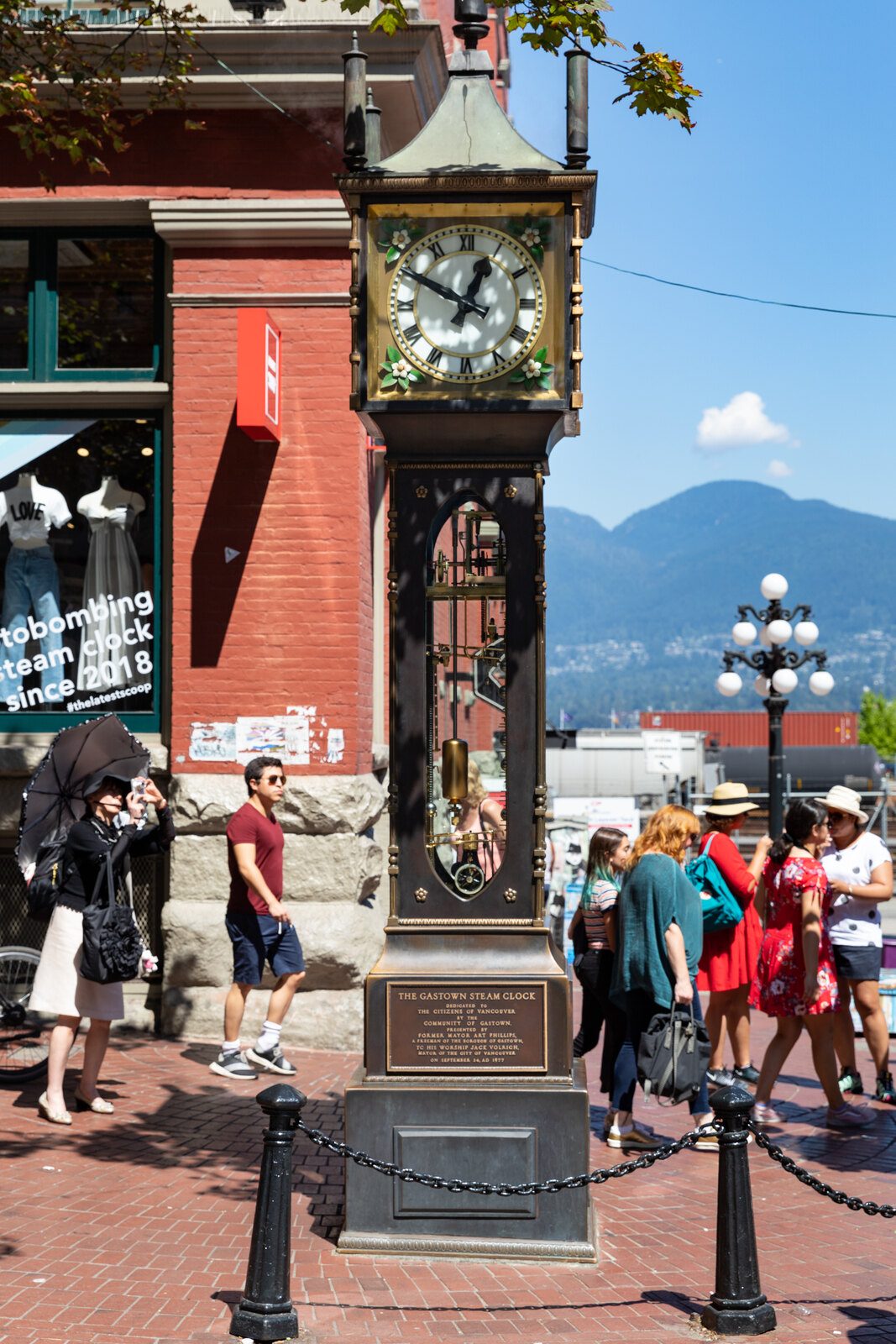
The phrase Legends of Vancouver is not a marketing line. It is the title of a book published in this city in 1911, and the story of how that book came to exist is more interesting than most of the ghost tours built on top of it.
E. Pauline Johnson — Tekahionwake, Mohawk poet, the most famous performer in Canada in her generation — moved to Vancouver in 1909, ill and nearly broke. She became friends with Chief Joe Capilano (Suá-pu-luck) of the Sḵwx̱wú7mesh, and with his wife Mary Agnes Capilano (Lixwelut). They told her stories. She published them one at a time in the Daily Province, and in 1911 a committee of her friends gathered them into a book and sold it to keep her housed while she was dying of cancer. She died on 7 March 1913. She is buried at Ferguson Point in Stanley Park, a few minutes' walk from the rock she made famous — the only burial the park has ever permitted.
For a century the book was read as Johnson's. In 2023 the University of Manitoba Press republished it as Legends of the Capilano, edited by Alix Shield, restoring the title Johnson had actually wanted and putting Joe and Mary Capilano back on the cover as the people whose stories these are. Five additional stories narrated by Mary Capilano were added. If you only take one thing from this page, take that: the oldest legends here are Sḵwx̱wú7mesh, they were told by named people, and the retelling has an author too.
What follows is the working list. Each one gets its own page with the sources laid out, because the difference between a legend and a lie is whether anyone tells you which part is which. Where a story is unverifiable — and several are — we say so on the page rather than at the bottom in small type.
The legends, one page each
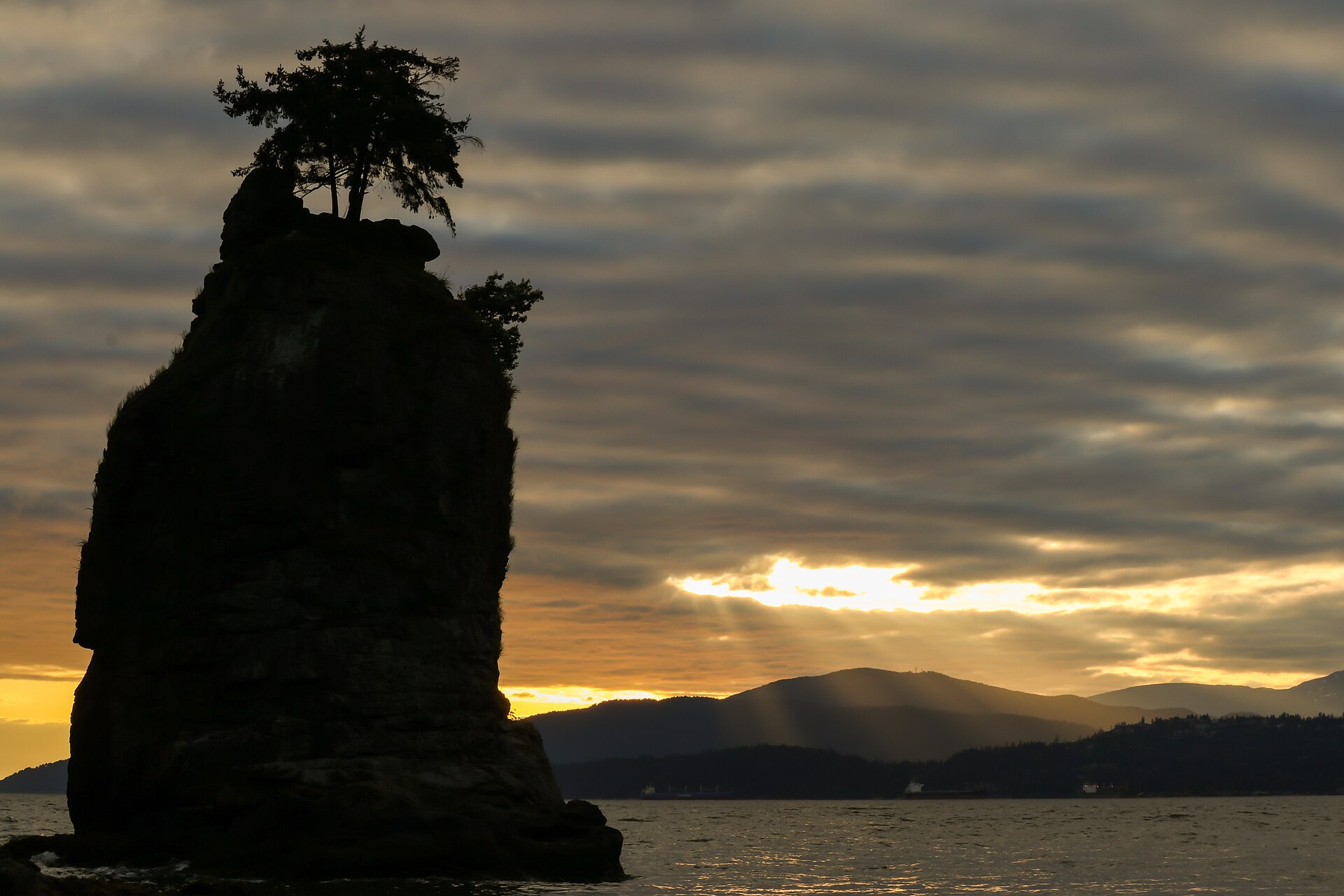 Stanley Park · Sḵwx̱wú7mesh storySiwash Rock: A Man Turned to Stone, and 32 Million Years of BasaltThe Squamish story of the man turned to stone, the 32-million-year-old basalt underneath it, the tree that died in 1965, and how to walk there.
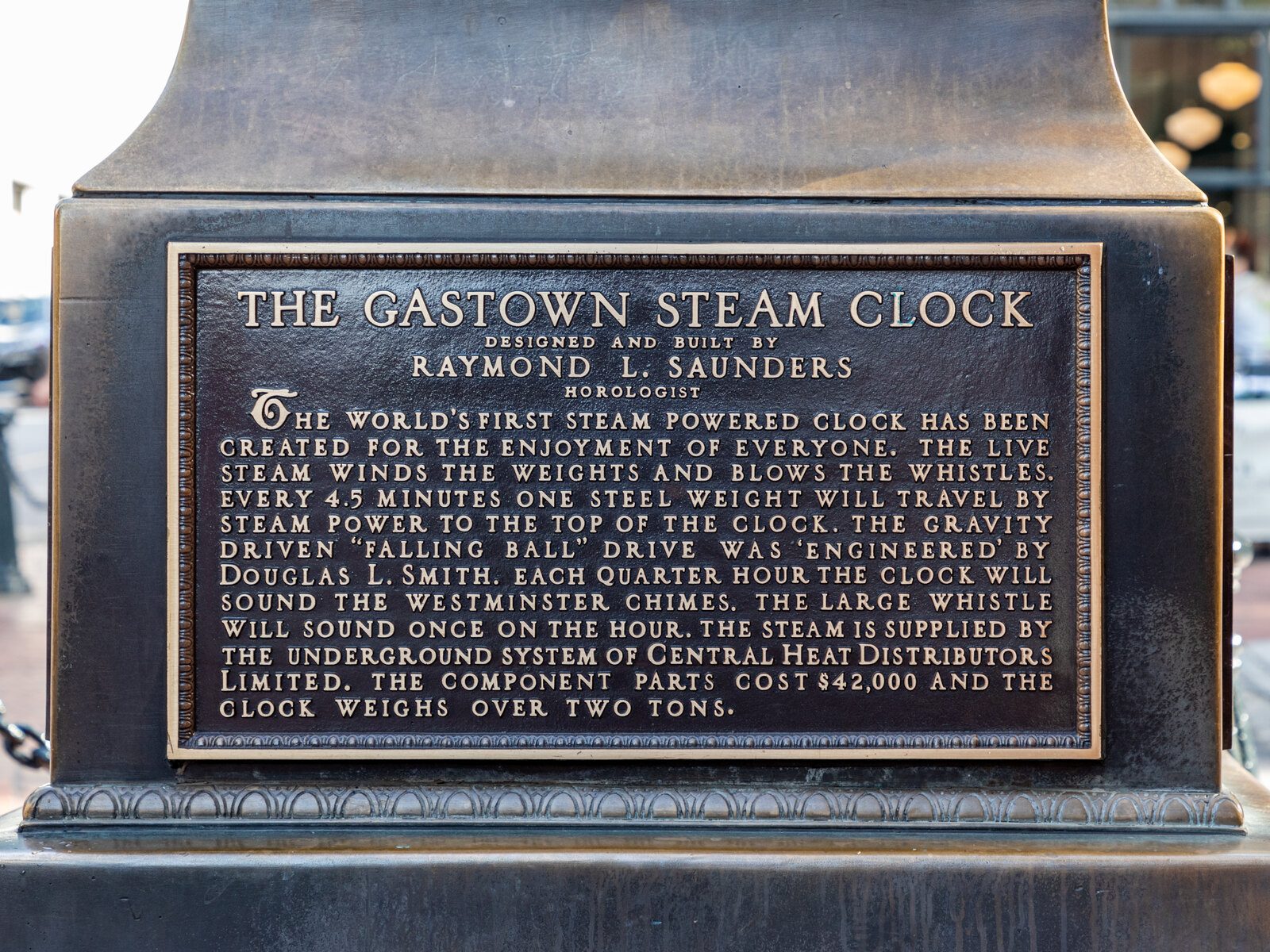 Gastown · The city's most photographed misunderstandingThe Gastown Steam Clock: Built in 1977, and Not Quite Steam-PoweredBuilt in 1977 by Raymond Saunders to cover a steam vent, powered partly by an electric motor. The real story, the whistle schedule, and where to stand.
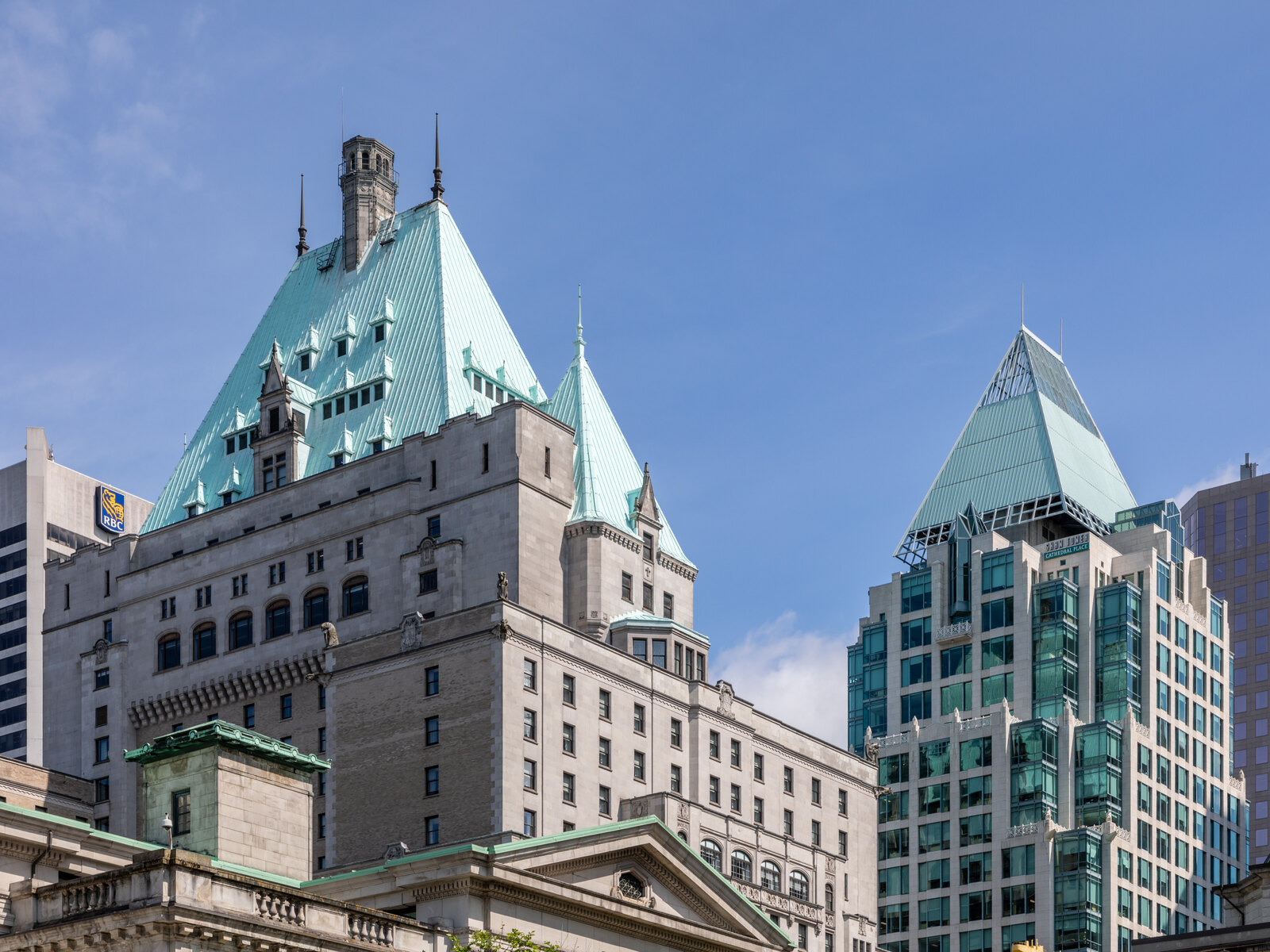 Downtown · Vancouver's most famous ghost storyThe Lady in Red: What's Documented About Hotel Vancouver's GhostJennie Pearl Cox, the 14th floor, and the photograph that supposedly proved it — which turned out to be a tarp. What's documented and what isn't.
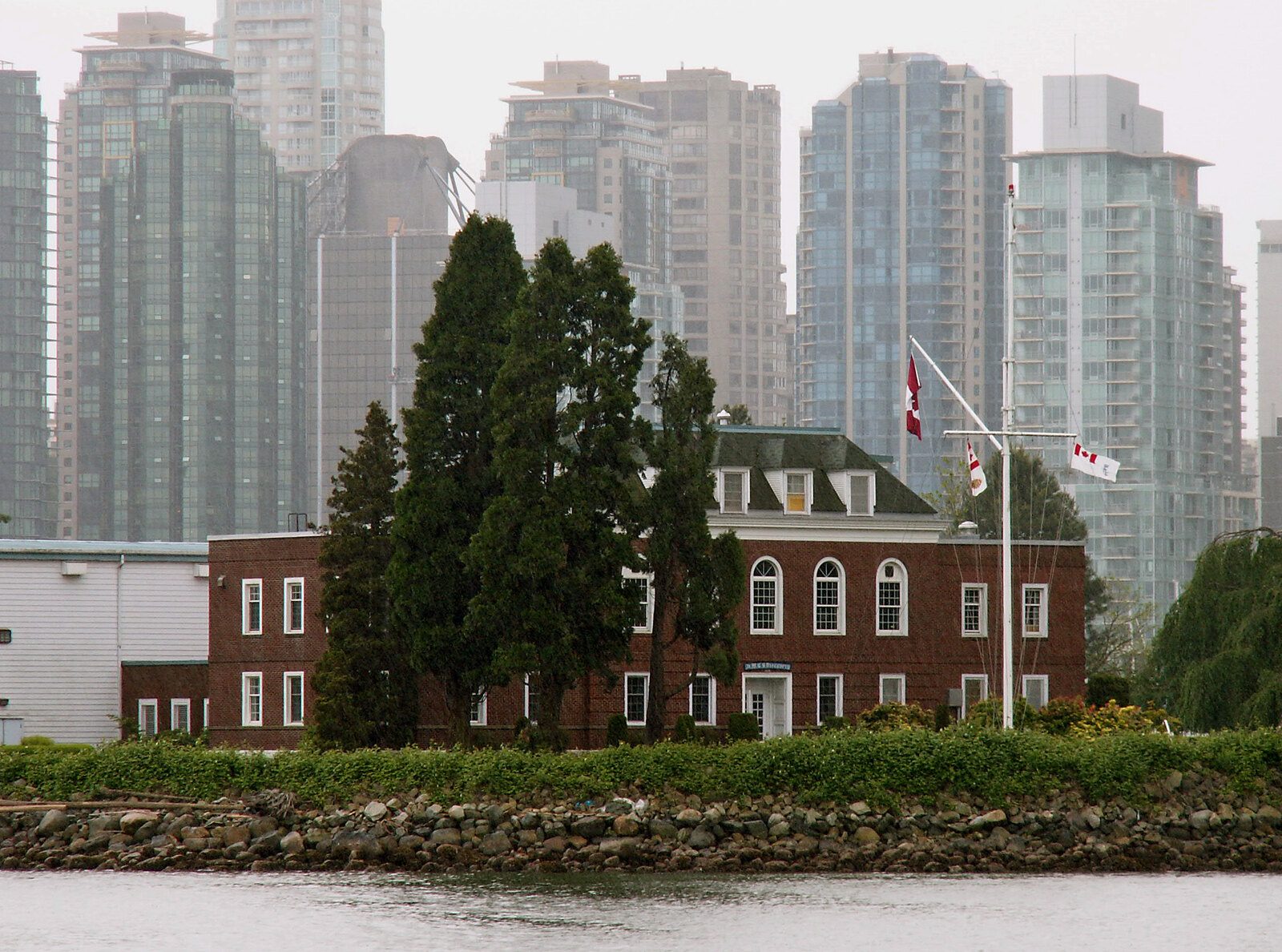 Stanley Park · The island you cannot walk ontoDeadman's Island: The Burial Ground in the Middle of Coal HarbourSquamish tree burials, the 1888-92 smallpox quarantine, the 1899 standoff with troops, and why the island is a naval base you cannot visit.
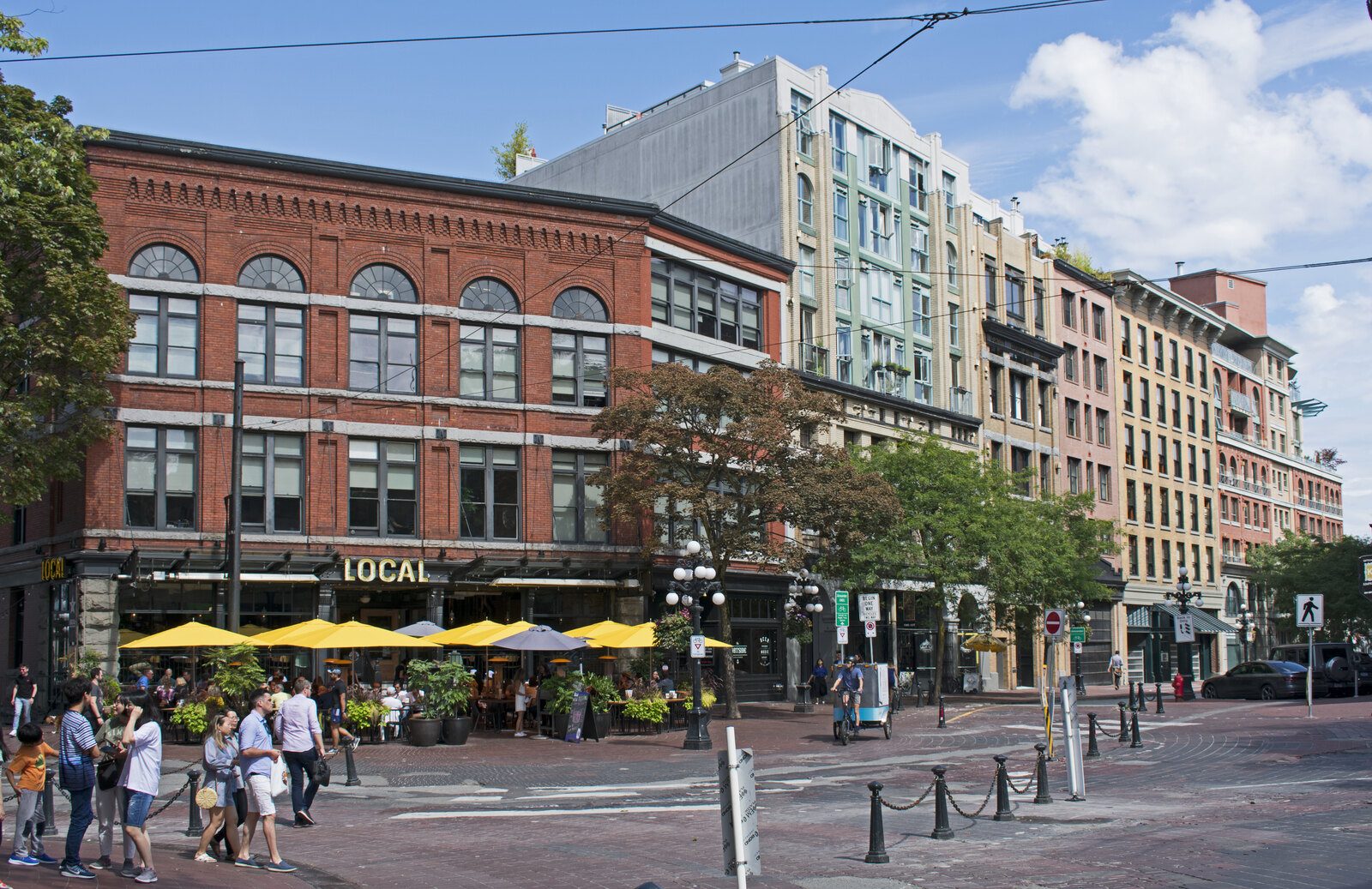 Gastown · 1867Gassy Jack: The Saloon That Built Gastown, and the Statue That Came DownA leaky skiff, a barrel of whisky and a bar paid for in drink instead of wages — how John Deighton founded Gastown, and why his statue fell.
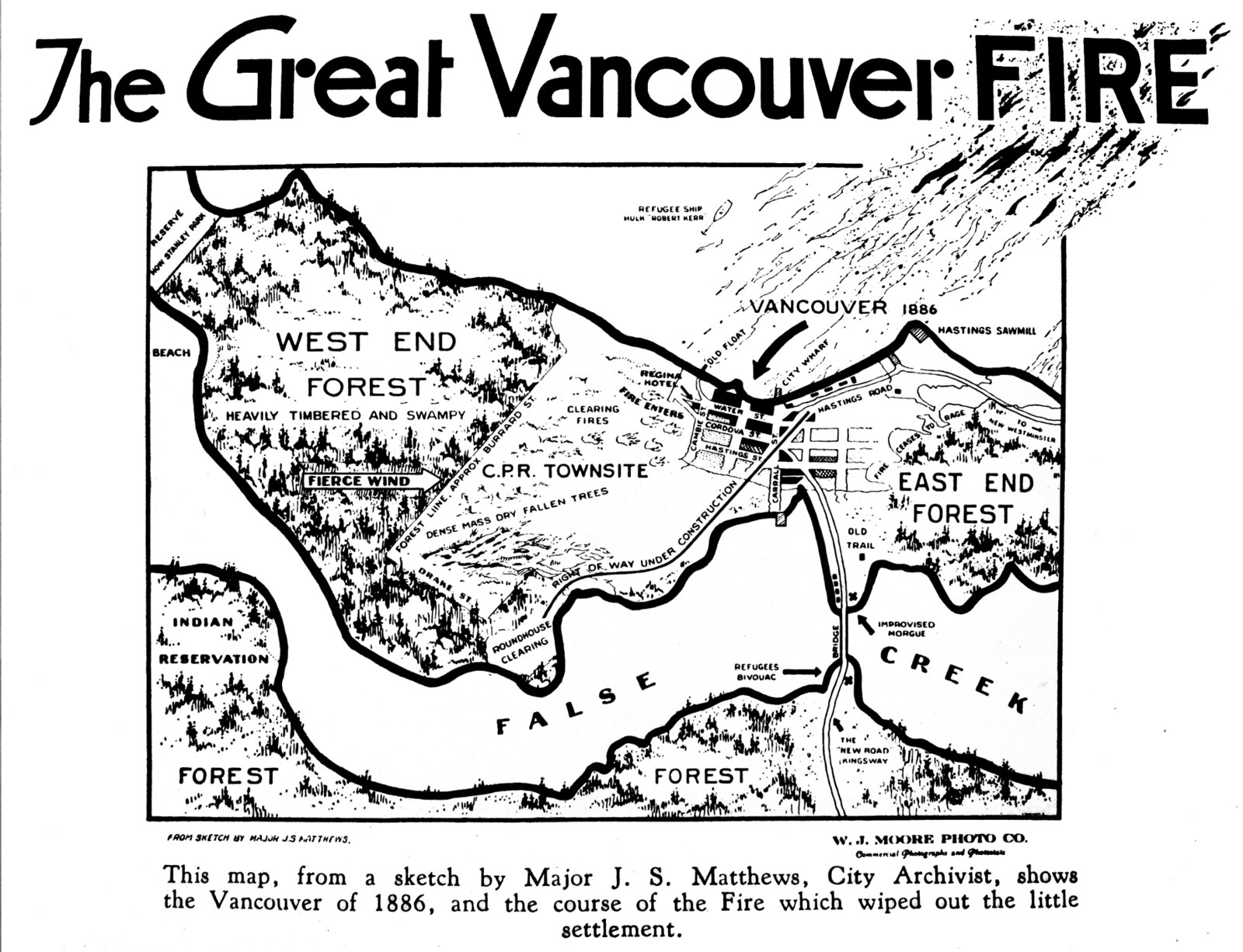 13 June 1886The Great Fire of 1886: Vancouver Burned in Under an Hour13 June 1886: two land-clearing fires got away and erased a ten-week-old city. What burned, how many died, and what was standing again by nightfall.
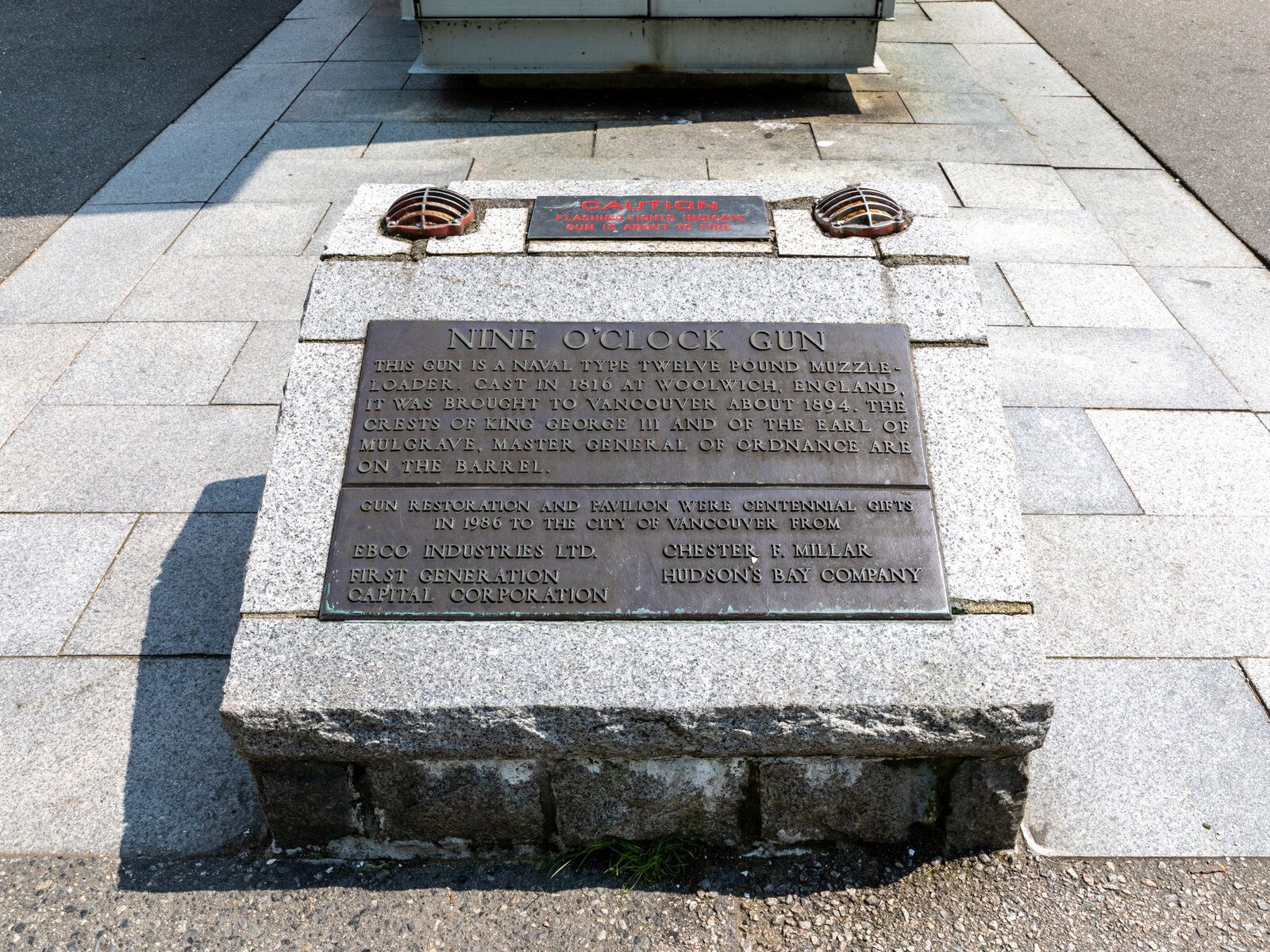 Brockton Point · Stanley ParkThe 9 O'Clock Gun: Vancouver's Nightly Cannon, ExplainedA 12-pounder cast at Woolwich in 1816, a lighthouse keeper with a stick of dynamite, and a bang heard across the inlet every night at nine.
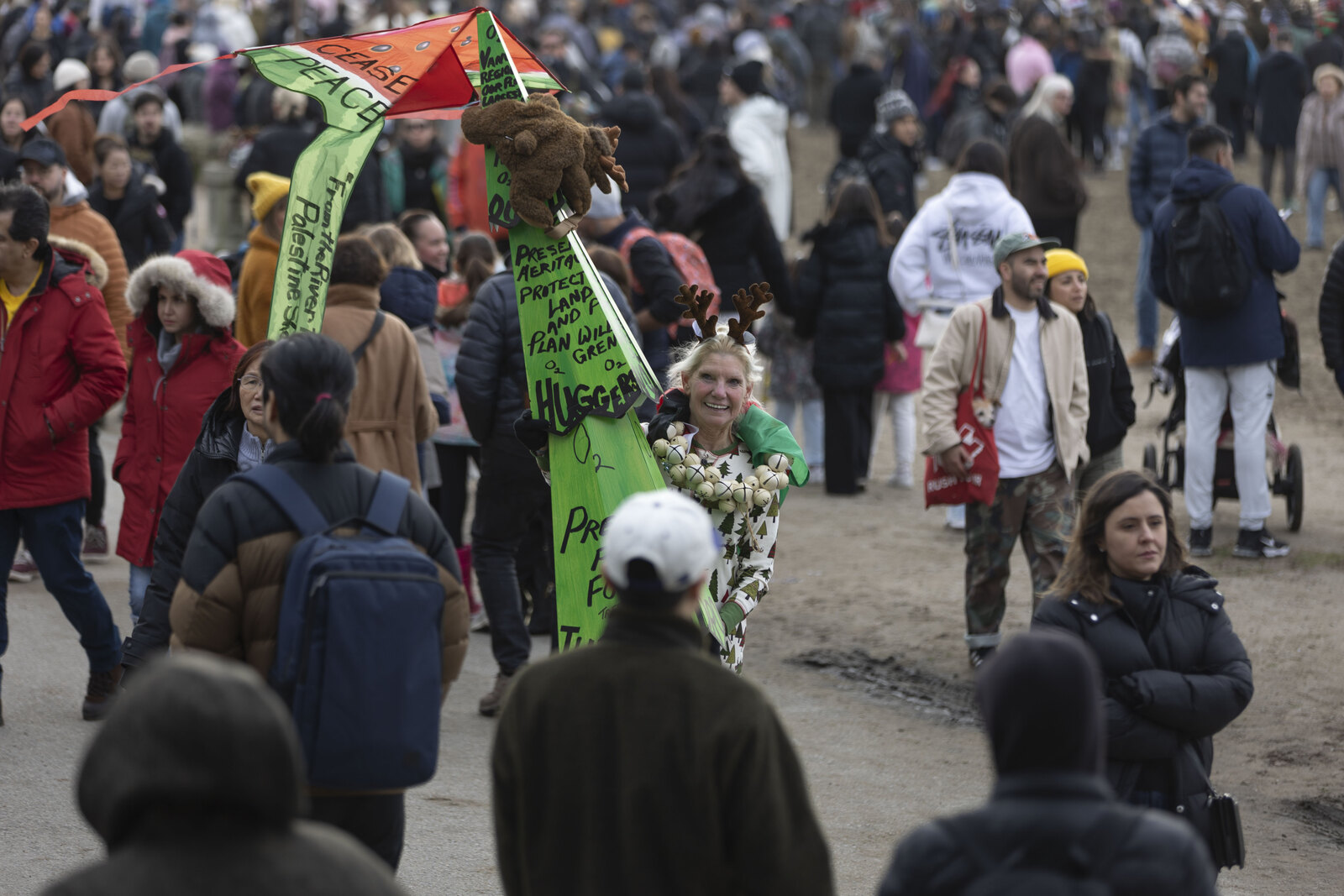 English Bay · 1 JanuaryThe Vancouver Polar Bear Swim: From Ten Swimmers to ThousandsPeter Pantages swam English Bay every day of the year. On 1 January 1920 nine people joined him. The history, the water temperature, and how to go.
Walking the legends in one afternoon
Four of them are within about six kilometres of each other and the walk is flat. This is the route we would give a visitor with half a day and no car, and it costs nothing except a transit fare at the end if your legs give out.
| Stop | Where | Time |
|---|---|---|
| Gastown steam clock | Water & Cambie, 2 min from Waterfront Station | 10 min — time it for the top of the hour |
| Maple Tree Square | 3 min east along Water Street | 10 min |
| Deadman's Island viewpoint | Coal Harbour seawall, past the marina | 25 min walk, 10 min looking |
| Nine O'Clock Gun | Brockton Point, Stanley Park seawall | 35 min walk from Coal Harbour |
| Siwash Rock | Seawall, past Prospect Point | 45 min walk — the long, good stretch |
| Pauline Johnson's grave | Ferguson Point, 15 min further | 10 min |
Do it anticlockwise and finish at Third Beach for sunset, then walk out through the park to Denman Street for food. If you want to hear the Nine O'Clock Gun rather than just look at it, run the route backwards and be at Brockton Point at 8:55 p.m.
The legend that isn't a legend: the park was never empty
Stanley Park is usually described as having been "discovered," or set aside as untouched wilderness in 1888. Neither is true, and the truth is the most consequential story on this page.
There were villages on the peninsula. Xwáyxway stood near what is now Lumbermen's Arch — a settlement with a longhouse big enough for potlatches of hundreds of people, on a midden of shell that had accumulated over thousands of years. Chaythoos was near Prospect Point. Squamish, Musqueam and Tsleil-Waututh families lived there, and some were still living there after the park was created.
They were removed. In 1888 the first park road was cut straight through the Xwáyxway midden — four acres of shell, tools and bone laid down over millennia — and the material was crushed and spread as the road surface. The road was, in the most literal sense, paved with the village. It did not even work: the shell made a poor surface and was later repaved. The families at Brockton Point held on longer; the Supreme Court of Canada ruled against them in 1925, and the last of them were gone by the end of the 1930s. In the same years the authorities put up totem poles near Lumbermen's Arch as a tourist attraction.
So if you have read that Stanley Park is a great urban wilderness that was never developed, you have read a sentence doing an enormous amount of work.
None of the older legends on this page make sense without that. Siwash Rock is not a curiosity in a park; it is a monument in a place people were living, told by people whose grandparents had been moved off it.
The ones still on the list
These have pages coming. The short versions, so you are not left hanging:
The Old Spaghetti Factory streetcar. Car No. 53 was built in New Westminster in 1904 for the BC Electric Railway and ran until 1957. It has stood inside the restaurant at 53 Water Street since 1970, and four separate ghosts are attributed to it, including a conductor said to sit in the back. A skeptical investigation by the Center for Inquiry found nothing. The streetcar itself is genuinely 120 years old and you can sit in it while eating, which is a better draw than the ghosts.
How to tell a Vancouver legend from a Vancouver fact
This city is young — incorporated in 1886 — and that means almost everything here is inside the reach of a written record. There are newspapers, court files, Park Board minutes, coroners' reports and an unusually good civic archive. When a story about Vancouver cannot be checked, that is usually because nobody has tried.
Three questions do most of the work. Is there a name and a date? The Deadman's Island quarantine has both; the Lady in Red has a name, a year, and no document. Does the story get more specific or less as you go back through the retellings? Real events accumulate detail. Legends accumulate adjectives. Who benefits from the telling? Not a cynical question — a ghost tour is honest work — but the version of Gastown's founding that leaves out John Deighton's second marriage is shorter for a reason.
None of this is an argument against the stories. Siwash Rock is a Sḵwx̱wú7mesh account of a person, and it is also 32 million years of basalt, and the second fact does not diminish the first. What ruins a legend is not the truth. It is being told it as though it were the truth by someone who never checked.
Frequently asked questions
Is Legends of Vancouver a real book?
Yes. E. Pauline Johnson published the stories in the Daily Province and they were collected into a book in 1911 by a committee of her friends, who sold it to support her while she was terminally ill. It has never been out of print for long. The 2023 University of Manitoba Press edition, Legends of the Capilano, restores her intended title and credits Chief Joe Capilano and Mary Agnes Capilano as the storytellers.
Which Vancouver legends are actually documented?
The history is: the 1886 fire, the Deadman's Island smallpox quarantine and the Ludgate standoff, the Nine O'Clock Gun's firing record, the founding of the Polar Bear Swim, and the construction of the Gastown steam clock in 1977. The ghost stories — the Lady in Red, the streetcar conductor at the Old Spaghetti Factory — have no verifiable evidence, and we say so on their pages.
Can you visit these places?
Most of them, free. Siwash Rock is on the Stanley Park seawall between Third Beach and Prospect Point. The steam clock is at Water and Cambie in Gastown. The Nine O'Clock Gun is at Brockton Point. Deadman's Island is the exception: it is an active naval reserve, HMCS Discovery, and closed to the public — you can only see it from the seawall at Coal Harbour.
Are the ghost tours worth it?
As entertainment and as a walking history of Gastown, often yes. As evidence, no — and a good guide will tell you that themselves. Treat the tour as theatre with a strong sense of place, and read the documented history separately.
Is it still called Siwash Rock?
Officially yes, but the Sḵwx̱wú7mesh name is Slhx̱í7lsh, and a Park Board commissioner formally proposed the change in 2017. "Siwash" comes to Chinook Jargon from the French sauvage. Plenty of locals now use both names, and the signage is inconsistent.
Sources
- E. Pauline Johnson, Legends of Vancouver (1911), full text
- Legends of the Capilano, ed. Alix Shield, University of Manitoba Press, 2023
- Museum of Vancouver — E. Pauline Johnson: Texts and Stories
- Vancouver Heritage Foundation — Brockton Point: the 1925 Supreme Court cases and the evictions
- David Suzuki Foundation — Stanley Park: shifting cultural baselines (the Xwáyxway midden and the 1888 park road)
Where accounts conflict, we say so in the text rather than picking the more dramatic version.
Photo: dronepicr, CC BY 2.0 · Photo: Dietmar Rabich, CC BY-SA 4.0 · Photo: Dietmar Rabich, CC BY-SA 4.0 · Photo: Steve Gregory, CC BY-SA 2.5 · Photo: Ymblanter, CC BY-SA 4.0 · Photo: Major Mathews/W. J. Moore, Public domain · Photo: Dietmar Rabich, CC BY-SA 4.0 · Photo: GoToVan, CC BY 2.0