FanVancouver · Local guide
Emergency Shelter in BC — Hypothermia Comes First
Hypothermia priorities, tarp configurations, insulating from the ground, staying with a stranded vehicle, and debris huts as a last resort.
FanVancouver · Local guide
Hypothermia priorities, tarp configurations, insulating from the ground, staying with a stranded vehicle, and debris huts as a last resort.
Home · BC Camping · Survival · Shelter
Skills · Tarp · Vehicle · Cold
The thing that kills people in British Columbia is not a predator. It is +5°C, wet, wind and a night with no plan — and it does not require a mountain to do it.
When something has gone wrong and darkness is coming, the order is fixed. People die by doing these in the wrong sequence — most often by marching for hours in the dark instead of stopping while they still had the energy to build something.
Conduction into cold ground steals heat faster than the air ever will, and it is the mistake almost every unprepared person makes: they build a beautiful roof and then lie on wet dirt.
Before you worry about a roof, put 10–20 cm of compressible material between you and the ground:
Then deal with the roof.
A 3 x 3 m tarp, four metres of cord and six pegs weigh under 700 g and cover almost every emergency.
Ridgeline between two trees, tarp over it, both edges staked low. Fast, sheds rain from any direction, and holds heat poorly because both ends are open. The default when it is simply raining.
One edge staked to the ground on the windward side, the other lifted on a ridgeline. The open face goes away from the wind and, if you have one, toward a fire. Reflects radiant heat back at you; the best cold-weather tarp shape.
One corner pegged into the wind, the opposite corner lifted, the two remaining corners staked wide. Very low profile. This is the configuration for real coastal wind.
Foil blankets reflect radiant heat but do nothing about conduction and trap condensation. Best use is inside a shelter as a reflector behind you, or as an outer wrap over your insulation layer — never against bare skin, where you will wake up soaked. A bivvy bag is dramatically better than a flat blanket for the same weight.
Three is enough: trucker's hitch (tension a ridgeline), clove hitch (attach to a tree fast, adjustable), bowline (a loop that never jams). Practise them at home in the dark. Under a headlamp in rain with cold hands is not when you learn a new knot.
Look before you build. Nature usually has something better than you can construct in two hours of failing light:
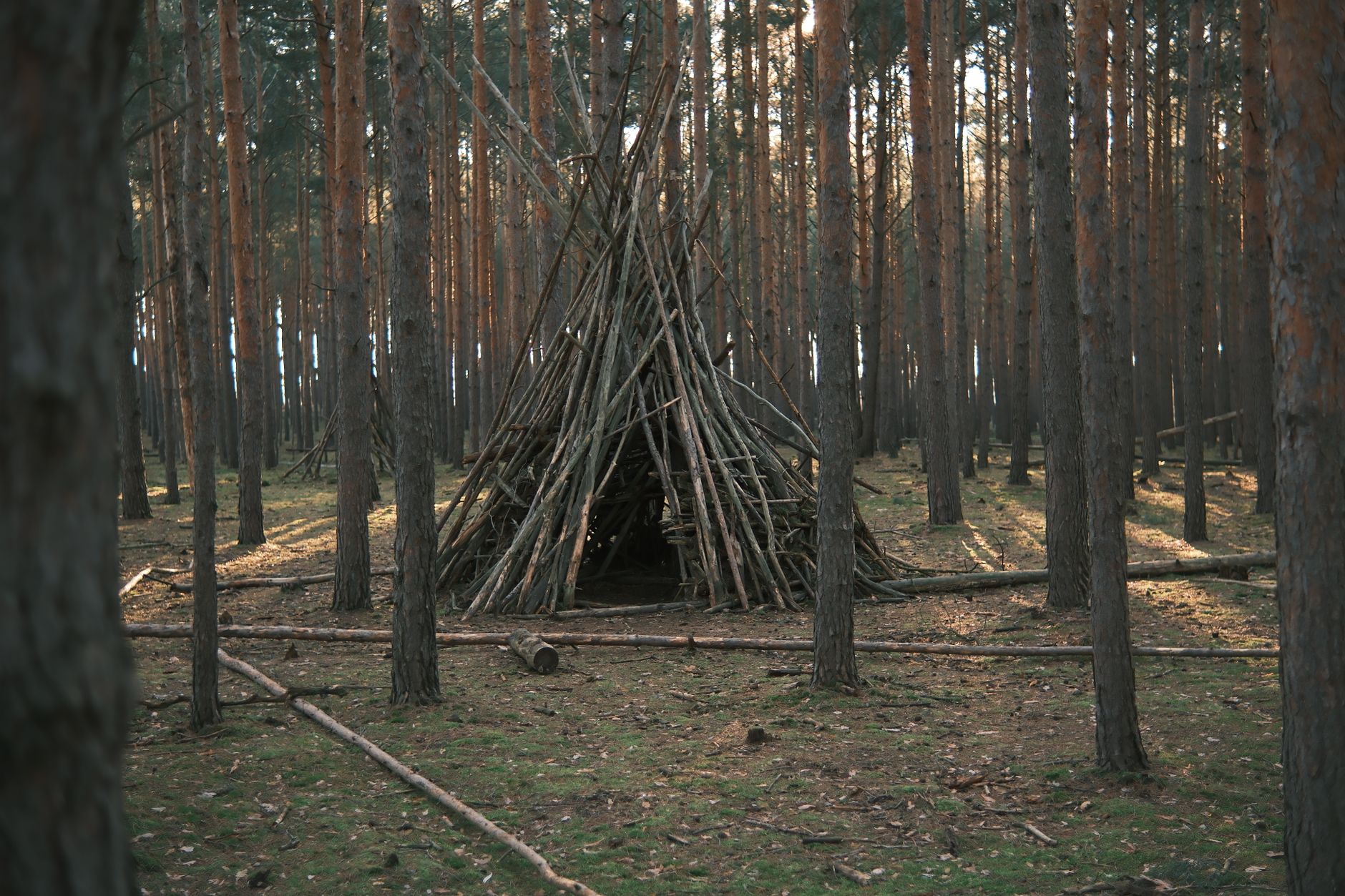
The debris hut is a genuine last-resort technique and every honest source says the same thing: it takes two to four hours to build properly and is worthless if built badly. Ridgepole at hip height on a stump or fork, ribbing leaned along both sides, then 60 cm or more of leaf litter, ferns and boughs piled over the whole frame. The interior should be barely bigger than your body — you are heating it with 100 W of yourself. Plug the entrance with a pack once you are inside.
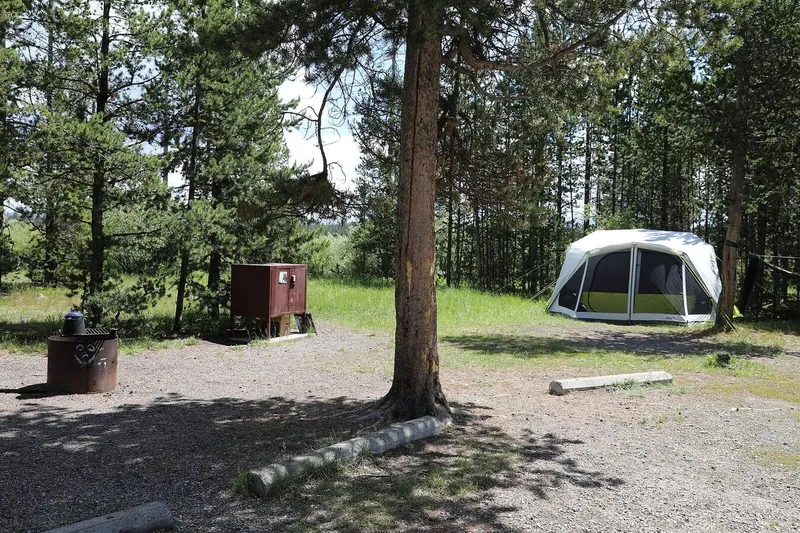
If you have a tent in the car, use the tent. Building a debris hut when a functioning shelter exists is a hobby, not survival.
On a BC forest service road in a storm, or stuck on a snowed-in highway pull-out, the vehicle is the shelter and the correct answer is almost always stay with it. It is warm, dry, windproof, visible from the air, and searchers look for vehicles.
Before you drive a forest road at all: tell someone your route and your return time. That single message is the difference between a search that starts at 9 pm and one that starts in three days.
You will not diagnose your own hypothermia. Judgement is one of the first things it takes. Watch your group.
What to do: stop moving, get the person out of wind and rain, remove wet clothing and replace it with dry, insulate from the ground, wrap them including the head, and give warm sweet drinks only if they are fully alert. Body-to-body warming inside a shared bag works. Do not rub the limbs and do not put a severely hypothermic person near a hot fire — rapid rewarming of cold extremities can push cold blood to the core.
A severely hypothermic person is a medical emergency and must be handled gently: rough movement can trigger cardiac arrest. Call for help. More detail on first aid and hypothermia.
There is no single number, because wet and wind matter more than the thermometer. Hypothermia routinely happens at +5 to +10°C when someone is wet and exposed to wind. Dry, still and 0°C is far safer than wet, windy and +5°C.
Almost always yes. The vehicle is shelter, it is visible from the air, and searchers look for vehicles. Clear snow from the exhaust before running the engine, run it intermittently, and only consider walking out in daylight when you know the distance and nobody is coming.
On its own, rarely. It reflects radiant heat but does nothing about conduction into the ground and traps condensation against you. Use it as a reflector or an outer wrap over real insulation, and prioritise getting 10–20 cm of material between yourself and the ground.
Two to four hours to build one that actually works, with roughly 60 cm of piled debris over the frame. That is why it is a last resort. If a tent, tarp or vehicle is available, use it instead.
Not legal or medical advice. Current regulations, park signage and professional training override this page. Emergency 911 · RAPP wildlife line 1-877-952-7277 · Report a wildfire 1-800-663-5555. Updated 2026-09-27.
More BC camping