FanVancouver · Local guide
Bear Safety in BC — The Encounter Protocol That Actually Works
Black bear vs grizzly, the BC Parks encounter sequence, how bear spray actually works, legal food storage and what to do in a charge.
FanVancouver · Local guide
Black bear vs grizzly, the BC Parks encounter sequence, how bear spray actually works, legal food storage and what to do in a charge.
Home · BC Camping · Survival · Black & grizzly bears
Wildlife · Food storage · Bear spray · Charges
Black bears live in every part of British Columbia, including suburbs. The aim is never to win an encounter — it is to be boring, predictable and far away before the bear has a decision to make.
Black bears (*Ursus americanus*) occur across the whole province, from the North Shore trails to the Kootenays. Grizzlies (*Ursus arctos*) hold ground in large intact systems — the Coast Range, the Chilcotin, the north, and pockets of the Interior — and BC Parks notes they no longer live in parts of their historic range. Check the individual park page before you go; that one click tells you which species you are planning around.
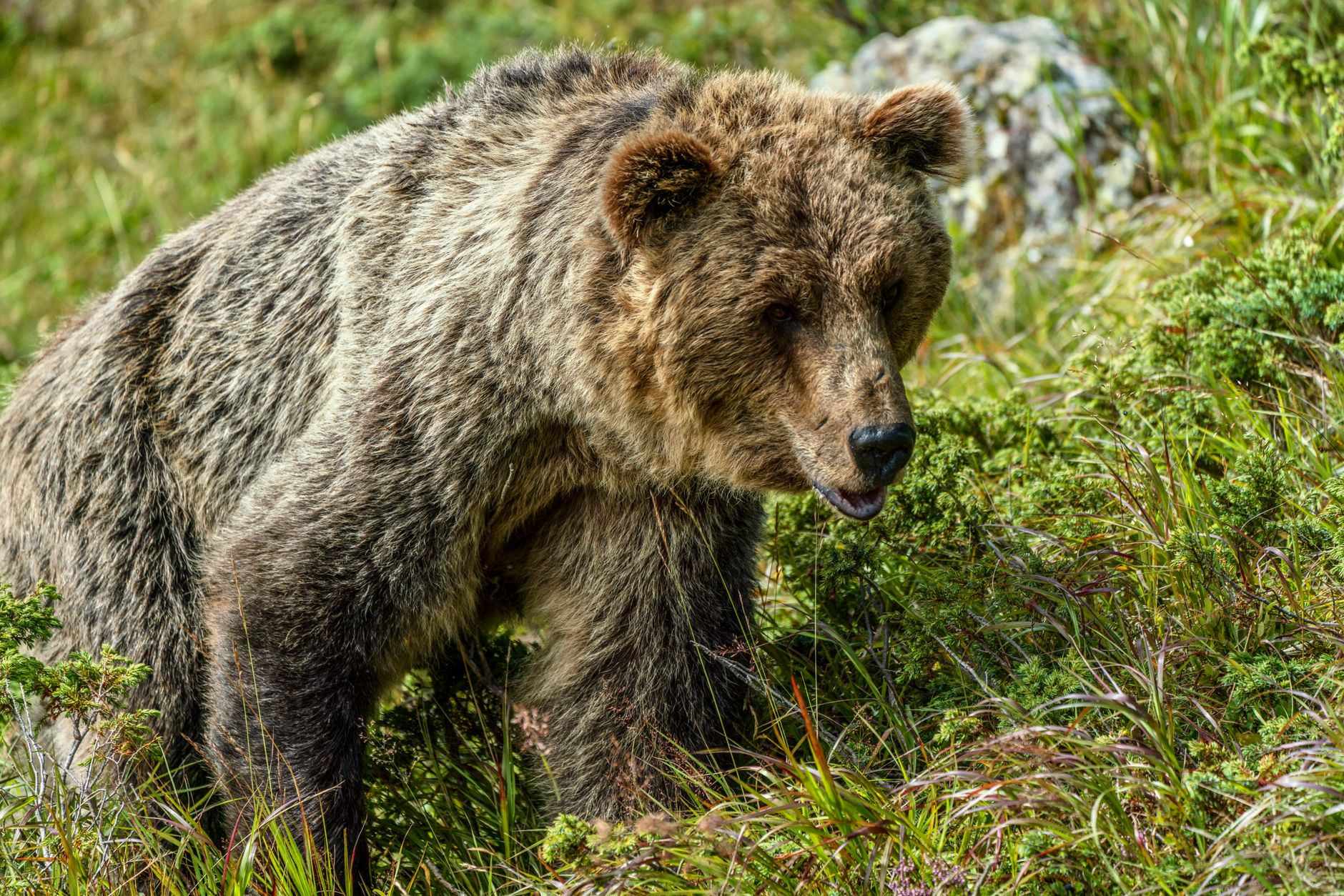
Colour is the worst identifier in the field. BC black bears are routinely brown, cinnamon or blond. The reliable cues are shape: a grizzly usually shows a muscular shoulder hump, a dished (concave) face profile, short round ears and long front claws; a black bear has a straighter facial profile, taller pointed ears and a rump higher than the shoulder.
Here is the honest part. At 25 m in salmonberry brush, with adrenaline running, most people cannot make that call. That is fine, because the first six moves of the protocol are identical for both. Species only changes the very last decision — what you do if the animal makes contact.
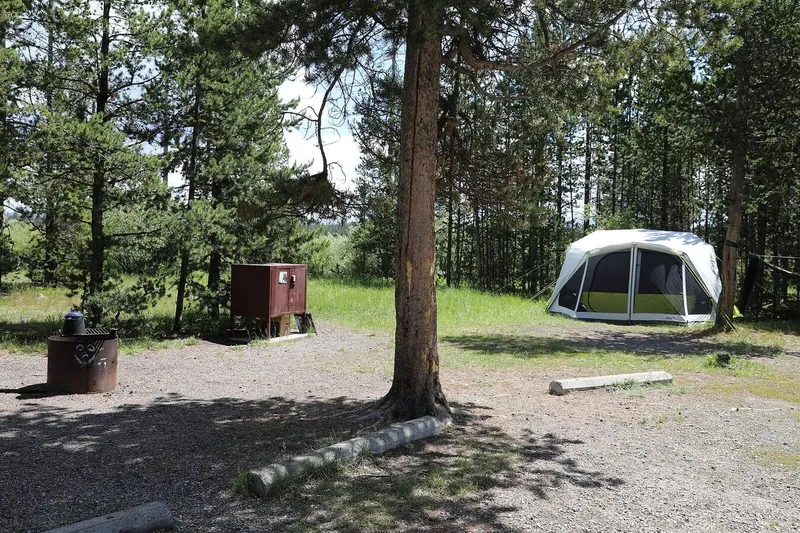
BC Parks is blunt about attractants, and its list is longer than most campers expect. All of the following must be locked in a hard-sided vehicle, hard-sided trailer, bear-resistant locker or approved canister whenever you are asleep or away from your site — even for one minute:
The rest of prevention is habit, not equipment. Keep the site bare when you are not there or sleeping. Lock the car — BC Parks specifically warns that bears have learned to open car doors. Cook and eat away from where you sleep. Strain dishwater and pack out the solids. Never dump grey water at the edge of the site.
On trail, BC Parks recommends moving mid-morning to late afternoon rather than dawn, dusk or dark; staying on designated trails; travelling in a tight group with children in the middle; and keeping dogs leashed. An off-leash dog that finds a bear will bring it back to you at speed, which is the single most avoidable way people get hurt.
Carry it on your hip belt or shoulder strap. Bear spray inside a pack is a paperweight — you will not get it out inside the four seconds a charge takes.
Legally, bear spray is sold and carried in Canada as a wildlife deterrent. It is an offence to carry it as a weapon against people, and you cannot take it in aircraft cabin or checked baggage — buy it after you land.
This is the BC Parks sequence, in order. Do not improvise the order.
Nearly every serious encounter in BC starts in one of three situations, and all three are avoidable if you can read the ground.
Cubs. If you see a cub, the sow is close and she may be between you and your exit. Do not move toward the cub for any reason. Back out along your entry path, talking, and widen the distance to well past 100 m before you relax.
A carcass or a fresh kill. Signs are a rank smell, scattered fur, ravens circling and low, or a mound of dirt and branches raked over something. A bear on a carcass is at its most defensive. Leave immediately and report the location to park staff.
A concentrated food source. In late summer BC bears feed hard on salmonberry, huckleberry and salal, and on spawning channels from September. Berry thickets on both sides of a narrow trail are a blind corner with a food reward at the end — this is where you make noise, keep the group tight, and consider turning around.
Make noise the useful way: talk, call out on blind corners, sing badly. Research on bear bells is unimpressive; the human voice carries the correct information, which is that a human is here.
Leave the area the way you came in, if that is safe. Do not loop back for a photograph.
Report the encounter. Aggressive behaviour, a bear that follows you, or any food-conditioned bear goes to the Report All Poachers and Polluters (RAPP) line at 1-877-952-7277, or #7277 on the TELUS network. Tell the campground operator too. Your report is what stops the next person from being a statistic and, often, what gets a bear relocated instead of destroyed.
Check yourself and everyone else for injuries. Adrenaline hides puncture wounds and sprains for about twenty minutes. Any bear-contact injury goes to a hospital — claw and tooth wounds are contaminated wounds.
If your group includes children, debrief calmly the same evening. The story they take home should be "we did the right thing and it worked," not a horror film.
Make noise from inside a hard-sided vehicle or building if you can get to one safely — shout, use a car horn. Do not go outside to confront it. A bear working a campsite at night is looking for food, which means the site has an attractant problem. In the morning, find and remove the attractant, and report the bear to the park operator and to RAPP at 1-877-952-7277.
Not in a frontcountry campground. BC Parks specifically asks campers not to hang food there, because the scent draws animals into the whole camping area. Use your locked hard-sided vehicle, a hard-sided trailer or a bear-resistant locker. Hangs and canisters are for backcountry sites without those options.
Yes — it is the standard deterrent for both species in BC, and BC Parks notes it also stops cougars, wolves and coyotes. It works when it is on your belt, unexpired, and deployed at your canister's rated range with the wind behind you.
BC Parks sets the viewing distance for predators — bears, wolves, coyotes and cougars — at a minimum of 100 m, about ten bus lengths. For deer, moose, elk and wild sheep it is 30 m. If an animal changes its behaviour because of you, you are already too close.
No, not as a plan. Black bears climb well, and a grizzly can reach several metres up. By the time you have found a climbable tree, the encounter has already progressed past the point where the protocol works.
Not legal or medical advice. Current regulations, park signage and professional training override this page. Emergency 911 · RAPP wildlife line 1-877-952-7277 · Report a wildfire 1-800-663-5555. Updated 2026-09-27.
More BC camping