FanVancouver · Local guide
Coyote Safety — Campground Edges, Kids and Pets in BC
Coyote behaviour in BC campgrounds, parks and city edges: correct hazing technique, protecting pets and children, and what makes them bold.
FanVancouver · Local guide
Coyote behaviour in BC campgrounds, parks and city edges: correct hazing technique, protecting pets and children, and what makes them bold.
Home · BC Camping · Survival · Coyotes
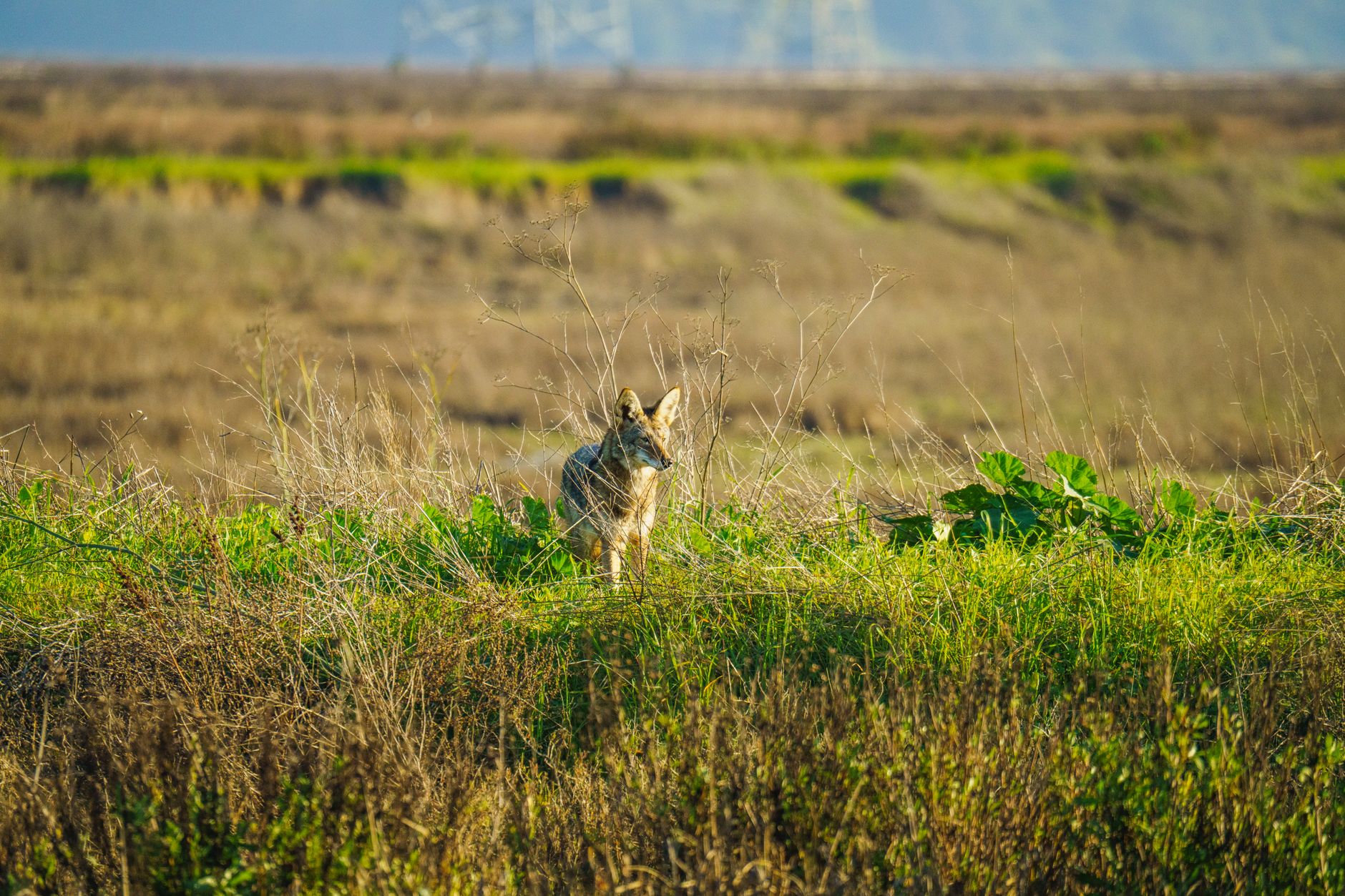
Wildlife · Pets · Hazing · Urban edge
Coyotes are the wild animal you are most likely to actually meet in BC, and the one whose behaviour is most directly manufactured by humans. Bold coyotes are fed coyotes.
A coyote weighs 9–16 kg — the size of a border collie. On its own it poses almost no threat to an adult. The problem is behavioural drift: a coyote that gets food from people stops treating them as a hazard and starts treating them as a vending machine.
Vancouver's Stanley Park provided the clearest case study in recent memory. Through 2020 and into 2021, a cluster of coyotes attacked dozens of people in the park before a cull ended it; investigators tied the behaviour to sustained human feeding. Nothing about those animals was unusual. What was unusual was the amount of food they had been handed.
The lesson transfers directly to campgrounds. A coyote patrolling a loop at dusk has learned that loop pays. Every unattended plate extends the lesson.
Hazing means making yourself unpleasant enough that the animal relearns avoidance. Half-hearted hazing is worse than none, because it teaches the coyote that shouting has no consequences.
Cats and dogs under about 12 kg are prey-sized. This is not alarmism; it is the size of the animals coyotes hunt naturally.
Coyotes thrive where wild land meets human infrastructure: trailheads, campground edges, valley towns, the North Shore, and the Metro Vancouver park system.
Report an aggressive or fearless coyote to RAPP, 1-877-952-7277. In city parks, report to the local municipality as well.
Coyotes are the most adaptable large predator in British Columbia and the one you are most likely to meet, because they live where people live.
Season matters. Coyotes are boldest and most defensive from April through August, when pups are in a den and adults will escort you away from it. Reported conflicts in Metro Vancouver cluster in exactly that window, and the animal that shadowed you for 200 m along a trail was almost certainly walking you past a den rather than hunting you.
A BC coyote is 9–16 kg — the size of a border collie, and much lighter than it looks in a winter coat. That is worth knowing before you decide what a "big" coyote can do.
People report wolves in Metro Vancouver several times a year. They are almost always coyotes.
| Feature | Coyote | Wolf |
|---|---|---|
| Weight | 9–16 kg | 30–60 kg |
| Ears | Large, pointed, tall for the head | Short, rounded, small for the head |
| Muzzle | Narrow, pointed, fox-like | Broad and blocky |
| Tail carriage | Held down, often below the back line | Held straight out or level |
| Legs | Slender | Long, heavy-boned, large feet |
| Where | Cities, farmland, park edges, everywhere | Remote coast, interior, rarely near cities |
If it is in a Vancouver neighbourhood, it is a coyote. If it is on the north coast, on an outer island, or deep in interior wilderness, consider wolves.
Almost every serious coyote incident involving a child in North America has one of two ingredients: a food-conditioned animal, or a small child alone and moving at ground level.
Attacks on people in BC are rare and almost never serious, but the ones that do happen are overwhelmingly in food-conditioned populations. The prevention is boring and it works.
Report to the Conservation Officer Service RAPP line, 1-877-952-7277, or #7277 on TELUS Mobility, when a coyote:
Do not report a coyote simply for existing in your neighbourhood. They are permanent residents of every city in southern BC, and a coyote crossing a road at 4 am is a coyote doing its job.
Rarely. A healthy coyote avoids adults. Bites do happen where animals have been fed heavily and lost their fear — the Stanley Park cluster in 2020–21 is the clearest BC example. Correct hazing restores normal avoidance behaviour in most cases.
Hazing is making yourself loud, large and unpleasant so the coyote relearns that people are worth avoiding. It is not intended to injure — you throw objects toward the animal to startle it. Done consistently by everyone in an area, it is what keeps coyotes wild and alive.
Shorten the leash so the dog is at your side, face the coyote, get big and loud, and back away together. Do not let the dog charge and do not turn your back. Report the encounter if the coyote showed no fear.
Rarely, and almost never seriously — but the incidents that do occur are concentrated in food-conditioned animals, and children are the group at risk. Never feed them, keep children within arm's reach at dawn and dusk, and haze any coyote that approaches instead of tolerating it.
Usually escorting, not hunting. From April through August adults will shadow you until you are clear of a den, typically at a fixed distance and without closing. Keep walking calmly in the direction you were going, keep dogs leashed and close, and do not run.
In or near any BC city it is a coyote. Coyotes weigh 9–16 kg with tall pointed ears, a narrow muzzle and a tail carried low; wolves weigh 30–60 kg with short rounded ears, a blocky muzzle and a tail carried straight out, and they live far from urban areas.
Not legal or medical advice. Current regulations, park signage and professional training override this page. Emergency 911 · RAPP wildlife line 1-877-952-7277 · Report a wildfire 1-800-663-5555. Updated 2026-09-27.
More BC camping