FanVancouver · Local guide
Wolf Safety in BC — Coastal Wolves, Dogs and Habituation
The BC Parks wolf encounter sequence, coastal wolf habitat and beach camping rules, why dogs trigger most incidents, and when to report.
FanVancouver · Local guide
The BC Parks wolf encounter sequence, coastal wolf habitat and beach camping rules, why dogs trigger most incidents, and when to report.
Home · BC Camping · Survival · Wolves
Wildlife · Coastal camps · Dogs · Habituation
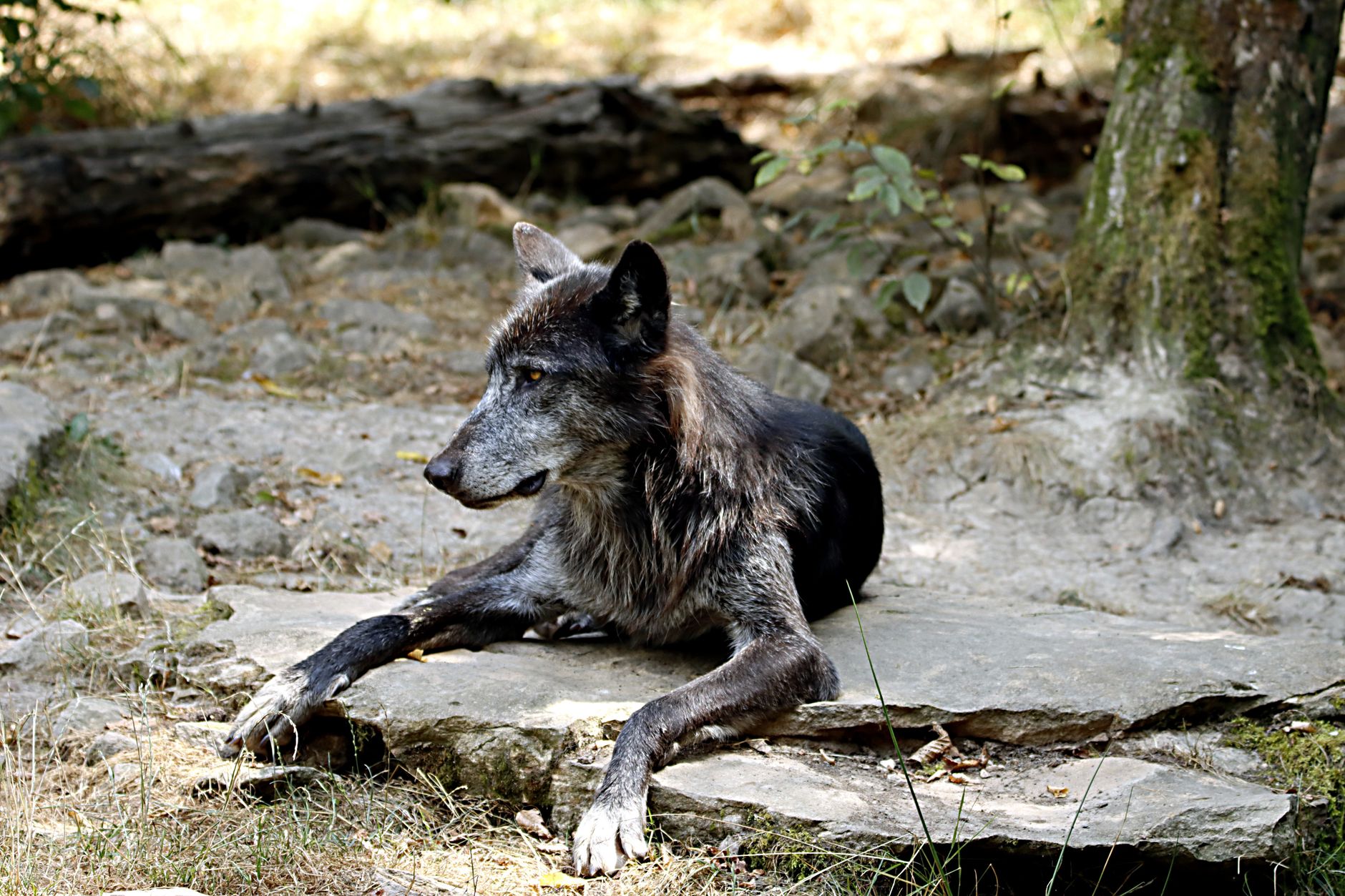
Wolves normally avoid people entirely. Nearly every dangerous encounter in BC traces back to two things humans control: food conditioning and off-leash dogs.
BC has wolves across most of the province, but the encounters that make the news cluster on the coast — Vancouver Island, the Great Bear Rainforest, the Broughton and Clayoquot areas — and in a handful of heavily used interior parks where animals have learned that campsites contain calories.
Coastal wolves are a distinct ecological story. They swim between islands, and BC Parks notes they feed heavily on what washes up: seal, sea lion and whale carcasses. Beaches are core habitat, not empty space. A tent pitched at the top of a beach where a carcass is decomposing is a tent inside a feeding station.
Habituation is the mechanism to understand. A wolf that sees people daily and is never punished for approaching gradually loses its wariness. Add a single food reward — a fish carcass cleaned at the water's edge, a dropped bag of trail mix — and habituation becomes food conditioning, which is when animals start following people. Parks Canada and BC Parks have both had to destroy conditioned wolves at popular coastal campsites. That outcome starts with somebody's convenience.
BC Parks gives a specific sequence for a wolf that acts unafraid or aggressive:
If you are kayaking or beach-camping anywhere on the BC coast, these are not optional:
BC Parks is direct about this: dogs attract wolves, especially during breeding and pup-rearing in spring and summer, and it advises against bringing dogs into areas with known resident packs at those times.
The mechanism is territorial rather than predatory. A dog is a canid intruder. A loose dog that meets a pack will usually run — straight back to its owner, with the pack behind it. Leash your dog, keep it inside the tent or vehicle at night, and do not tie it out unattended.
If wolves have your dog's attention across a clearing, shorten the leash, get large, make noise and back out. Do not release the dog so it can "defend itself" — that is how dogs die.
Report any wolf that lingers near a campsite, follows people, shows no fear, or has been fed. Call RAPP at 1-877-952-7277 (or #7277 on TELUS) and tell the park operator.
There is a hard truth in reporting. A habituated wolf usually ends up destroyed, and people delay reporting because they do not want that. Delay does not save the animal — it just moves the destruction later, after somebody has been bitten. Early reports occasionally allow non-lethal management such as aversive conditioning or a temporary campground closure. Late ones never do.
British Columbia holds one of the largest wolf populations in North America, across essentially the whole province outside the southwest urban core.
Size: 30–60 kg. Packs: typically 4–8. Activity: most often at dawn, dusk and night, but coastal wolves are freely active in daylight on beaches at low tide.
Attacks on people in BC are extremely rare, and the recorded ones share a single cause — habituation, driven by people leaving food and by people feeding wolves for photographs. A wild wolf avoids you entirely. A wolf that has learned about camp food is a different animal.
Not every wolf you see is a problem, and reacting to a curious one as if it were an aggressive one wastes energy and teaches you nothing.
| Behaviour | What it means | What you do |
|---|---|---|
| Sees you, leaves immediately | Normal wild wolf | Nothing. Enjoy it |
| Watches from distance, does not approach | Curiosity, or a den nearby | Move away calmly, do not linger |
| Approaches slowly, tail neutral, circling | Investigating, possibly habituated | Group up, get big, shout, throw things |
| Follows at a fixed distance for a long way | Testing, or escorting you past a den or rendezvous site | Keep facing it periodically, keep moving, do not run |
| Approaches directly, ears forward, no hesitation | Habituated and bold — the dangerous version | Act aggressively now, immediately, before it gets closer |
| Howling nearby at night | Normal pack communication | Nothing. It is not a hunt signal |
Growling, snapping, or a wolf that stands its ground when you advance is a serious animal. So is any wolf circling a camp at close range at night.
The rules that prevent habituation are the same ones that prevent bear problems, applied harder — because wolves are more interested in your boots than your food.
Healthy wild wolves avoid people and are not a meaningful risk. The documented BC incidents involve habituated or food-conditioned animals, mostly at popular coastal camping beaches, and often involve dogs. Manage attractants and leash your dog and your risk is close to zero.
BC Parks sets 100 m minimum on land for predators and 200 m from a boat or kayak. Photograph with a telephoto lens. Approaching is how a wild wolf becomes a destroyed wolf.
BC Parks advises avoiding areas with known resident packs, particularly in spring and summer when wolves are breeding and raising pups. If you do bring a dog, keep it leashed at all times and inside a tent or vehicle overnight.
Get large, get loud, gather children and pets, and throw sticks and rocks at it if it comes closer than about 100 m. Back away slowly, never turning your back. Use bear spray if it closes to within your canister's range, and report it afterwards.
Wild wolves avoid people, and attacks in BC are extremely rare. The recorded incidents almost all involve habituated animals on the west coast of Vancouver Island and the central coast, where people left food out or fed wolves for photographs. Store everything, never feed them, and report bold behaviour.
Do not run. Group up, make yourself large and loud, back away while facing it periodically, and throw sticks or rocks toward it if it keeps closing. A wolf that approaches directly without hesitation is habituated — act aggressively straight away rather than waiting to see what it does.
Yes — coastal BC wolves are known for chewing and carrying off boots, drybags, paddles, PFDs and fishing gear, not just food. On outer-coast and kayak trips, lock or stow everything overnight and do not pitch a tent on the wolf trail that runs along the back of the beach.
Not legal or medical advice. Current regulations, park signage and professional training override this page. Emergency 911 · RAPP wildlife line 1-877-952-7277 · Report a wildfire 1-800-663-5555. Updated 2026-09-27.
More BC camping