English
 Español
 Français
 Deutsch
 Українська
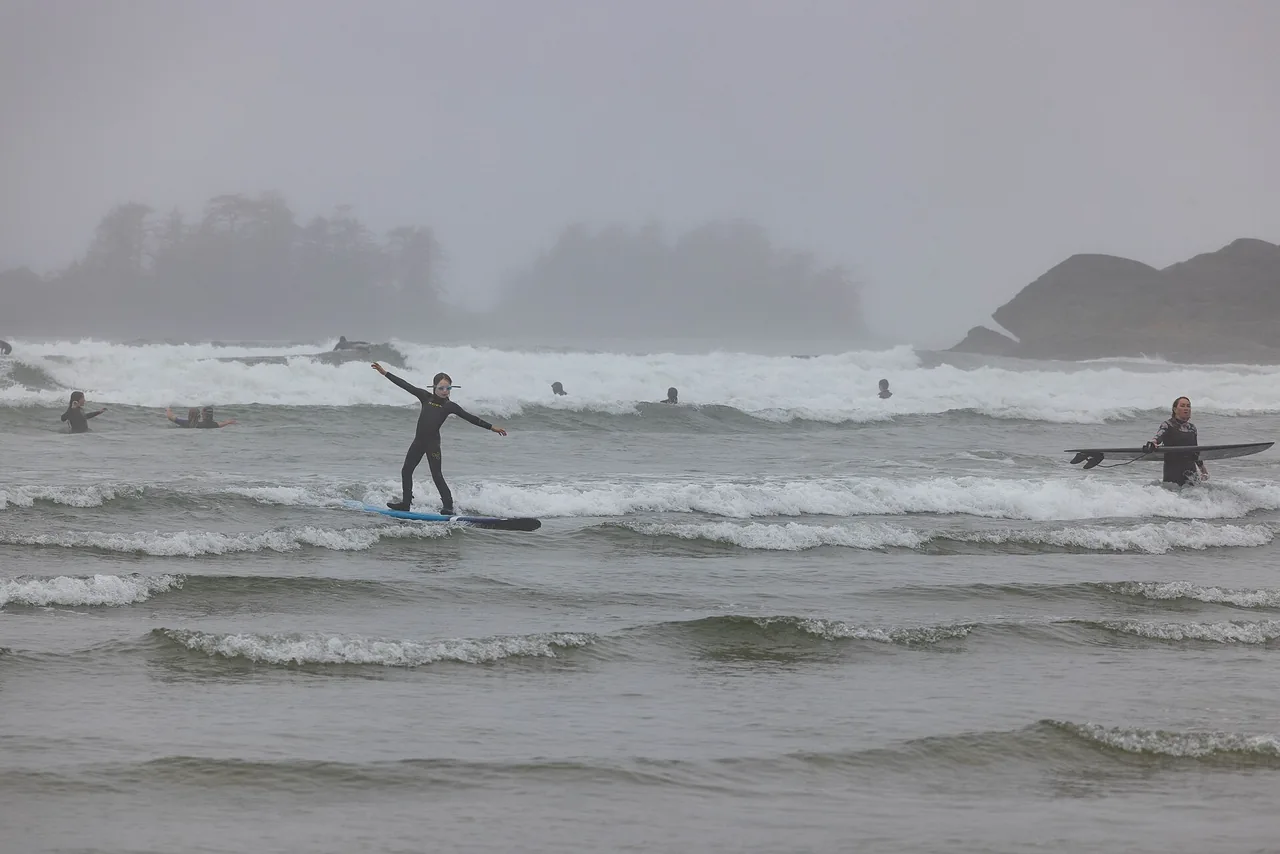
📷 More frames like the hero shot — surf, storms and rainforest — in the Tofino photo gallery.
🏖 The beaches, ranked honestly
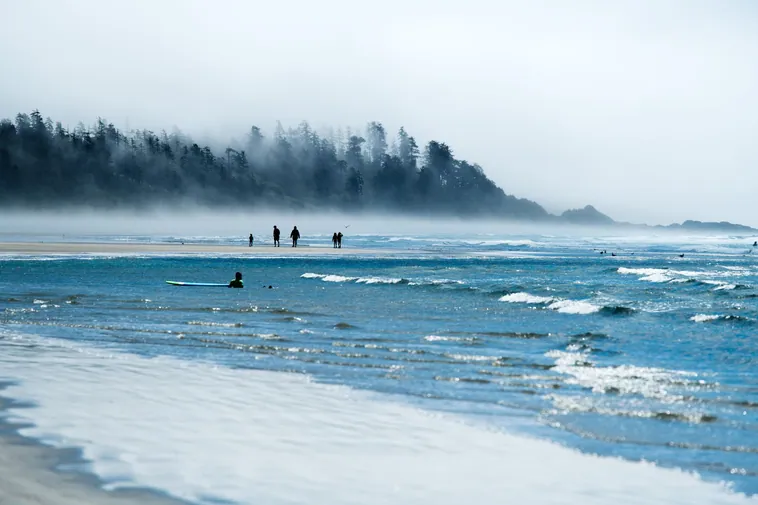
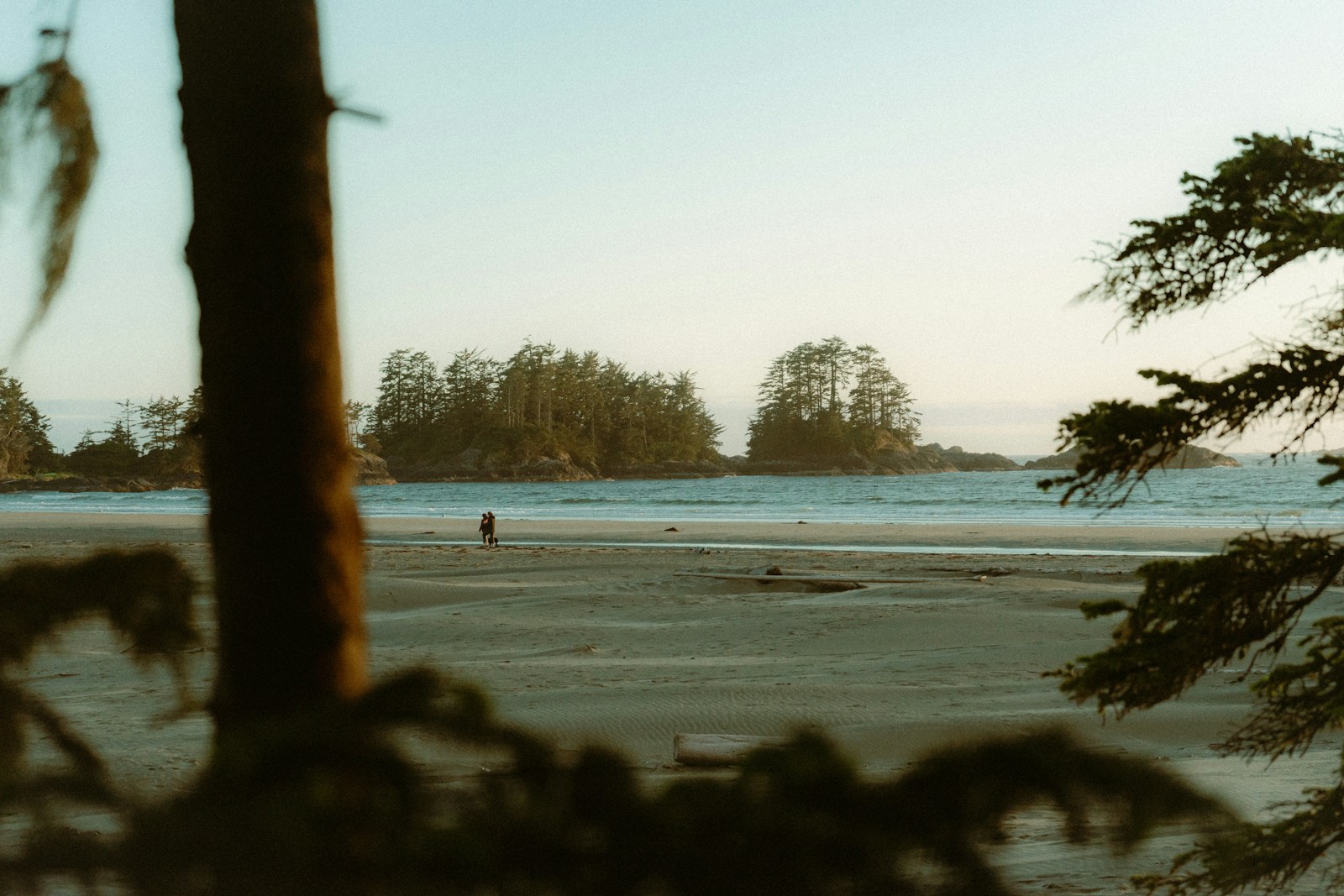
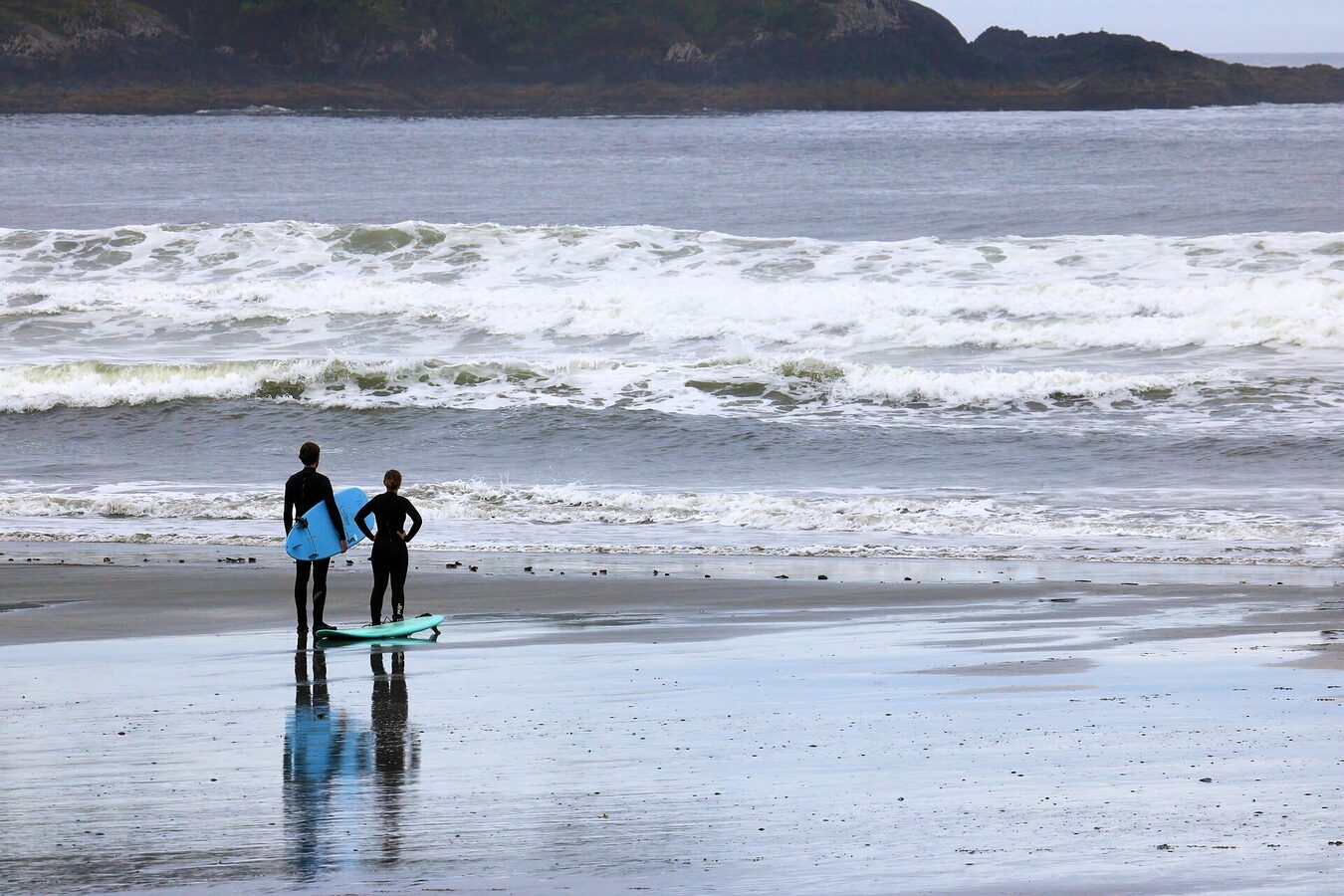
🎓 Lessons & gear — who to book
Surf Sister — the legendary (originally all-female, now for everyone) school; certified instructors, group lessons ~$99+tax · surfsister.com
Pacific Surf Co. — lessons, camps and rentals at Cox Bay's Surf Grove · pacificsurfschool.com
Long Beach Lodge Surf Club — lesson-plus-hot-tub luxury on Cox Bay · longbeachlodgeresort.com
Swell Tofino — surf + SUP + bikes in town · swelltofino.com
Gear-only: board + wetsuit + booties ≈ $40–60/day all over town. Book lessons a few days ahead in July–August.
🏄 How to choose a board (honest, not branded)
Tofino’s beaches are wide and sandy — forgiving for learning, unforgiving if you bring the wrong board for your body and the day’s swell. Ignore brand rankings. Choose by volume and stability, then by ambition.
- Beginner foam / soft-top (often 8–9+ ft): thick, buoyant, soft rails. You catch whitewater early, fall less painfully, and learn pop-ups without fighting the board. Nearly every first lesson here starts on foam — and that’s a feature, not a consolation prize.
- Longboard / mid-length (hard top): once whitewater feels easy, a longer hard board still prioritises glide and early wave entry. Better for Chesterman’s mellower peaks than for punching through Cox Bay’s heavier sets.
- Shortboard: lower volume, steeper learning curve. Only worth it when you can consistently paddle into unbroken waves and recover from wipeouts in cold, moving water. Bringing a performance shortboard on day one is how people spend the afternoon swimming after their board.
Lesson packages include the right foam board. If you rent on your own, tell the shop your height/weight and honest experience — local shops (see below) size you better than any internet “best boards” list.
🧊 Wetsuits for Pacific Northwest water
The ocean here does not care that it is August. Typical surface temps run roughly 7–15 °C across the year — cold enough that “I’ll just tough it out in a spring suit” is how trips end early. Local schools and rental shops outfit you; if you buy or pack your own, this is the honest thickness map most Tofino instructors echo:
| Season | Typical suit | Extras |
|---|---|---|
| May–September | 4/3 mm fullsuit (some warm days allow a thick 3/2 — still bring boots) | Booties standard; gloves optional on windy days |
| Shoulder (Apr / Oct) | 4/3 or 5/4 depending on your cold tolerance | Boots + consider hood |
| November–March | 5/4 mm (or thicker) with sealed seams | Hood, gloves, boots — non-negotiable for most people |
Fit matters more than the number on the label. A loose 5/4 that floods is colder than a snug 4/3. Shoulders should move without ballooning at the chest; wrists and ankles should seal. If you can pinch a fistful of neoprene at the lower back, size down. Schools such as Surf Sister and Pacific Surf School include correctly sized suits with lessons — use that fitting as your reference.
Seasonal note: thickness guidance is general Pacific NW practice, not a medical claim. Cold-water shock is real — enter gradually, and never surf alone in winter swell.
📅 Seasons — what you're really signing up for
| Season | Waves | Best for |
|---|---|---|
| May–Sep | Small, clean, friendly | First-timers, families — this is lesson season |
| Oct–Mar | Big Pacific storm swell | Experienced surfers + top-tier storm-watching from the lodges |
| Apr / shoulder | Mixed | Quieter beaches, better lodging prices |
Water: 7–15°C year-round. A 4/3 or 5/4 wetsuit + boots (hood and gloves in winter) is non-negotiable — schools provide everything.
📖 Best season to visit — the literary version
Come in July or August if you want the softest introduction: smaller, cleaner peaks, longer evenings, and the pleasure of peeling a cold-water grin off your face after a first green wave. The beaches fill; book lessons and beds early. Come in September through early October if you want the same coastline with more empty sand — swell builds, lodging softens, and the light turns copper over Cox Bay.
Winter is another country: Pacific storms stack horizon-to-horizon, lodges sell storm-watching packages, and the water belongs to people who already know what a closeout feels like. Beginners watch from the lookout with hot chocolate; experts paddle with buddies and respect. April–May is the quiet bargain — grey whales on migration, shoulder rates, and beginner-friendly days returning between front systems.
Pair this page with the full Tofino guide for beaches, camping and kid-safer coves.
🚗 Getting there from Vancouver
1 · BC Ferries Horseshoe Bay → Departure Bay (Nanaimo), ~1 h 40 min — reserve with a car in summer (bcferries.com).
2 · Drive Highway 4 west via Port Alberni, Cathedral Grove's giant cedars and Kennedy Lake — ~3 h of the best road-trip scenery in Canada. Fuel up in Port Alberni.
3 · No car? Tofino Bus / IslandLinkBus runs from Nanaimo, or fly YVR South Terminal → Tofino–Long Beach in ~45 min (Pacific Coastal).
Make it a loop: pair with Victoria on the way back, or whale watching from Tofino itself — grey whales feed right off the surf beaches.
❓ BC surfing — FAQ
Can you surf near Vancouver?
Not in the city — English Bay is flat. The nearest real surf is on Vancouver Island's west coast: Tofino (the classic), and the wilder south-island breaks at Jordan River and Sombrio Beach, about 2 hours from Victoria. Tofino is worth the trip: it's Canada's surf capital.
How do I get from Vancouver to Tofino?
Ferry + drive: BC Ferries from Horseshoe Bay to Nanaimo (~1 h 40 min), then a spectacular 3-hour drive across the island via Port Alberni — about 6 hours door to door. Alternatives: a 45-minute Pacific Coastal/Harbour Air flight, or an overnight in Victoria first. Book summer ferries with a vehicle in advance.
How much do surf lessons cost in Tofino?
Group lessons often land around the ~$99+tax range (verify current rates on school sites) for a 2.5-hour session with roughly a 5:1 student-instructor ratio, wetsuit and board included (Surf Sister, Pacific Surf School and others). Gear-only rentals are about $40–60 a day for board + wetsuit + booties.
When is the best time to surf in Tofino?
Beginners: May–September — smaller, cleaner waves and milder water. Experienced surfers chase October–March, when Pacific storms deliver the biggest swell (and the famous storm-watching). The water stays cold year-round (7–15°C) — a 4/3 or 5/4 wetsuit with boots is standard even in August.
Do I need to be a strong swimmer to try surfing in Tofino?
Schools ask for basic swimming ability and usually take ages 12+. Beginner lessons happen in waist-deep whitewater on wide sandy beaches — it's one of the most forgiving places in the world to learn, cold water aside.
Build the full west-coast trip
Everything else Tofino: our complete Tofino guide (beaches, hikes, hot springs, where to stay). Getting organized: camping bookings, campfire rules and the live wildfire map before any summer road trip.