FanVancouver · Local guide
Campfire Craft in BC — Legal, Wet-Weather and Lifesaving
Current BC fire prohibitions and fines, Category 1-3 explained, the tinder ladder, lighting wet coastal wood, and putting a fire dead out.
FanVancouver · Local guide
Current BC fire prohibitions and fines, Category 1-3 explained, the tinder ladder, lighting wet coastal wood, and putting a fire dead out.
Home · BC Camping · Survival · Fire craft
Skills · Bans · Wet wood · Extinguishing
Fire is warmth, dry socks, boiled water, signal and morale. It is also how 2,000 square kilometres of British Columbia burns in a bad August. Learn the craft; obey the ban.
Before you strike anything, check whether open fire is prohibited where you are going. Prohibitions are set by fire centre — Coastal, Kamloops, Southeast, Cariboo, Prince George, Northwest — and they change through the season with drought conditions. Check the current BC fire bans and the live fire map the morning you leave, not the week before.
The categories mean specific things:
| Category | What it covers | Typical status in a dry August |
|---|---|---|
| Category 1 | Campfires — a fire under 0.5 m high and 0.5 m wide, for cooking or warmth | First to be banned in the Coastal and Kamloops centres |
| Category 2 | Open fires up to 2 m by 3 m, or up to two concurrently burning piles, grass burning under 0.2 ha | Usually banned before Category 1 |
| Category 3 | Anything larger — piles over 2 m by 3 m, windrows, land clearing | Banned earliest, requires a burn registration number |
Individual parks and municipalities can also ban fires when the province has not, and BC Parks campgrounds sometimes prohibit fire in specific loops year-round. The kiosk board at your loop overrides everything on this page.
When a ban is on, the answer is a stove. Most bans still permit CSA- or ULC-rated appliances that burn gas, propane or briquettes with a flame controllable by a valve — but confirm, because a total campfire ban sometimes extends to charcoal and portable fire pits.
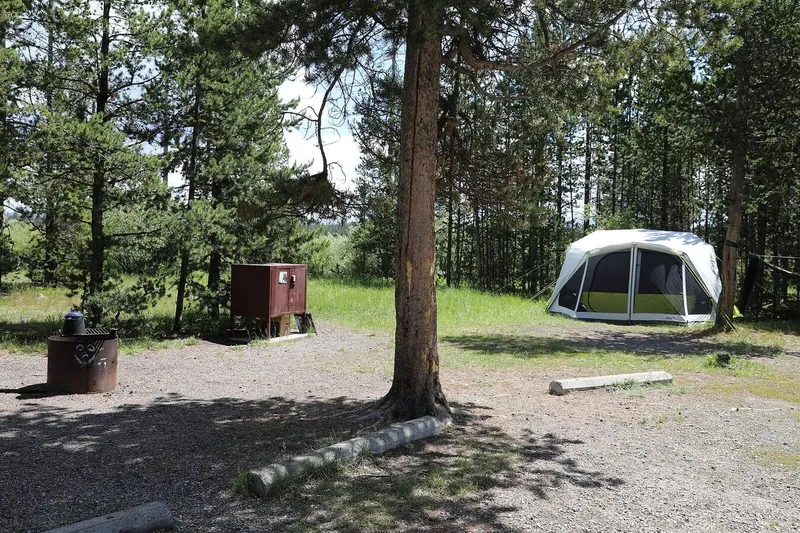
In a BC Parks campground, use the metal ring provided and nothing else. Building a new ring is a rule violation and leaves a scar that outlives you.
In the backcountry, where legal:
Fire is not a thing you light; it is a sequence of sizes, each igniting the next. Skip a rung and it dies.
Take dead branches still attached to standing dead trees, at chest height. Wood on the ground has spent the night absorbing the coast. The snap test: dry wood snaps crisply, wet wood bends and tears.
Add only after a stable bed of coals exists. Piling a wrist-thick log onto flame is the most common way beginners smother their own fire.
Anyone can light a fire in Kamloops in July. The skill that matters here is coastal: everything soaked, everything mossy, drizzle at 6°C.
More escaped fires in BC come from bad extinguishing than from bad lighting. A fire left "basically out" at 11 pm can be an open flame at 2 am when the wind comes up.
Scatter cold ash only where the park permits it. In a campground, leave the ash in the ring for the operator.
If you see smoke or flame that is not a managed campfire, report it. 1-800-663-5555, or *5555 from a cell. Give the location as precisely as you can — road name and kilometre marker, GPS coordinates from your phone's compass app, or a landmark and a bearing.
The BC Wildfire information line is 1-888-336-7378. Burn registration is 1-888-797-1717.
It depends on your fire centre and the specific park, and it changes weekly through the summer. Check the province's fire prohibition page and your park's kiosk board on the day. Our campfire page tracks the current picture, park by park.
A violation ticket is $1,150. An administrative penalty can reach $10,000, and a court conviction up to $100,000 and/or a year in jail. If your fire causes a wildfire, penalties reach $1,000,000 and/or three years in jail, plus the cost of fighting it.
Usually yes. Most BC campfire prohibitions still allow CSA- or ULC-rated cooking appliances burning gas, propane or briquettes with a valve-controlled flame — but a total ban can extend further, so read the specific prohibition order for your fire centre.
Split wet rounds to reach dry heartwood, make feather sticks from the dry splits, and use cedar bark, birch bark from fallen trees, or fatwood as tinder. Build on a raised platform of sticks or bark, and set up a drying rack of next-hour wood around the fire as soon as you have flame.
When lighting or maintaining an open fire in BC you must have at least 8 litres of water or a hand tool for fire control on site, must not leave the fire unattended, and must ensure it is completely extinguished before you leave.
Not legal or medical advice. Current regulations, park signage and professional training override this page. Emergency 911 · RAPP wildlife line 1-877-952-7277 · Report a wildfire 1-800-663-5555. Updated 2026-09-27.
More BC camping