English
Fall Colours in Vancouver 2026: 15 Best Spots & Peak Dates
Published 2026-09-29 · Alex · FanVancouver local desk
Locally verified in Vancouver by Alex · checked 2026-09-29
When: leaves start turning in the last week of September; the city peaks from mid-October into early November. Maples go first, ginkgos last.
Best free walk: Stanley Park from Lost Lagoon past the Rowing Club, or Queen Elizabeth Park and its Quarry Garden.
Best garden: VanDusen for the ginkgos ($15.81, open 9–5 daily in October), and Nitobe for Japanese maples (closed Mondays).
Right now: the golden larches on Frosty Mountain, about three hours away, usually hit their short peak in late September and early October.
Vancouver is an evergreen city: cedars, firs and hemlocks hold the hills green all year. That is exactly what makes its autumn so striking. The city's maples, oaks, beeches and ginkgos turn red and gold against a dark green background, often with the ocean or the North Shore mountains behind them. You don't need to leave town to see it, and most of the best places are free.
This guide lists 15 places worth your time in 2026, when each one is at its best, and what the gardens charge this October. Hours and prices were checked against each garden's own site on 29 September 2026.
When do the leaves peak in Vancouver?
The first trees start to turn in the last week of September. The main show runs from mid-October to the first weeks of November. Colour moves through the city in a rough order:
- Late September to early October: alpine larches in the mountains, and the first maples on high ground such as Burnaby Mountain.
- Mid- to late October: the city's maples and cottonwoods, the Sylvia Hotel's creeper, and most of the parks on this list. This is the peak for Stanley Park, Queen Elizabeth Park, Trout Lake and Nitobe.
- Late October into November: ginkgos, beeches and the waterfront trees, which change last because the ocean keeps them mild.
Weather decides the dates. A dry, cool spell brings the colour on quickly. A wet, windy week, and Vancouver has plenty in October, can strip a tree in a day. Watch the forecast, and go on the first calm day after the colour peaks, not the first sunny one.
The 15 best places, at a glance
| Place · area | Best for · peak | Cost & notes |
|---|---|---|
| Stanley Park seawallDowntown | Lost Lagoon, Rowing Club · mid–late Oct | Free. Paid parking in the park. |
| Sylvia Hotel & Beach AveWest End | Crimson creeper at sunset · Oct | Free. Best in the last hour of light. |
| Hadden Park, Kits PointKitsilano | Big maples, skyline view · mid–late Oct | Free. Beach path next door. |
| Ron Basford ParkGranville Island | Red and orange maples · mid–late Oct | Free. Pair with the market. |
| Trout LakeEast Van | Reflections, copper beeches · late Oct | Free. Farmers market Sat to Oct 31. |
| Queen Elizabeth ParkRiley Park | Quarry Garden, larches, view · mid–late Oct | Free. Bloedel dome is paid. |
| Dr. Sun Yat-Sen GardenChinatown | Maples by the pond · late Oct | Classical garden paid; the park is free. |
| VanDusen Botanical GardenOak St & 37th | Ginkgos, sugar maples · late Oct–early Nov | $15.81 adult. Daily 9–5 in Oct. |
| Nitobe Memorial GardenUBC | Japanese maples · mid–late Oct | $10 adult. Closed Mondays. |
| UBC Botanical GardenUBC | Eastern forest species · Oct | $14.50 adult. Closed Mondays. |
| Main MallUBC | Avenue of red oaks · late Oct | Free. Open any time. |
| Deer Lake ParkBurnaby | Flat lake loop · mid–late Oct | Free, with free parking. |
| Burnaby Mountain ParkBurnaby | Early colour, big views · early–mid Oct | Free. |
| Park & Tilford GardensNorth Vancouver | Japanese maples · Oct | Free, 9:30–4 daily. |
| Frosty Mountain larchesManning Park · ~3 hr | Golden larches · late Sep–early Oct | Park free. 18 km, full-day hike. |
Peak windows are typical, not guaranteed; weather moves them by a week or more either way. Garden prices are for adults, before tax, as listed on 29 September 2026.
Free walks in the city
Stanley Park — Lost Lagoon, the Rowing Club and the seawall
Most of Stanley Park is evergreen rainforest, which is exactly why its autumn works: the maples and other broadleaf trees along the edges glow against a wall of dark conifers. Start at Lost Lagoon, at the foot of Georgia Street, where the path around the water passes trees that reflect in it on a still morning. Then walk to the Vancouver Rowing Club and follow the seawall towards the totem poles at Brockton Point; just past the club, a row of leafy trees hangs over the path. For a framed view of the clubhouse and the colour around it, look from Devonian Harbour Park on the north side of West Georgia Street.
The full seawall loop is roughly 9 km, but the best autumn stretch is the first half hour from Coal Harbour. Entry is free; parking in the park is paid, and our Stanley Park parking guide has the rates and the lots that fill first. For everything else in the park, see our Stanley Park guide.
English Bay and the Sylvia Hotel
Beach Avenue is lined with big maples, lindens and European hornbeams, and the ivy-covered front of the Sylvia Hotel is one of the city's best-known autumn sights. The hotel's Virginia creeper turns amber, then crimson, then deep burgundy through October, and it catches the low sunset light off English Bay. Walk it in the last hour before sunset, then carry on along the seawall towards Sunset Beach. Our West End guide covers the neighbourhood around it.
Kits Point and Granville Island
At Kits Point, Hadden Park sits between the Vancouver Maritime Museum and Kitsilano Beach, and its maples drop leaves the size of dinner plates onto the grass with the downtown skyline across the water. Continue along the beach path, and warm up on Cornwall Avenue or Yew Street; our Kitsilano guide has the cafes.
On Granville Island, walk past the market to Ron Basford Park on the island's southern tip, where the maples turn red, orange and yellow above False Creek. It pairs well with lunch at the market; see our Granville Island guide.
Trout Lake — East Van's reflections
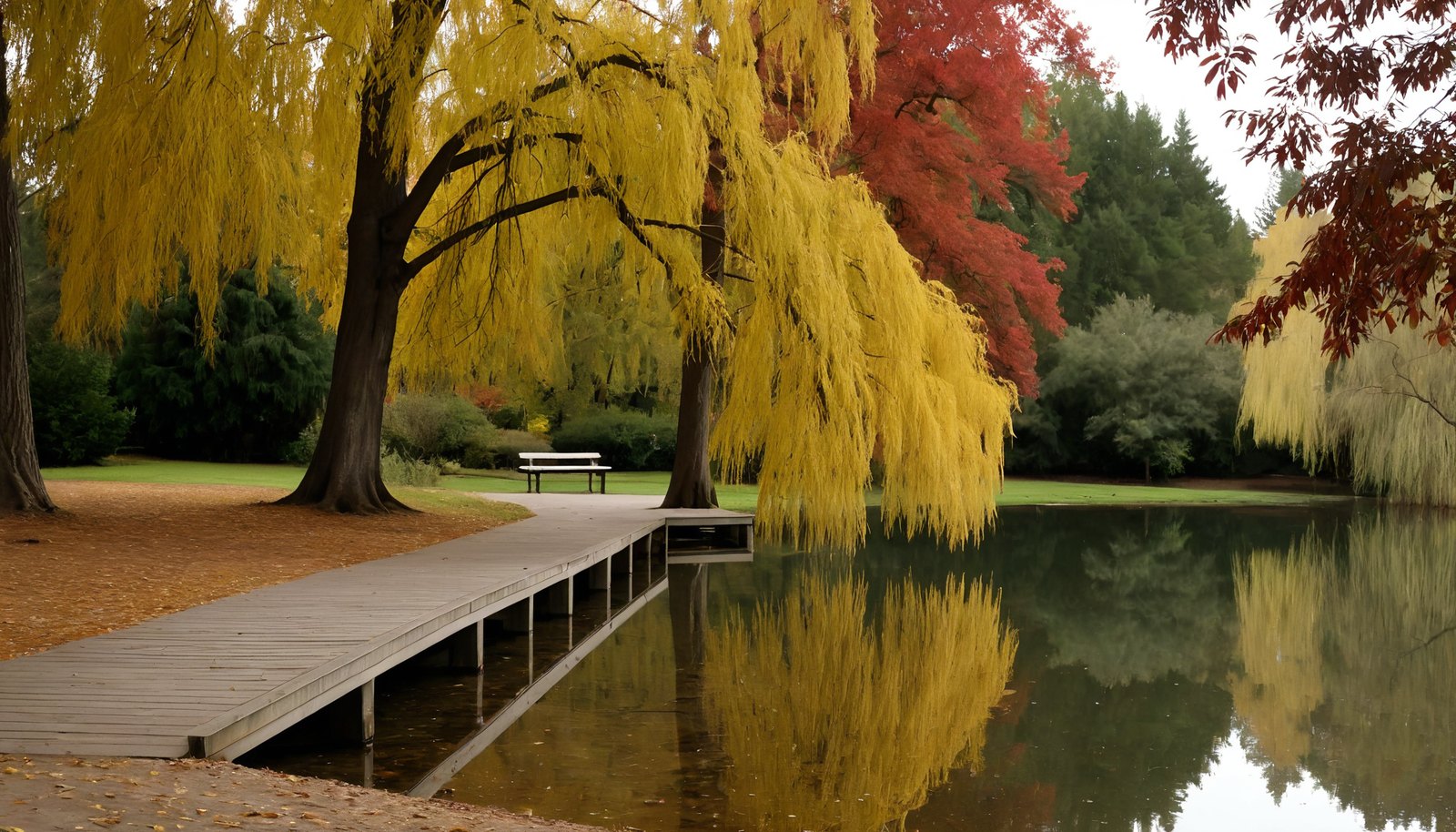
The path around Trout Lake, in John Hendry Park, passes maples, a weeping willow, oaks, birches and cherries, and on a calm morning the whole shoreline doubles in the water. The stand-out is the row of European beech trees along East 19th Avenue at the south end, which turns a deep copper-gold. The Saturday farmers market runs here until October 31, and Commercial Drive's cafes are a short walk away.
Queen Elizabeth Park — the view over a city of trees
- Where: Cambie Street at West 33rd Avenue; the Canada Line's King Edward station is the nearest
- Best for: the Quarry Garden, larches on the Cambie Street side, and the summit view
- Cost: free; only the Bloedel Conservatory dome charges admission
- Fall-colour guide: destinationvancouver.com
Queen Elizabeth Park gives you autumn twice. Down in the Quarry Garden, a former rock quarry planted with specimen trees, the paths wind past red and gold deciduous trees set against the green of the conifers. On the northwest side, near Cambie Street, a group of larches turns gold, a rare sight inside the city. Then climb to the summit viewpoint by the Bloedel Conservatory: from the highest point in the city, you look out over streets of turning trees towards downtown and the North Shore mountains.
It is in the Riley Park neighbourhood, and VanDusen is barely 2 km away, so the two make an easy west-side garden morning. If the weather turns, the Bloedel dome is the dry backup.
Dr. Sun Yat-Sen Park and Classical Chinese Garden
In Chinatown, at 578 Carrall Street, the Dr. Sun Yat-Sen Classical Chinese Garden was the first full-scale Chinese classical garden built outside Asia, completed for Expo 86. Its carefully pruned trees colour against white walls, dark roof tiles and a jade-green pond. The classical garden charges admission, and it is worth booking ahead in October. The public Dr. Sun Yat-Sen Park next door is free, with its own pond, rock forms and a pavilion. See our Chinatown guide for the rest of the neighbourhood.
Gardens worth the ticket
Vancouver's paid gardens are where the colour is planned rather than accidental. They were planted with autumn in mind, and in October you get more species turning in a smaller space. All three below close earlier from November, so late-October afternoons are the sweet spot.
VanDusen Botanical Garden — the ginkgos
- Where: 5251 Oak Street at West 37th Avenue
- Hours: daily 9 am–5 pm from September 8 to October 31; 10 am–2 pm in November; last entry 30 minutes before closing
- Cost: adults $15.81 plus GST until October 31 ($1 less online); $11.19 from November. Seniors $12.65, youth 13–18 $11.05, children 5–12 $7.90, under-5s free
- Harvest Days: live music and family activities, included with admission, 10:30 am–4:30 pm on the remaining dates: October 3–4, 10–12 (including Thanksgiving Monday) and 17–18
- Official page: vandusengarden.org
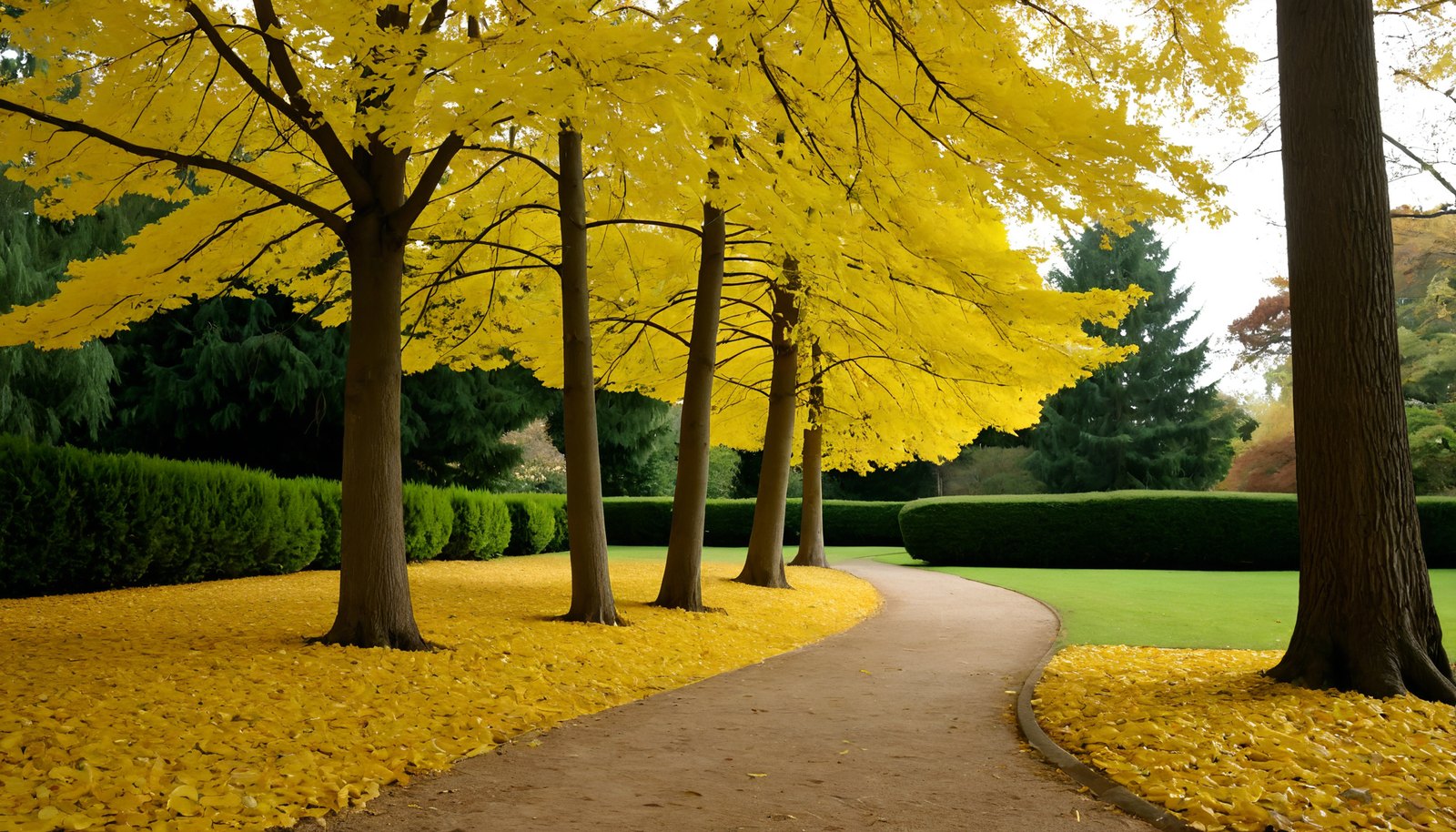
If you visit only one garden in October, make it this one. VanDusen covers 55 acres (22 hectares) with more than 7,500 kinds of plants, and its autumn is planned: the sugar maples turn crimson, the bald cypresses go rusty orange, and the ginkgos turn a clear, even gold that is the best in the city. Ginkgos are also the late performers. They often hold their colour into November and then drop almost all their leaves within a few days, leaving a yellow carpet on the lawn.
Book online to save a dollar, especially on busy Harvest Days weekends. Later in the season the garden reopens in the evenings for the Festival of Lights.
Nitobe Memorial Garden — Japanese maples at UBC
- Where: 1895 Lower Mall, UBC, beside the Asian Centre
- Hours: Tuesday–Sunday 10 am–4:30 pm until October 31, closed Mondays; from November 1, Tuesday–Sunday 10 am–2 pm
- Cost: adults $10 (UBC summer rate); a combined ticket with UBC Botanical Garden is $22.50
- Official page: botanicalgarden.ubc.ca
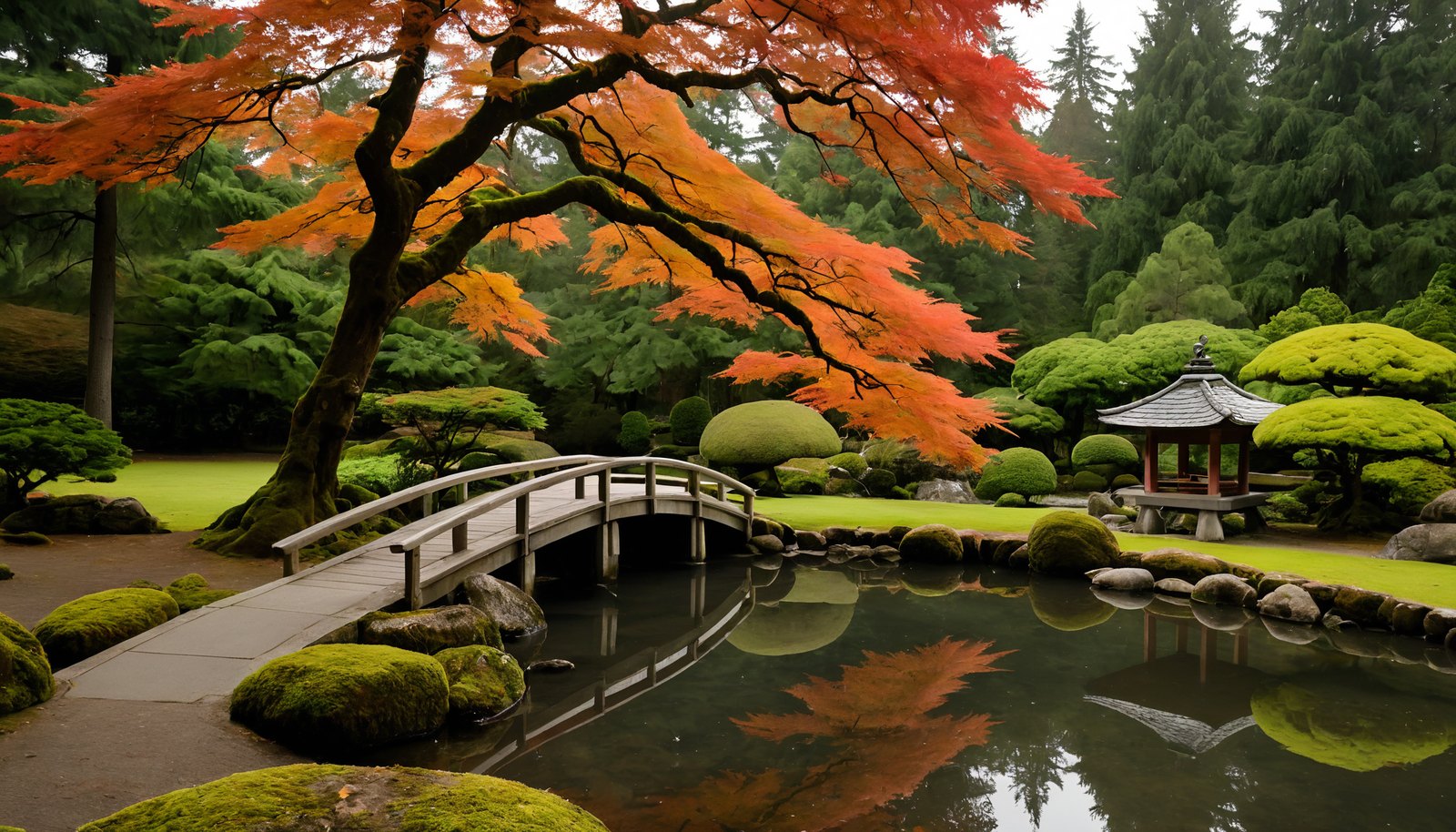
Nitobe is a traditional Japanese stroll garden designed around the passing seasons, and autumn is its moment. Its sinuous Japanese maples turn scarlet over moss, stone and still water, and the garden is small enough that you notice every tree. Come early on a weekday: it is compact and quiet, and a busy weekend afternoon changes its character. It is closed on Mondays, including Thanksgiving Monday.
The Museum of Anthropology is a short walk away, which makes a good rainy-day pairing; see our Vancouver museums guide.
UBC Botanical Garden and Main Mall
- Where: 6804 SW Marine Drive; Main Mall runs through the middle of campus
- Hours: Tuesday–Sunday 10 am–4:30 pm until October 31 (last entry 3:30); from November 1, 10 am–2 pm
- Cost: adults $14.50; Main Mall is free
- Official page: botanicalgarden.ubc.ca
At the Botanical Garden, head for the Carolinian Forest, planted with eastern North American species. It is the closest thing in Vancouver to a New England autumn. Then walk Main Mall, the long campus boulevard lined with red oaks that turn brown, gold and crimson; it is free and open all the time. Our UBC Botanical Garden guide has the full layout.
Beyond Vancouver
Deer Lake and Burnaby Mountain
Deer Lake Park in Burnaby is one of the easiest fall walks in the region. A figure-eight of gravel, packed dirt and boardwalk trails circles the lake in about 5 km, or an hour at an easy pace, past maples that reflect in the water. Parking by the beach area is free.
Burnaby Mountain Park, next to Simon Fraser University, is higher, so its colour usually arrives earlier than in the city below. Walk the Panorama Trail past the Kamui Mintara (“Playground of the Gods”) sculpture for views over Burrard Inlet.
Park & Tilford Gardens — North Vancouver
- Where: 333 Brooksbank Avenue, North Vancouver, beside the Park & Tilford shopping centre
- Hours: 9:30 am–4 pm, seven days a week
- Cost: free, with free parking
- Garden site: parkandtilfordfogs.ca
A small surprise behind a shopping centre: eight themed gardens, first planted by the Park & Tilford distillery in 1969. For autumn, go straight to the Oriental Garden, where the Japanese maples turn gold and crimson around stone lanterns. It takes 30 minutes and pairs easily with a North Vancouver afternoon.
Frosty Mountain larches — the golden day trip
- Where: E.C. Manning Provincial Park, from the Lightning Lake day-use area — about 3 hours' drive from Vancouver
- Distance: about 18 km return to the larch plateau with roughly 800 m of climbing; about 21 km return and 1,150 m to the summit
- Time: allow about 7 hours to the larches and back
- When: the needles usually turn gold at the end of September or early October; peak can last only a week or so
- Official page: bcparks.ca
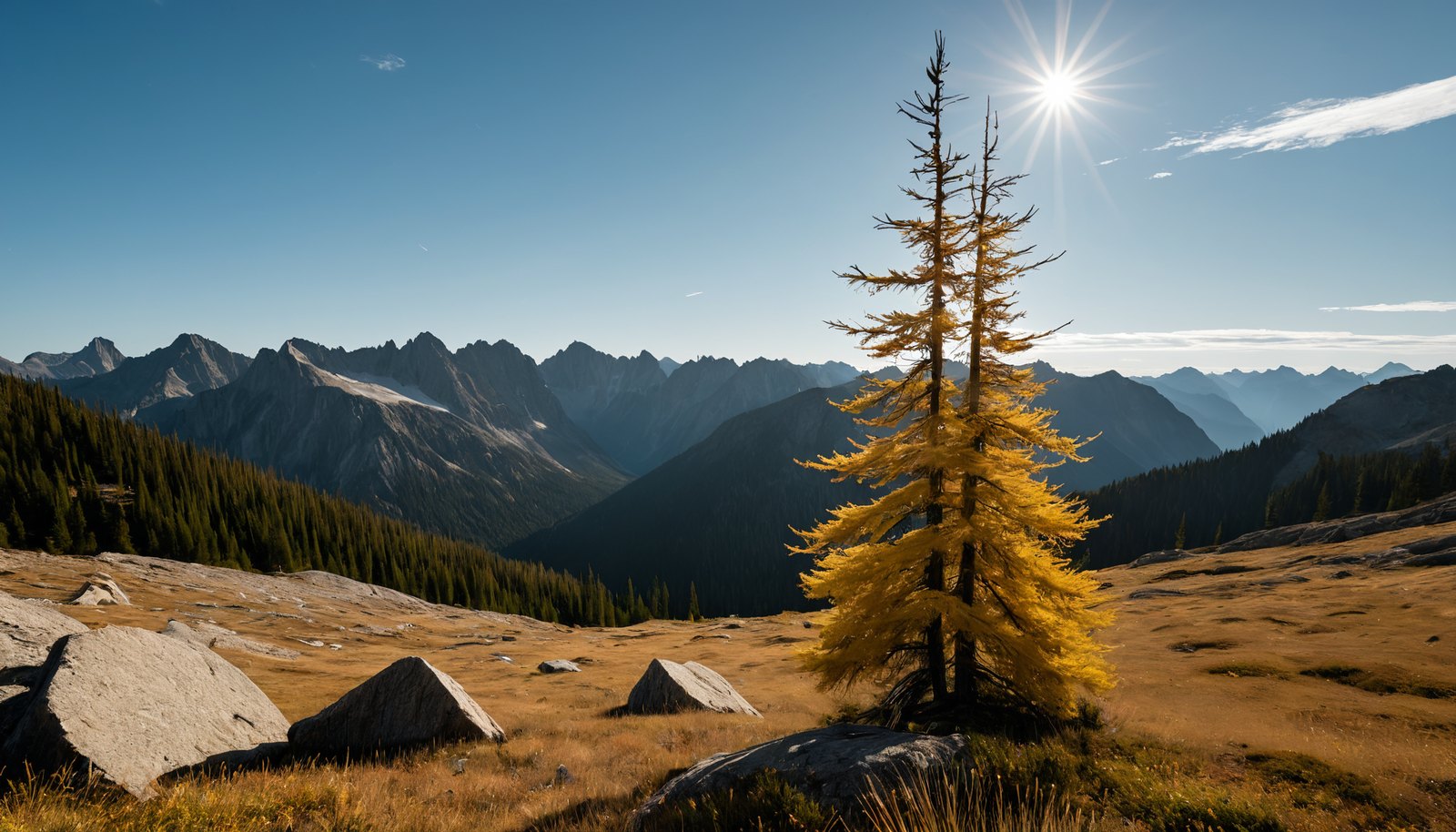
Alpine larches are conifers that lose their needles, and before they do, they turn a brilliant gold. On Frosty Mountain there is a stand of them high on a subalpine plateau, with some trees thought to be close to 2,000 years old. It is the most spectacular autumn sight within a day of Vancouver, and in 2026 the window is now: late September into the first week or two of October.
It is a real mountain day, not a stroll. Start early, since fall weekends are very busy and the Lightning Lake lot fills. Carry layers, a headlamp and the Ten Essentials, and check the forecast and BC Parks advisories: snow can arrive at that elevation in October. Stay on the trail, because the alpine plants are fragile. For somewhere to sleep, see our Manning Park camping guide; for easier hikes closer to town, see hikes by skill level.
Driving east anyway? The Fraser Valley's bigleaf maples and cottonwoods are at their best in October, and the same road leads to the salmon run at Weaver Creek and a soak at Harrison Hot Springs. For farm days with the kids, see the pumpkin patches near Vancouver.
Three fall-colour days
The west-side gardens.
- Start at Queen Elizabeth Park when it is quiet: the Quarry Garden, then the summit view.
- Head a few blocks west to VanDusen for late morning. Give it two hours.
- Finish at Kits Point, with Hadden Park at golden hour and dinner on West 4th.
The downtown loop, on foot.
- Walk the Coal Harbour seawall to Lost Lagoon.
- Continue past the Rowing Club towards Brockton Point, then cut back through the park.
- Come out on Beach Avenue for the Sylvia Hotel at sunset.
UBC, rain or shine.
- Nitobe at 10 am, before the crowds.
- Walk Main Mall under the red oaks.
- Head to the Botanical Garden's Carolinian Forest. If the rain sets in, the Museum of Anthropology is a few minutes' walk from Nitobe. Remember that both gardens are closed on Mondays.
How to get the best photos
Overcast is your friend. Soft cloud light keeps reds and golds rich and stops the contrast from blowing out. The grey Vancouver days that feel like a letdown are often the best for leaf photos.
Go after the rain. Wet bark turns almost black, and the leaves stand out against it. A polarizing filter, or polarized sunglasses in front of a phone lens, cuts the glare off wet leaves and water.
Chase still water early. Lost Lagoon, Trout Lake and Deer Lake give the best reflections before the wind picks up, usually in the first hours after sunrise.
Mind the gardens' rules. Stay on the paths, don't climb trees or shake branches for a leaf shower, and check the garden's policy before bringing a tripod or planning a portrait session.
For the rest of the season, see things to do in Vancouver in October, the Thanksgiving long weekend guide, Halloween 2026 and November in Vancouver. On a wet day, try our rainy-day guide, and for a slower autumn evening, our date ideas.
Where to stay in Vancouver
Coming for the colours? A West End or Kitsilano base puts Stanley Park, English Bay and Kits Point within walking distance, and the west-side gardens a short ride away. Compare live hotel and rental prices below.
FAQ
When is the peak of fall colours in Vancouver?
Leaves usually start to turn in the last week of September, and the city is at its best from mid-October into the first weeks of November. Maples tend to peak in the second half of October, ginkgos a little later. Higher ground such as Burnaby Mountain turns first, and the waterfront last.
Where can I see fall colours in Vancouver for free?
The Stanley Park seawall around Lost Lagoon and the Vancouver Rowing Club, Queen Elizabeth Park and its Quarry Garden, Trout Lake, Hadden Park at Kits Point, the maples of Beach Avenue by the Sylvia Hotel, and the public Dr. Sun Yat-Sen Park in Chinatown are all free. So is Park & Tilford Gardens in North Vancouver.
How much is VanDusen Botanical Garden in October 2026?
Adult admission is $15.81 plus GST until October 31, and booking online saves $1. The garden is open daily 9 am to 5 pm from September 8 to October 31, with last entry 30 minutes before closing. Harvest Days family activities are included on weekends until October 18 and on Thanksgiving Monday, October 12.
Is Nitobe Memorial Garden open in October?
Yes, Tuesday to Sunday from 10 am to 4:30 pm until October 31; it is closed on Mondays. Adult admission is $10 at UBC's summer rate. From November 1 the garden keeps shorter hours, 10 am to 2 pm, Tuesday to Sunday.
Where can I see golden larches near Vancouver?
On Frosty Mountain in E.C. Manning Provincial Park, about three hours' drive east. The larch plateau is about 18 km return from Lightning Lake with roughly 800 m of climbing, a full day. The needles usually turn gold in late September and early October, and the peak can last as little as a week.
Is Queen Elizabeth Park free?
Yes. The park, its Quarry Garden and the summit viewpoint are free. Only the Bloedel Conservatory dome at the top charges admission.
What if it rains?
Go anyway, with a jacket. Leaf colour often looks richer under cloud than in bright sun, and wet bark turns black, which makes reds and golds stand out. What ends the season is wind: a stormy day can strip a tree, so go on the first calm day after peak.
How we checked. Hours and prices come from the gardens' own sites, read on 29 September 2026: VanDusen Botanical Garden, UBC Botanical Garden (for Nitobe and the Botanical Garden), and Park & Tilford Gardens. The Frosty Mountain route figures come from BC Parks and published trail guides. Specific trees and viewpoints follow Destination Vancouver's fall guides and our own visits. Peak timing is typical, not a forecast, and drive times are our own off-peak estimates. The garden, lake, ginkgo and larch images are illustrative, not photographs of the places named.
More practical Vancouver: getting around · YVR mega-guide · cruises · insider guide.
📬 Vancouver This Weekend
One short email every Friday: the weekend's best events, free things to do, and one local tip. No spam, unsubscribe anytime.