English
 Español
 Français
 Deutsch
Halloween 2026 falls on a Saturday — the first Saturday Halloween since 2020, which means the whole city gets a full night instead of a school night.
Fright Nights at Playland: October 7–31, select nights, from $39 in advance. Canyon Frights at Capilano: October 9 – November 1, included with park admission.
The Stanley Park Ghost Train is not running. Second year in a row: the Park Board is looking for a new operator for the whole site. From 22 October the railway site hosts Astra Lumina, a ticketed light walk, instead.
Fireworks are illegal in Vancouver — every kind, every day of the year, since November 2020. Buying them outside city limits does not change that.
Every year, somewhere around the third week of September, the internet fills up with the same paragraph: the Celts invented Halloween, the Church stole it, the Irish carried it across the ocean in their pockets. Most of that paragraph is wrong, and the parts that are true are better than the myth.
So this guide does two things. The first half is the story — where the night came from, why the lantern was carved out of a turnip before it was ever carved out of a pumpkin, and how two words first printed in a small-town Alberta newspaper ended up being shouted on doorsteps from Osaka to Dublin. The second half is Vancouver, October 2026: what is actually open, what it costs, what closed and is not coming back, and what will get you a fine.
If you only came for the dates, they are in the green box above and in the tables below. If you came for the rest, start at the beginning — which, as it happens, is a sunset.
Where to stay in Vancouver
In Vancouver the price depends on the neighbourhood far more than on the star rating. Compare live hotel and rental rates side by side before you lock your dates.
Part one: the night the year turned
The old year ended in the dark
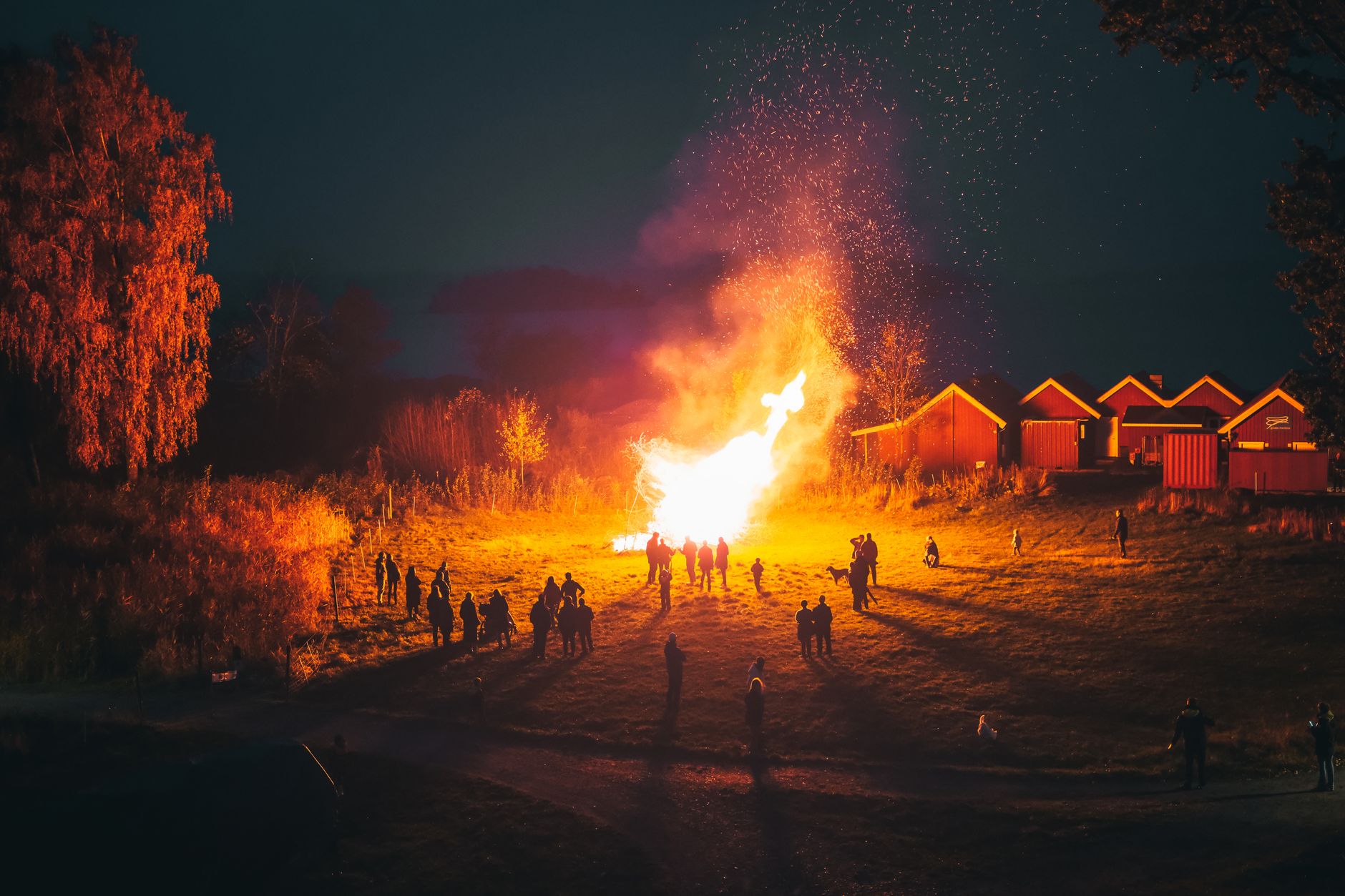
Begin with a calendar that no longer exists. In early medieval Ireland the year did not start in the cold silence of January. It turned at the end of the harvest, when the cattle came down off the summer pasture and the community counted what it had and guessed whether it would be enough. That hinge was called Samhain, and it began at sunset on the last day of October.
That detail — at sunset — is the one worth holding on to. The Irish reckoned a day from sundown to sundown, not midnight to midnight. Which means the eve was not a warm-up for the festival. The eve was the festival, and everything after dawn was already the next thing. It explains a small mystery that survives to this day: why the world celebrates Hallowe'en with such enthusiasm and All Hallows barely at all. The evening was never the lesser half.
Samhain sat on a seam. The harvest was in, the dark was coming, and the boundary between the living world and whatever else there is was understood to be thin. This is not a metaphor imposed by later romantics; the medieval Irish literature is full of Samhain as the night when the burial mounds open and things come out of them. It is a night with the door left unlatched.
The lantern was a turnip, and the turnip had a story
Before the pumpkin, there was a vegetable nobody today would volunteer to carve. A turnip — or in Ireland more often a large swede — hollowed out with a knife over a long evening, a face cut into one side, and a lump of burning coal or a stub of candle set inside. The result is in the photograph below, and it is worth looking at properly, because it is not cute. It was never meant to be cute.
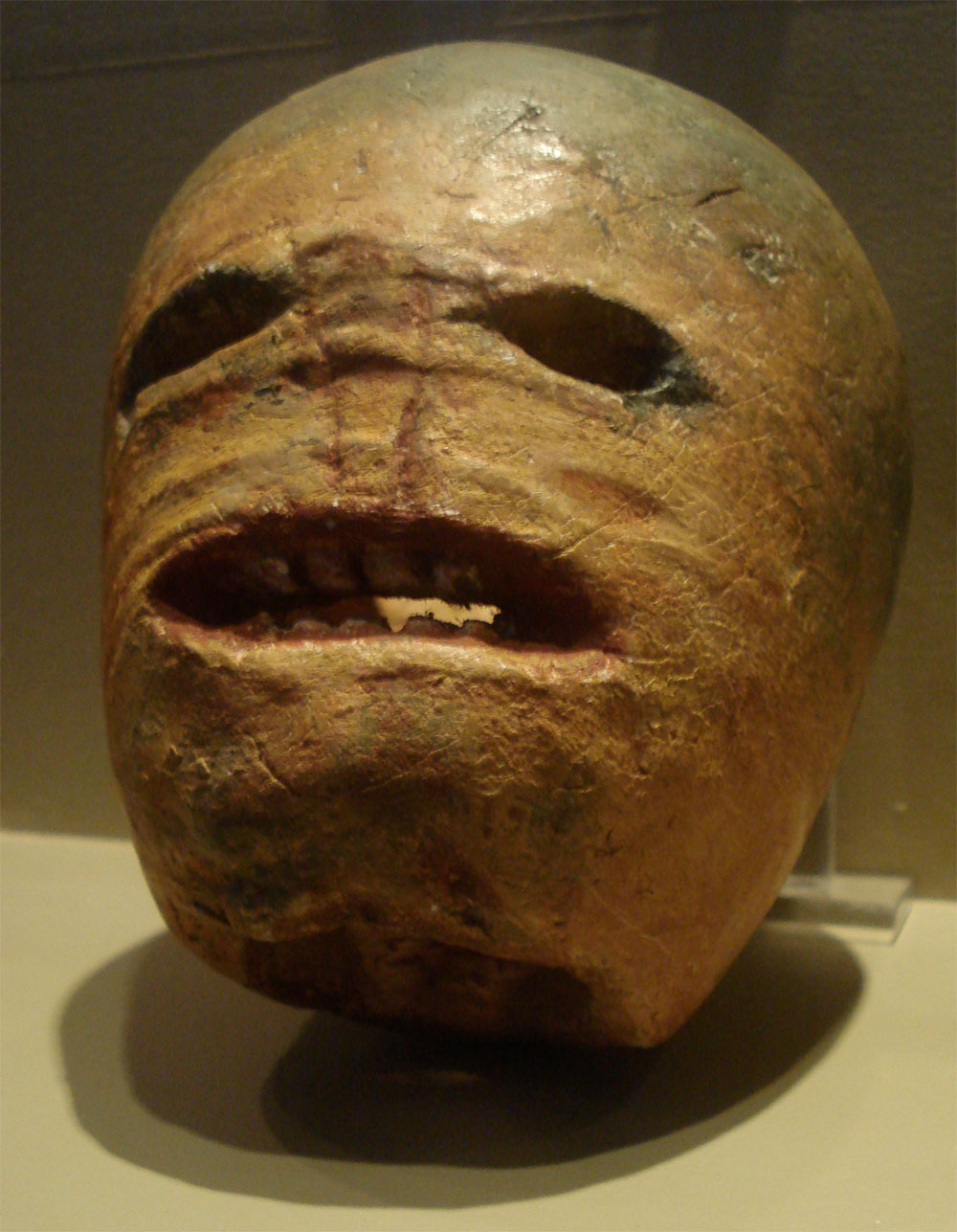
The name comes with a folk tale, and folk tales are rarely tidy, but this one has held its shape for a long time. A man called Jack — Stingy Jack, in most tellings — twice tricks the Devil into promising never to take his soul. When Jack dies, Heaven will not have him because of the life he led, and the Devil, bound by his own promise, will not have him either. He is turned away at both doors and sent off into the dark with nothing but an ember to see by, which he carries in a hollowed turnip. Jack of the lantern. Still walking.
Here is where honesty is more interesting than tradition. The turnip lantern is documented in Ireland, and it is also documented in England — where hollowed-out lanterns appear around All Saints' and around Guy Fawkes Night, the two autumn fire festivals sitting five days apart. Which came first is genuinely unsettled. The confident version you have read a hundred times — ancient Celtic lanterns warding off ancient Celtic spirits — runs well ahead of the paper trail. What is certain is that people in these islands carved faces into root vegetables in the dark half of the year, and that when they emigrated, they kept doing it.
What Rome actually did in 834
Now the myth that deserves to die.
You have read that the Church deliberately planted All Saints' Day on 1 November to smother Samhain — a hostile takeover, pagan festival painted over in Christian colours. It is a satisfying story. It is almost certainly not what happened.
The date was fixed for the whole Western Church by Pope Gregory IV in 834. But the November date had already been in local use north of the Alps for a century before him, and the problem Gregory was solving was administrative, not theological: a liturgical calendar that had drifted apart between Rome and the Frankish north, with different regions honouring the saints on different days. He standardised. There is no evidence he had ever heard of a harvest festival on the western edge of Ireland, and no reason he would have cared if he had.
What really happened is slower and more human. Two observances — a Christian vigil for the dead and a much older night when the dead were thought to be close — ended up on the same evening, in the same damp corner of Europe, among people who saw no particular need to choose. They shared the lease. Over centuries the two grew into each other so completely that separating them now is like trying to unmix paint. The Church did not steal Samhain. Samhain and All Hallows simply moved in together and the neighbours stopped being able to tell which was which.
You had to earn it
The doorstep transaction is older than the candy, and it did not start as a threat.
In late medieval Britain and Ireland the practice was souling: on All Souls' the poor went door to door and were given small spiced cakes, and in exchange they prayed for the household's dead. A cake for a soul out of purgatory. It was a real economy, with a real exchange rate.
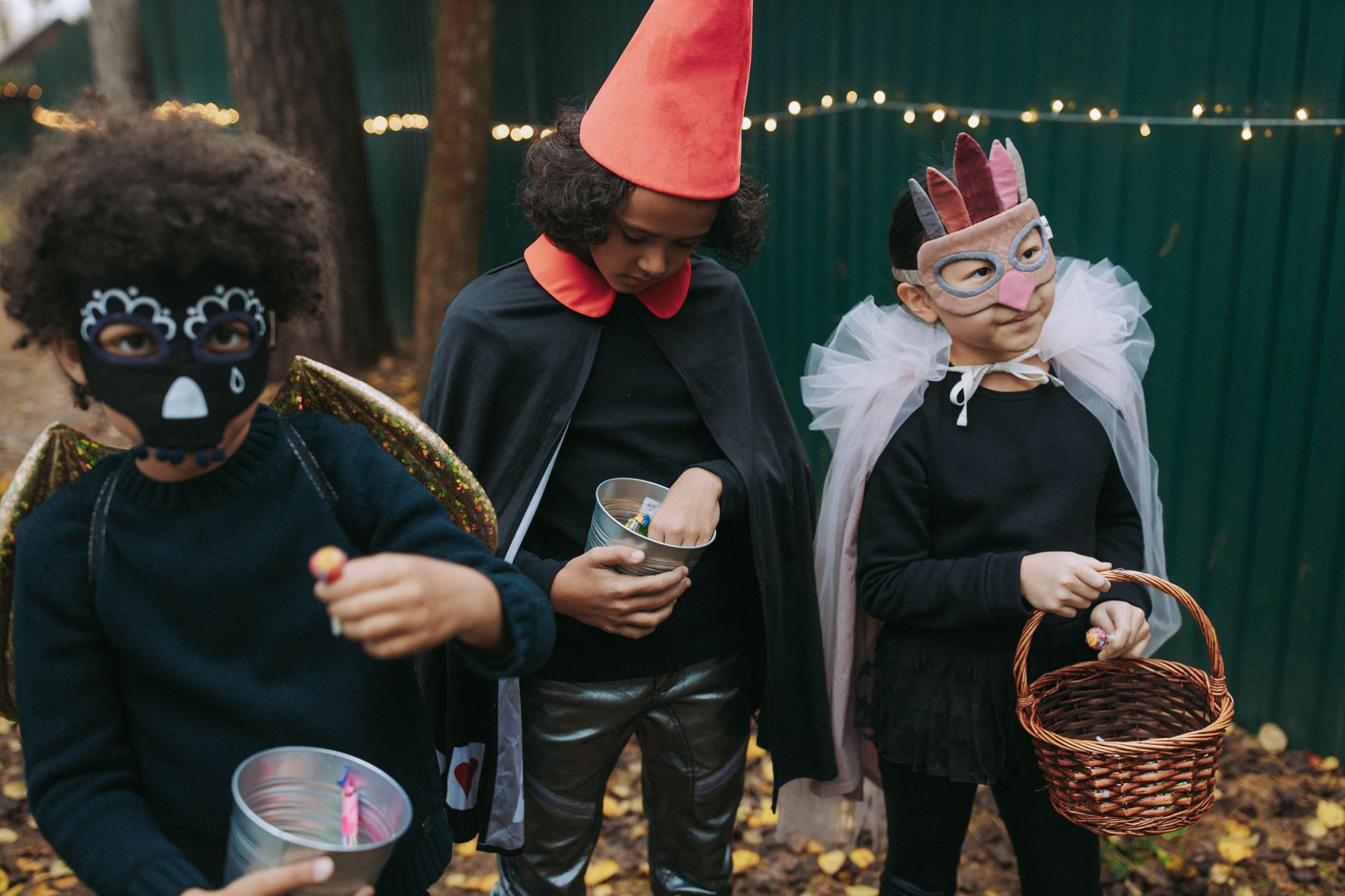
Then, especially in Scotland, came guising — going out disguised, and this is the part modern Halloween quietly dropped. A guiser did not simply hold out a bag. He performed. A song, a poem, a joke, a party trick; something, before anything was handed over. The disguise was protective in origin, the idea being that if the dead were abroad you did better to look like one of them. But the performance was the price of admission.
There is a small argument to be made that the modern version, in which nothing is asked of the child but the correct phrase, is the impoverished descendant of something considerably more fun.
Two words, first printed in Alberta
And now the part that belongs on a Canadian website, because almost nobody outside a small circle of etymologists knows it.
The phrase “trick or treat” — the two words that a billion people will say on 31 October — appears in print for the first time not in New York or Boston or Chicago, but in the Lethbridge Herald in 1927, reporting on Halloween in Blackie, Alberta: a prairie town of a few hundred people, roughly an hour southeast of Calgary. The finding is credited to the etymologist Barry Popik, who has done more than anyone to trace the phrase back through newspaper archives.
It was not invented in Blackie, of course. A phrase reaches print after it has been in mouths for a while, and an earlier report in the Sault Daily Star in 1917 describes the same doorstep practice in Sault Ste. Marie, Ontario, without using those exact words. But the paper trail says the same thing twice: the ritual as the world now performs it took its modern shape in Canada, in small towns, in the years around the First World War, and travelled south from there. The Americans got it from us.
Worth remembering the next time someone calls Halloween an American import.
The pumpkin's promotion
The last piece is agricultural. Irish and Scottish emigrants arrived in North America in the nineteenth century carrying souling, guising and the habit of carving lanterns, and found a continent growing a native vegetable that was enormous, hollow-ish already, soft enough to cut with a kitchen knife, and ripe at exactly the right moment in the year.
Anyone who has ever tried to carve a raw turnip understands immediately why the substitution was permanent. The pumpkin did not replace the turnip because of tradition or symbolism. It replaced it because it was easier, and because there were fields of them.
Part two: Vancouver, October 2026
So much for the history. Here is the practical half — what is running this year, what it costs, and where the city has quietly changed the rules while nobody was reading.
Fright Nights at Playland: the big one
Fright Nights is the largest haunt in Western Canada and the anchor of the whole month: seven haunted houses inside the Playland grounds at Hastings Park, plus the rides running in the dark. It opens 7 October and runs on select nights through 31 October.
Pricing is tiered by date, not by weekday. The three Wednesdays — 7, 14 and 21 October — are the cheap nights, and every night from 23 October on is peak. The gap between the cheapest and the dearest night is $20 in advance and $24 at the gate, and buying ahead saves another $6–$10 on any night — which is the single most useful thing to know before you buy.
| Nights | Hours | Advance | Day of |
|---|---|---|---|
| Oct 7, 14, 21 (Wednesdays) | 6 pm – 11 pm | $39 | $45 |
| Oct 8, 11, 15, 18 | 6 pm – 11 pm | $49 | $59 |
| Oct 9, 10, 16, 17, 22 | 6 pm – 12 am | $49 | $59 |
| Oct 25, 28, 29 peak | 6 pm – 11 pm | $59 | $69 |
| Oct 23, 24, 30, 31 peak | 6 pm – 12 am | $59 | $69 |
A few things the ticket page will not shout at you:
- The Rapid Pass is a separate purchase — $56 as an add-on bought in advance, $58 bought on the day or on site. On a peak Saturday that turns a $59 ticket into $115. On a $39 Wednesday it is close to double the price of the ticket itself.
- Seven houses, no guarantee you will see seven houses. The event says outright that experiencing all of them is not guaranteed. On 30 and 31 October, treat four or five as a good night.
- Bags cost money. Nothing larger than a sheet of letter paper (8.5 × 11 in) gets past the gate; the bag check outside costs $10. Bring nothing, or bring something small.
- Recommended 13+. This is not a soft rating for marketing purposes. It is a genuine haunt with live actors who follow you.
Getting there. The Fright Nights entrance is on Hastings Street at Windermere, a short walk from several bus stops on the Hastings corridor — the 14, the 16 and the R5 Hastings RapidBus all put you within a few minutes of the gate. Driving on a peak night is the worst version of the evening: Hastings Park empties several thousand people onto the same streets at once at closing, and the PNE's own lots fill early. Since 31 October 2026 is a Saturday, all SkyTrain and bus travel that day is charged at the one-zone fare, currently $2.85 on a Compass Card or $3.50 by tap — which makes transit roughly the price of fifteen minutes of parking.
Canyon Frights at Capilano: the version children survive
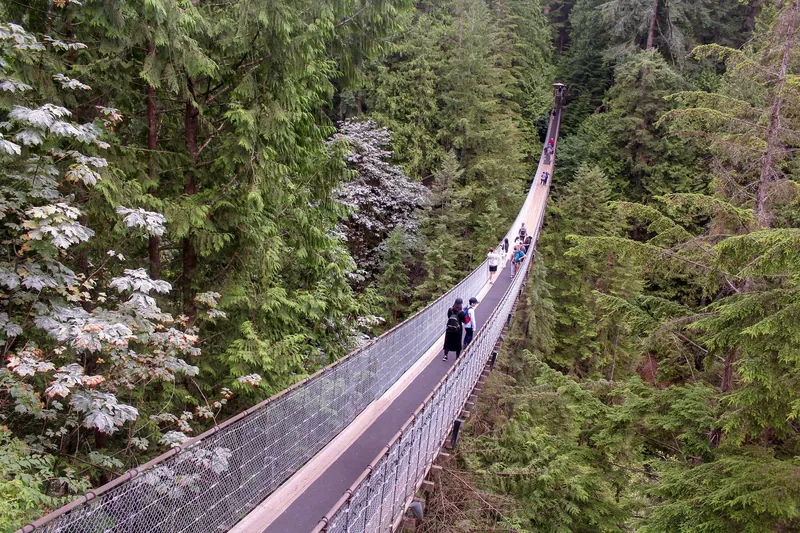
If Fright Nights is the teenage rite of passage, Canyon Frights is the answer for a family with a seven-year-old. Capilano Suspension Bridge Park dresses the whole canyon — the bridge, the Treetops walkways, the Cliffwalk — in lights and gentle theatrics rather than chainsaws.
- Dates: 9 October – 1 November 2026.
- Hours: 10 am – 8 pm, extended to 9 pm on 23–25 October and 30 October – 1 November. You may stay an extra hour past posted closing.
- Price: included with regular park admission or an annual pass — there is no separate Halloween ticket.
- Live entertainment runs nightly at Loggers' Grill Plaza, 3:30 pm to 7:30 pm.
- Parking is limited and a free shuttle runs from downtown Vancouver on peak nights — use it.
The genuinely useful piece of arithmetic here is the BC Resident Annual Pass: it costs the price of a single day's admission and covers a full year, which includes both Canyon Frights in October and Canyon Lights from 20 November. If you live here and you are going once in autumn, you are one visit away from the pass paying for itself twice over. Annual passholders do need to reserve an arrival window in advance during the event — it is not walk-up.
The Ghost Train: the answer is no, and here is why
This is the section most Vancouver Halloween guides have not updated, so read it before you plan an evening around a train that has not run since 2024.
The Stanley Park Halloween Ghost Train is not running in 2026. It did not run in 2025 either, so 2026 is the second Halloween in a row without it. The last full season was 2024 — the “Ghosts in the Graveyard” theme, roughly $17 for adults and $14 for children — and before that it had been dark since 2019.
The reason is not scheduling. In 2025 the Park Board suspended train operations entirely over safety concerns with the railway's ageing systems, with the repair bill estimated at around $8 million. Rather than spend that on a train, the Board decided to reconsider the whole site.
In January 2026 it issued a Request for Expressions of Interest covering roughly 16 acres — the train site plus the adjacent former Children's Farmyard — inviting operators to propose a permanent attraction. The deadline for expressions of interest was 31 March 2026, the intended opening is around June 2027, and the initial operating term is ten years with the possibility of extension. Proponents were explicitly free to propose keeping a train, or to propose something else entirely.
Two consequences worth knowing:
- Bright Nights has left Stanley Park permanently. The Christmas train event relocated to the Cloverdale Fairgrounds in Surrey from the 2025 season onward. If you have a family tradition built around it, the tradition now involves a drive to Surrey.
- The site is not sitting empty in the meantime. A temporary Harry Potter experience occupied it from November 2025 to February 2026, which is a fair indication of the sort of tenant the Board is now imagining for those 16 acres.
- This autumn the site has a new tenant: Astra Lumina. From 22 October to 31 December 2026 the old railway site hosts a night walk of light installations by Moment Factory — about 45–60 minutes, rain or shine, adults from $27.20. It is not a ghost ride, but it is the way to spend an evening at the train site this year. Tickets, directions and what to expect.
The honest summary for October 2026: assume no train, and check the City's own status page in late September if you want to be certain.
If the point of the evening is a ghost story rather than a ride, the city's most famous one is a ten-minute walk from Burrard station: the Lady in Red at the Hotel Vancouver, whose single best piece of photographic evidence turned out, in 2017, to be a red tarp. The rest of them are collected in Legends of Vancouver.
Fireworks: the shortest section on this page
They are illegal. All of them. Everywhere in the City of Vancouver, every day of the year.
The ban took effect on 1 November 2020, which makes Halloween 2020 the last legal one. Before that there was a permit system — an online application to the fire chief, a purchase window of 25 to 31 October only, a minimum age of 19, and use restricted to private property. That system ended because of what the last night under it looked like: on 31 October 2020 Vancouver Fire Rescue Services answered roughly 400 fire-related calls in 24 hours, of which 40 were confirmed fires.
What remains legal is professional pyrotechnics: certified technicians, holding a permit, at a community event — Canada Day, Diwali, Lunar New Year, and in normal years the Celebration of Light. Nothing in that list is available to a person with a box from a fireworks stand outside city limits. Buying them in another municipality does not make them legal to set off here, and the fines are not nominal.
If you want the full rules, fines and the list of places you can legally watch professional displays, that is on our fireworks in Vancouver page.
Pumpkin patches: what they actually charge
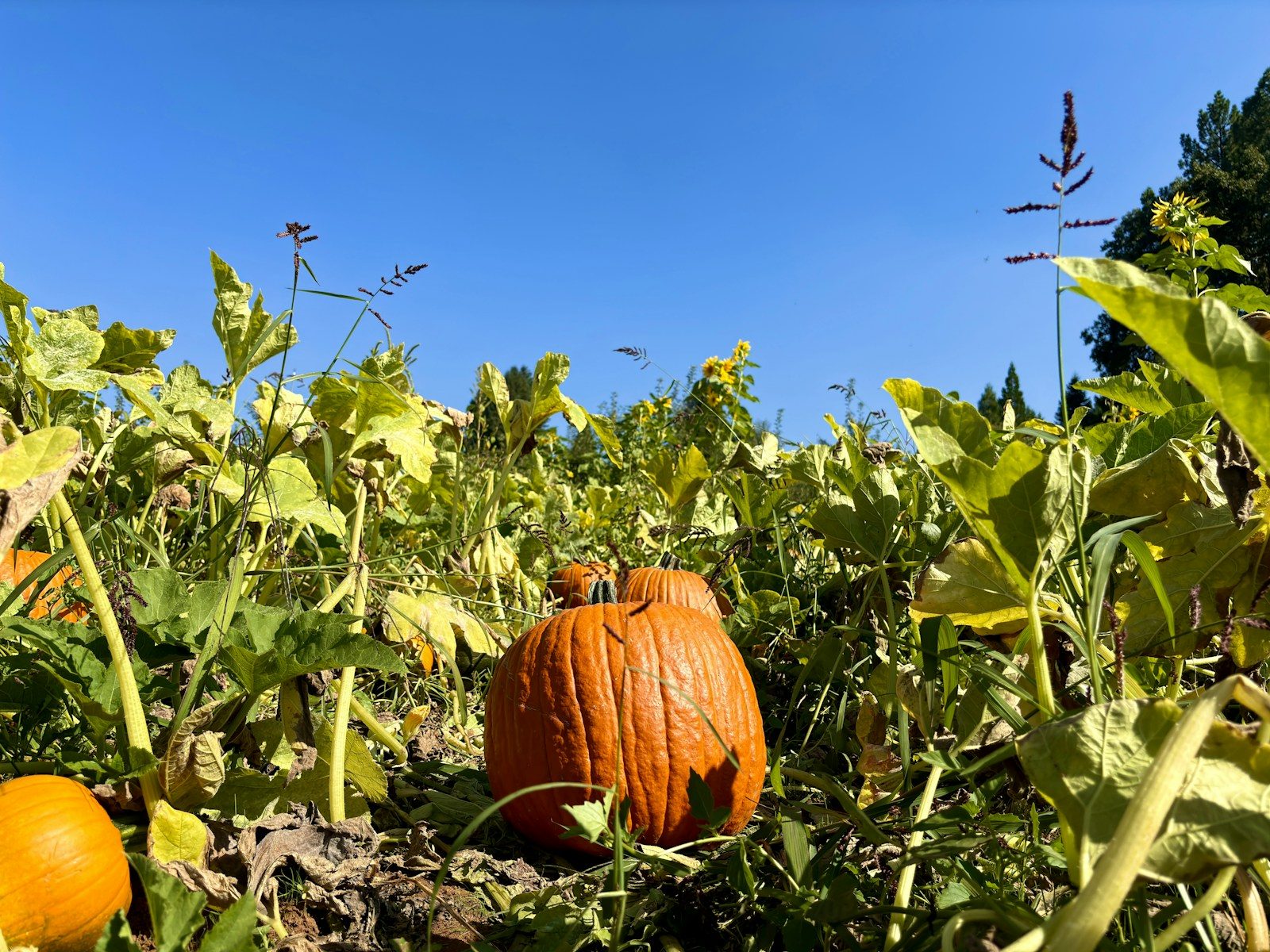
The patch is the daytime half of the season and the prices have quietly climbed. Compare what the ticket covers, not just the number: Richmond Country Farms puts one pumpkin in the price of admission, while at Laity the pumpkin is a separate purchase at the till.
| Farm | Where | Admission | Notes |
|---|---|---|---|
| Richmond Country Farms | Richmond | $15 + tax weekdays $20 + tax weekends | Closest to the city; one pumpkin, wagon ride, corn maze and an apple included. Open to Oct 31 |
| Aldor Acres | Langley | $21 | Ages 2 and under free; 9 am–6 pm, open to Oct 31 |
| Laity Pumpkin Patch | Maple Ridge | $13 weekdays $16 weekends & holidays | GST included, ages 3+; tickets at the gate only, pumpkins extra |
| Maan Farms | Abbotsford | ~$20 weekdays ~$27 weekends | 9 am–6 pm; the only one of the four open to Nov 1 |
The pattern across the three farms with two prices is the same: go on a weekday. The weekend premium is $5 a head at Richmond Country Farms, $3 at Laity and roughly $7 at Maan Farms; on a weekday the parking is survivable and the corn maze is not a queue. On a tighter budget, 2026 listings put Port Kells in Surrey at $6.99 and Hazelmere from $10, and Westham Island Herb Farm near Ladner charges nothing to walk the field. Prices move during the season, so check the farm's own page on the morning you go. Eight farms near the city, with hours, drive times and dog rules, are compared in our pumpkin patches guide.
Where to trick-or-treat in Vancouver
Vancouver has no official list of trick-or-treating streets, and any page that gives you one is guessing. What can be said honestly is that the geography follows the housing stock, and the housing stock is public knowledge.
Doorstep Halloween needs three things: front doors at street level, short distances between them, and families who expect visitors. That combination lives in the older single-family grids — Dunbar, Kerrisdale, West Point Grey, Renfrew–Collingwood, and the streets around Trout Lake and Commercial Drive — where houses sit close together, porches face the sidewalk, and the same blocks have been doing this for decades.
The West End is the counter-example, and it catches visitors out every year. It has the highest residential density in the city and almost none of it is reachable by a child at street level. A tower with a locked lobby is one doorbell, not forty.
The practical shape of the night in Vancouver: doors start opening around 5:30 pm, once it is properly dark, and the porch lights begin going off after 8:30 pm. Because 2026 falls on a Saturday, expect both ends to stretch — earlier starts from younger families in daylight, and older kids out considerably later than usual.
The rain plan, which is not optional
October is one of the wettest months of the Vancouver year. The airport's climate normals put it somewhere between 120 and 140 mm of rain spread across roughly 13 to 17 days, depending on which thirty-year reference period you use — and every Vancouver parent already knows which way that rounds on the 31st.
What this does to a costume is specific and predictable:
- Anything made of cardboard has a lifespan of about forty minutes. Paint and glue give up before the child does.
- Face paint runs. A mask, or nothing on the face at all, survives the evening.
- The winning costume is the one that fits over a rain jacket — a cape, a cloak, a sheet, a big coat with something added. The costume that requires the jacket to come off is the costume that ends in tears on the third block.
- Paper bags fail. Use a bucket or a pillowcase inside a plastic bag.
One more myth, since we are correcting them
Somebody will tell you this month to X-ray the candy, or to check it for needles and razor blades, or to accept nothing that is not factory-sealed.
The fear is close to fifty years old and it has been examined properly. The sociologist Joel Best, at the University of Delaware, has spent decades combing newspaper archives for confirmed cases of a child seriously harmed by contaminated Halloween candy given out by a stranger. He has not found one. The handful of incidents that got national coverage turned out, on investigation, to be something else entirely — most infamously the 1974 death of Timothy O'Bryan in Texas, poisoned by his own father for insurance money, using Halloween as cover and the panic as a defence.
What actually injures children on 31 October is traffic. It is a dark, wet evening with an unusual number of small people crossing streets in dark clothing between parked cars, and drivers who are not expecting them. Reflective tape on the costume and a light in the hand are worth more than an hour spent inspecting a bag of chocolate bars.
Also on in October
A few more things that reliably run through the month, worth checking directly for this year's dates:
- HowlOver Canada — FlyOver Canada's Halloween overlay at Canada Place, indoors and short, which makes it the reliable option on a downpour evening.
- Forbidden Vancouver's walking tours — the historical end of the spectrum: Gastown, Chinatown and the city's genuinely unpleasant past, told properly. Closest thing in the city to Halloween for adults who do not want to be chased.
- Vancouver Horror Show — the local horror film festival, usually mid-October across several venues.
- Dooms Night — the long-running Halloween dance event at the Pacific Coliseum, scheduled for Saturday 31 October 2026.
For the wider month-by-month picture, we keep a running list of things to do in Vancouver in October, and the seasonal handover into the markets and lights is on November and the Christmas markets page.
How to spend the 31st
Three versions of a Saturday Halloween, depending on who you are with.
With small children. Pumpkin patch on a weekday earlier in the month, when it is a few dollars cheaper and far quieter. Canyon Frights in daylight on a Sunday if you want an outing with no risk of nightmares. Then the 31st itself: out at 5:30, done by 8, one of the older residential grids, a bucket rather than a bag, and a light.
With teenagers. Fright Nights, but not on the 31st — one of the three Wednesdays — the 7th, 14th or 21st — at $39 gets you the same seven houses at two-thirds of the peak price and a queue you can actually get through. If it has to be Halloween itself, buy in advance, arrive at opening, and accept that you will see four houses rather than seven.
Without children. A Forbidden Vancouver tour early, then the 31st is a Saturday night in a city that takes costumes seriously — the Drive and Gastown carry it. Whatever the plan, it ends on transit: one-zone fares all Saturday, and the last thing anyone needs on 31 October is a car in Gastown.
Where these facts came from
Dates and prices on this page come from the operators' own published information — Fright Nights admission and Capilano Suspension Bridge Park tickets and hours — and from the City of Vancouver for the Stanley Park train and the fireworks bylaw. The Park Board's January 2026 Request for Expressions of Interest is a public document on the Park Board meetings site. Prices change; where a number matters to your budget, check it against the operator before you buy. Anything on this page that turns out to be wrong, tell us and we will fix it.
Frequently asked questions
Is the Stanley Park Ghost Train running in 2026?
No. It did not run in 2025 and is not expected to run in 2026 — the second Halloween in a row without it, after a final run in October 2024. The Park Board suspended train operations over safety concerns with the ageing railway, with repairs estimated at around $8 million, and in January 2026 opened a search for an operator to build a new permanent attraction on the site. The new attraction is targeted at around June 2027.
How much does Fright Nights cost in 2026?
Advance tickets are $39 on the three Wednesdays (7, 14 and 21 October), $49 on 8–11, 15–18 and 22 October, and $59 on the seven peak nights from 23 October (23, 24, 25, 28, 29, 30 and 31). Day-of prices are $45, $59 and $69 respectively. The Rapid Pass is a separate add-on at $56 in advance or $58 on the day.
Are fireworks legal in Vancouver on Halloween?
No. Consumer fireworks have been banned throughout the City of Vancouver since 1 November 2020 — all types, all year, including Halloween. Buying them in another municipality does not make them legal to use here. Only certified technicians holding a permit may set off fireworks, and only at approved community events.
What day is Halloween in 2026?
Saturday, 31 October 2026. It is the first Saturday Halloween since 2020, which means later trick-or-treating, busier events and — usefully — one-zone TransLink fares all day, since weekend travel is charged at the single-zone rate.
Is Fright Nights suitable for young children?
No. The event is recommended for ages 13 and up, and that recommendation is genuine: the haunted houses use live actors who follow guests. For families with younger children, Canyon Frights at Capilano Suspension Bridge Park (9 October – 1 November) is the equivalent event without the scares, and it is included with regular park admission.
What time do children trick-or-treat in Vancouver?
Doors generally start opening around 5:30 pm, once it is properly dark, and porch lights begin going off after 8:30 pm. Because Halloween 2026 falls on a Saturday, expect both ends to stretch — earlier starts from younger families and older children out later.
Where did trick-or-treating come from?
It descends from souling — the medieval practice of going door to door on All Souls' Day in exchange for prayers for the household's dead — and from Scottish guising, where a song or a performance was the price of the gift. The phrase “trick or treat” itself was first recorded in print in Canada: the Lethbridge Herald in 1927, reporting on Halloween in Blackie, Alberta.
Why was the jack-o'-lantern originally a turnip?
Because the pumpkin is a North American plant and the tradition is not. In Ireland, Scotland and parts of England, lanterns were hollowed out of turnips and swedes and lit with an ember or a candle stub. When emigrants reached North America they found the pumpkin — far larger, far softer and ripe at exactly the right time of year — and the substitution was immediate and permanent.