English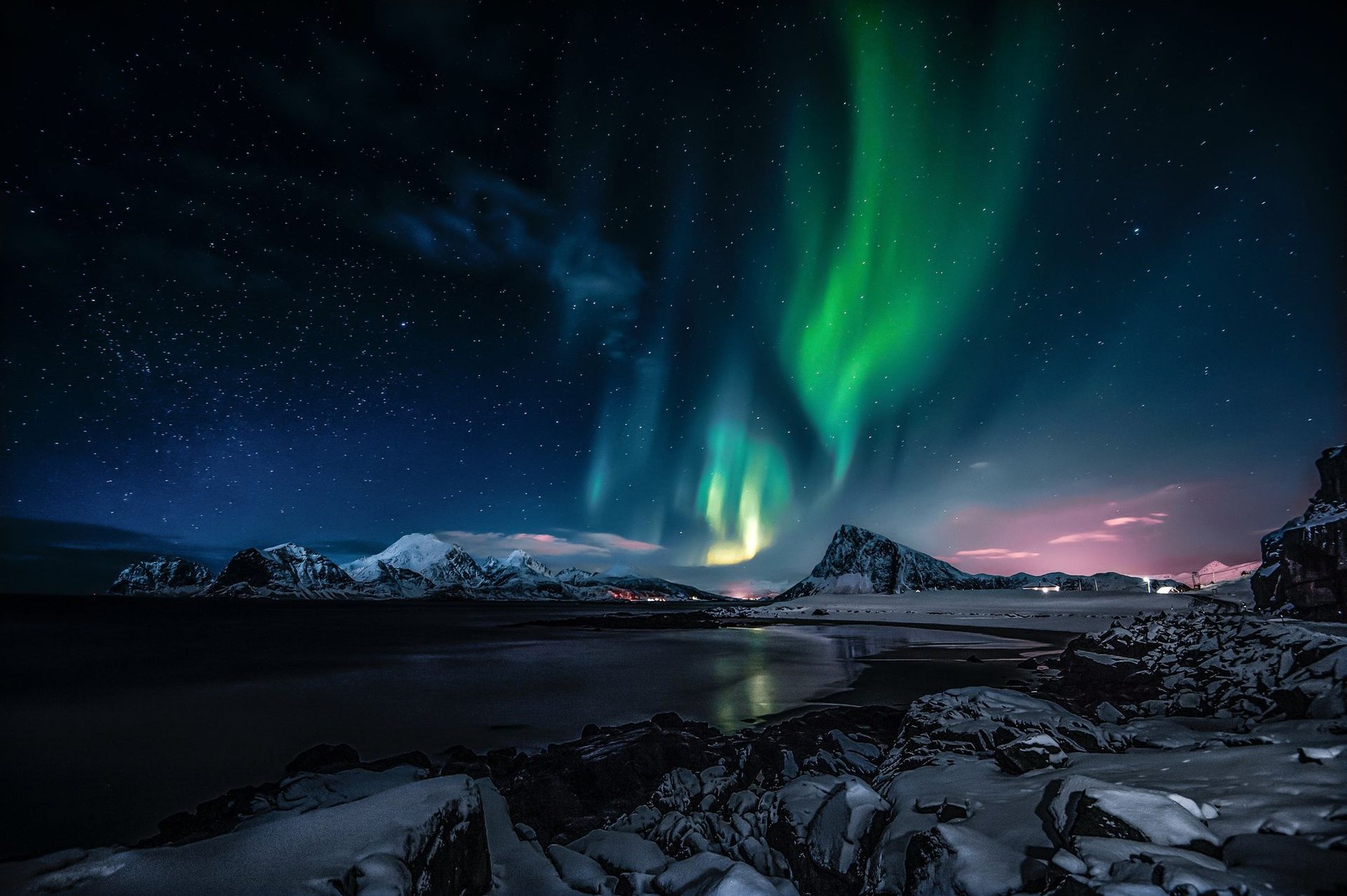
Most nights the answer is no, and a page that says yes every night is worthless. This one reads the NOAA aurora model over British Columbia and tells you which it is, then where to stand on the nights it is yes.
Tonight
Kp 4 is unsettled, not a storm. Aurora at this level sits over northern BC. Vancouver gets nothing unless it jumps. The NOAA model right now puts the chance of visible aurora overhead in Vancouver at 0%, and the strongest band over British Columbia at 15% near 63 degrees north. Full darkness comes about an hour after sunset at 6:44pm.
Kp measured 4 October, 9:27 AM Pacific.
Vancouver sits at the left end of this chart. The aurora does not have to be overhead to be seen: a bright oval two or three hundred kilometres north shows up as a glow along the horizon, which is what almost every Vancouver sighting actually is.
Daytime Kp is in the model too and is no use to anyone standing outside, so it is left out here. A forecast three days ahead is a probability, not a plan: the useful window is the last six hours.
Source: NOAA Space Weather Prediction Center, planetary K index and the OVATION aurora model. Sky conditions from our own Vancouver weather feed.
What Kp has to reach before Vancouver sees anything
Vancouver sits at 49 degrees north, which is far enough south that the aurora is a horizon event here, not an overhead one. The oval has to push down over central and northern British Columbia before any of it clears our northern skyline. In practice that means:
Kp 4 and below. Nothing from here. The oval is over the territories.
Kp 5. A camera on a tripod at a genuinely dark site may pick up green low in the north. The eye usually reads it as a pale grey arc, if at all.
Kp 6. A visible glow on the northern horizon from outside the city glow. This is the level where the drive is justified.
Kp 7 and above. Structure above the horizon, sometimes colour to the naked eye, and on the rare extreme nights overhead from the city itself. May 2024 was one of those and people watched it from Kitsilano Beach.
Those thresholds are about geomagnetic latitude, and they are also why a Kp number alone misleads. A short sharp storm at Kp 6 that peaks at four in the afternoon gives Vancouver nothing at all, because the sky is bright. The live panel above reads the model at our own latitude for exactly that reason.
Where to stand
Two things matter and they pull in opposite directions: an unobstructed view north across water or open ground, and distance from the city glow. Everything below is within about ninety minutes of downtown.
Spanish Banks and Locarno, Point Grey
Wide low northern horizon across English Bay, free Park Board parking lots (busy on clear nights — arrive before dusk), and a seawall walk if the show is faint. Closer to city glow than Porteau, but twenty five minutes from downtown without the Sea to Sky commitment.
Burnaby Mountain (Centennial Way lookouts)
Elevation helps on marginal nights. Face north-east away from the downtown wall of light; the main tourist viewpoint that stares at the skyline is the wrong seat. Parking fills early when social media declares a “rare aurora” — have a Plan B at a lower, darker shoreline.
Porteau Cove, Sea to Sky Highway
The default answer. Forty five minutes up Highway 99, the view opens straight up Howe Sound to the north, and the provincial park has a parking lot right at the water. Squamish puts some glow on the horizon but nothing like the city. Come prepared for wind off the water even in summer.
Boundary Bay and Centennial Beach, Delta
Flat, wide, and dark to the south, which sounds wrong for a northern event until you stand there: the horizon is low in every direction and the dyke gives you a long unlit foreground. Closer to the city glow than Porteau, but it is forty minutes from downtown and it works on big nights.
Iona Beach, Richmond
The jetty runs four kilometres into the Strait of Georgia with water on both sides. Airport traffic overhead, the sewage plant behind you, and it is still one of the best low northern horizons you can reach without leaving the city. Gates close at dusk in some seasons; check before you rely on it.
Pitt Lake and Grant Narrows, Pitt Meadows
Mountains on three sides and a long lake pointing north. Genuinely dark, genuinely quiet, and an hour from downtown. The road in is unlit farmland, so watch for deer.
Cypress Mountain lookout, West Vancouver
Easy to reach and the highest of these, but the famous view faces south over the city, which is the wrong direction and the brightest thing on the mountain. Useful only if you carry on past the lookout to somewhere facing north. Worth knowing before you drive up expecting the view to do the work.
Further afield, Prince George and the north sit under the oval far more often, which is why the aurora is a normal winter sight there and a rare one here. If a trip north is on the table, see the day trips and drives page for the routes.
What the camera sees, and what you will
Almost every Vancouver aurora photo you have seen is a long exposure. A modern phone in night mode gathers three to ten seconds of light; your eye gathers a fraction of a second and loses colour in the dark entirely. A display that reads as vivid green on a screen was often a grey glow to the people standing there. That is not a trick, it is the difference between a sensor and a retina, and knowing it in advance is the difference between a good night out and a disappointment.
Practical settings if you have a camera with manual control: the widest aperture you have, ISO somewhere between 1600 and 6400, an exposure of two to eight seconds, and focus set manually on a bright star rather than left to autofocus, which hunts in the dark. Anything longer than about fifteen seconds turns the stars into short trails.
Timing the night
Geomagnetic activity tends to peak around local midnight, so the hours either side of it are the ones to spend outside. Full darkness arrives roughly an hour after sunset, and in June there is barely any true darkness at this latitude at all, which is why aurora season here runs from late August to April. The equinoxes in late March and late September are statistically the most active weeks of the year.
The moon matters more than people expect. A full moon washes out a faint arc completely, and a faint arc is what Vancouver usually gets. On a marginal night the difference between a new moon and a full one is the difference between something and nothing.
The honest part
On most nights of the year the answer on this page is no. Vancouver is a coastal city at 49 degrees with a wet climate and a lot of light, and even in a strong solar cycle a visible aurora from here is a handful of nights a year, several of which will be clouded out. Anyone telling you otherwise is selling something. What we can do is make sure that on the nights it is yes, you find out in time to be outside.
Two things worth knowing before you drive: the cloud forecast settles more of these nights than the sun does, and mountain roads that are easy in September are not in February, so check road conditions before heading up the Sea to Sky in winter. If you are going to be out past midnight at a dark site, the cold and the isolation deserve the same respect as any night hike; the safety page covers it.