English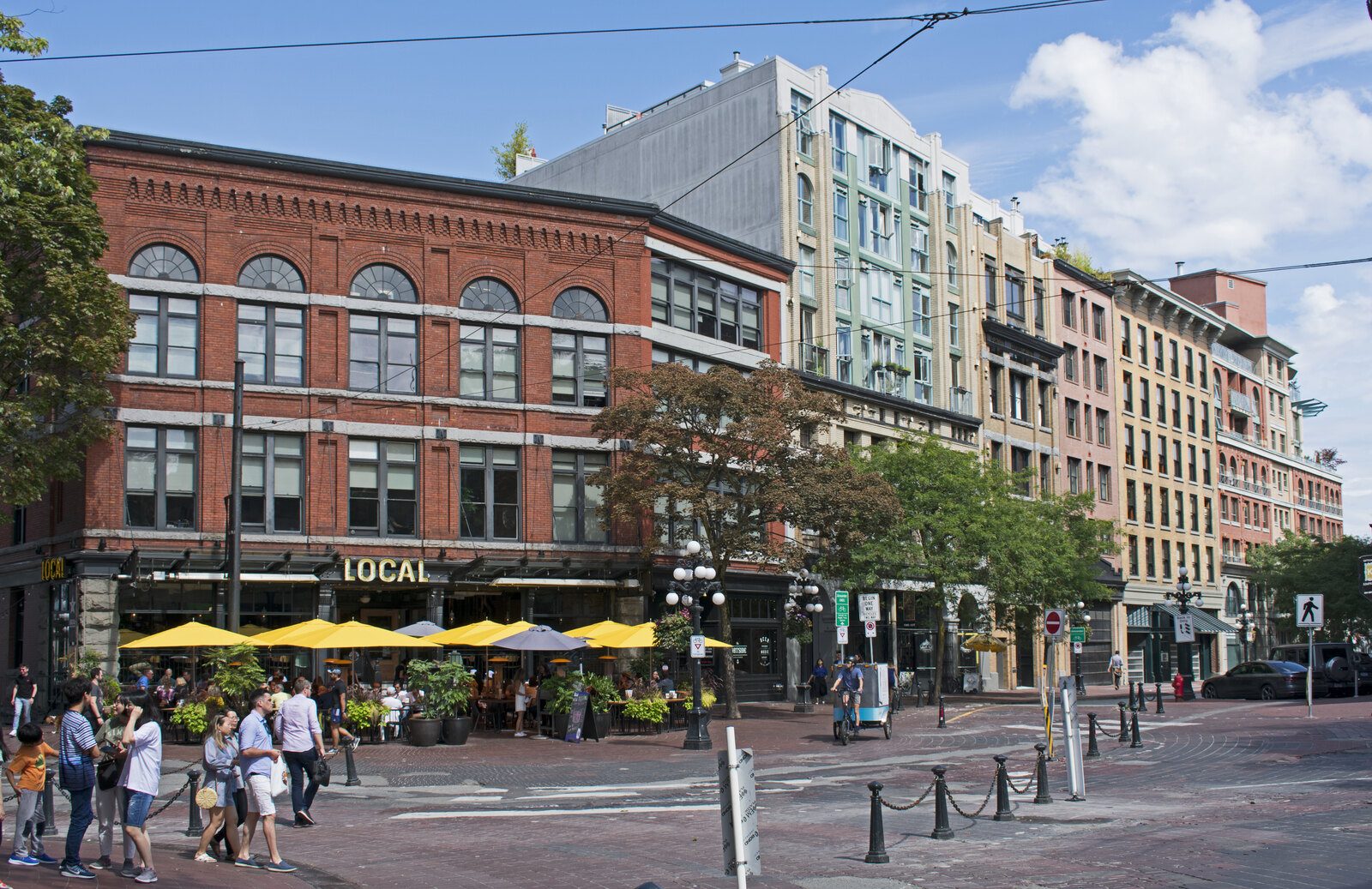
The story is told in about thirty seconds on every walking tour in Gastown, and it is a good thirty seconds. A man rows into Burrard Inlet in a leaky skiff with his wife, a dog, two chairs, a yellow dog — the inventory changes with the teller — and one barrel of whisky. He lands at a mill where the workers have nowhere to drink. He announces that any man who helps him build a saloon can drink from the barrel for free. The saloon goes up in a day. The neighbourhood is named after him.
Most of that is true. The part everyone repeats — the day — is the part the record does not actually support, and the part the record does support is the part the tour usually leaves out.
Who he was
John Deighton was born in Hull, in the East Riding of Yorkshire, in November 1830. He went to sea young, came to British Columbia in the gold-rush years, and made his living as a steamboat pilot on the Fraser River — a job that in the 1860s meant knowing a shifting sandbar system by feel, in fog, with a boiler behind you. He talked. He talked so continuously and so well that the nickname arrived before he did: Gassy Jack, from "gassy," a man full of wind.
He had already run a drinking establishment in New Westminster. While he was away from it, it was damaged during Fourth of July celebrations — the American mining population in the colony marked the date enthusiastically — and that is roughly where the man's luck turned him toward the inlet.
The deal
In 1867 he arrived on the south shore of Burrard Inlet, beside Hastings Mill. The mill had a workforce and no bar. The nearest alternative drinking establishment was twenty-five miles away, which in 1867 meant a day of your life each way.
What the record says is that the saloon was built by idle sawmill workers in exchange for all the whisky they could drink in one sitting. That is the transaction, and it is a better detail than the legend, because it tells you what labour was worth on the inlet that year: a building, for one sitting's drink.
The "twenty-four hours" figure is the embroidery. It is repeated everywhere and sourced nowhere. Treat it the way you would treat any round number that improves a story — the same test we set out on the legends hub. Nobody was timing it. Somebody, later, decided it had taken a day.
The Globe Saloon worked. A settlement grew around it because a bar is a reason for people to be somewhere, and people called the place Gastown after the man who talked in it. In 1870 the colonial government surveyed the townsite and named it Granville. Nobody used the official name. In 1886 the whole thing was incorporated as Vancouver, and ten weeks later it burned to the ground in under an hour.
Deighton did not see any of that. He died in May 1875, aged forty-four.
The part the plaque left out
Deighton married twice, and both marriages were to Sḵwx̱wú7mesh women.
The name of his first wife is not recorded, which is itself the point — the archive kept his nickname and lost her name. As her health failed around 1870, her niece, Quahail-ya, came to help care for her. After her death, Deighton married Quahail-ya. She is listed in the settler record as Madeline Deighton.
In 1940, the city archivist J. S. Matthews interviewed her. She told him she had been about twelve years old when they married. He was thirty-nine or forty. She outlived him by seventy-three years and died on 10 August 1948, by report somewhere between a hundred and two and a hundred and ten years old.
That is not a modern reinterpretation and it is not an inference. It is what she said, on the record, to the man whose job was keeping the city's record, and it sat in the archive for eighty years while the bronze version of her husband stood on a whisky barrel four blocks away being photographed.
The statue
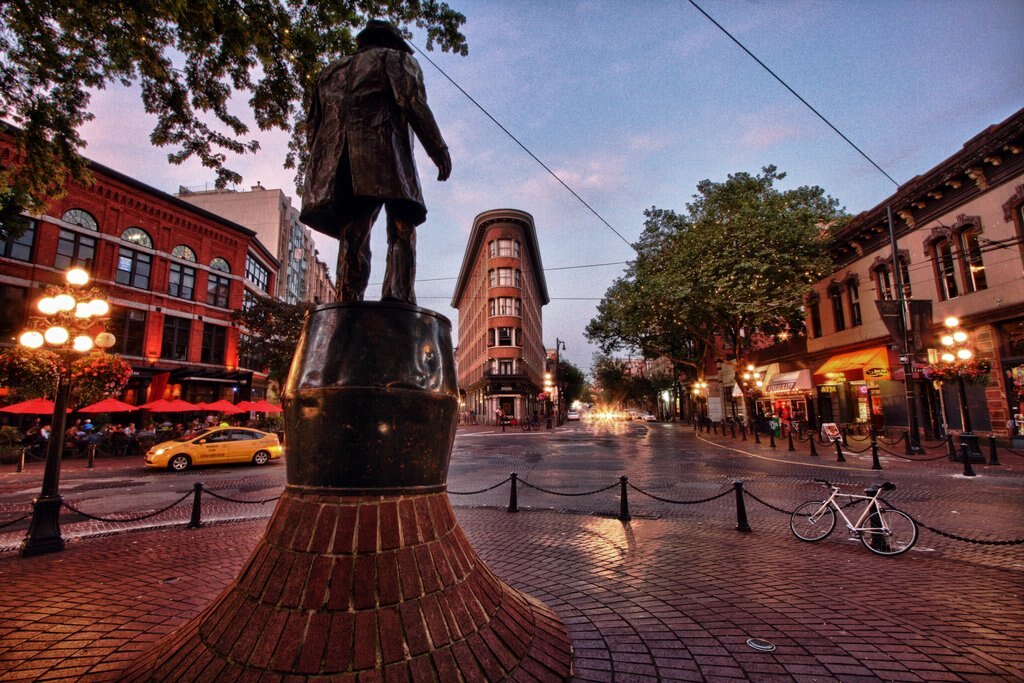
The bronze went up in Maple Tree Square in 1970, during the restoration that turned a skid-road district into a heritage neighbourhood. It showed Deighton standing on a barrel, mid-sentence, which was the correct pose.
On 14 February 2022 it was pulled down and covered in paint during the annual Memorial March for Missing and Murdered Indigenous Women and Girls, which has walked through the Downtown Eastside on that date since 1992. It has not been put back.
You will still meet both arguments in Gastown, often in the same hour: that a city should not erase its founder, and that a city should not put its founder on a plinth without the rest of the sentence. What is worth noticing is that nothing in the second argument is new information. It has been in the archive the entire time.
What is actually there now
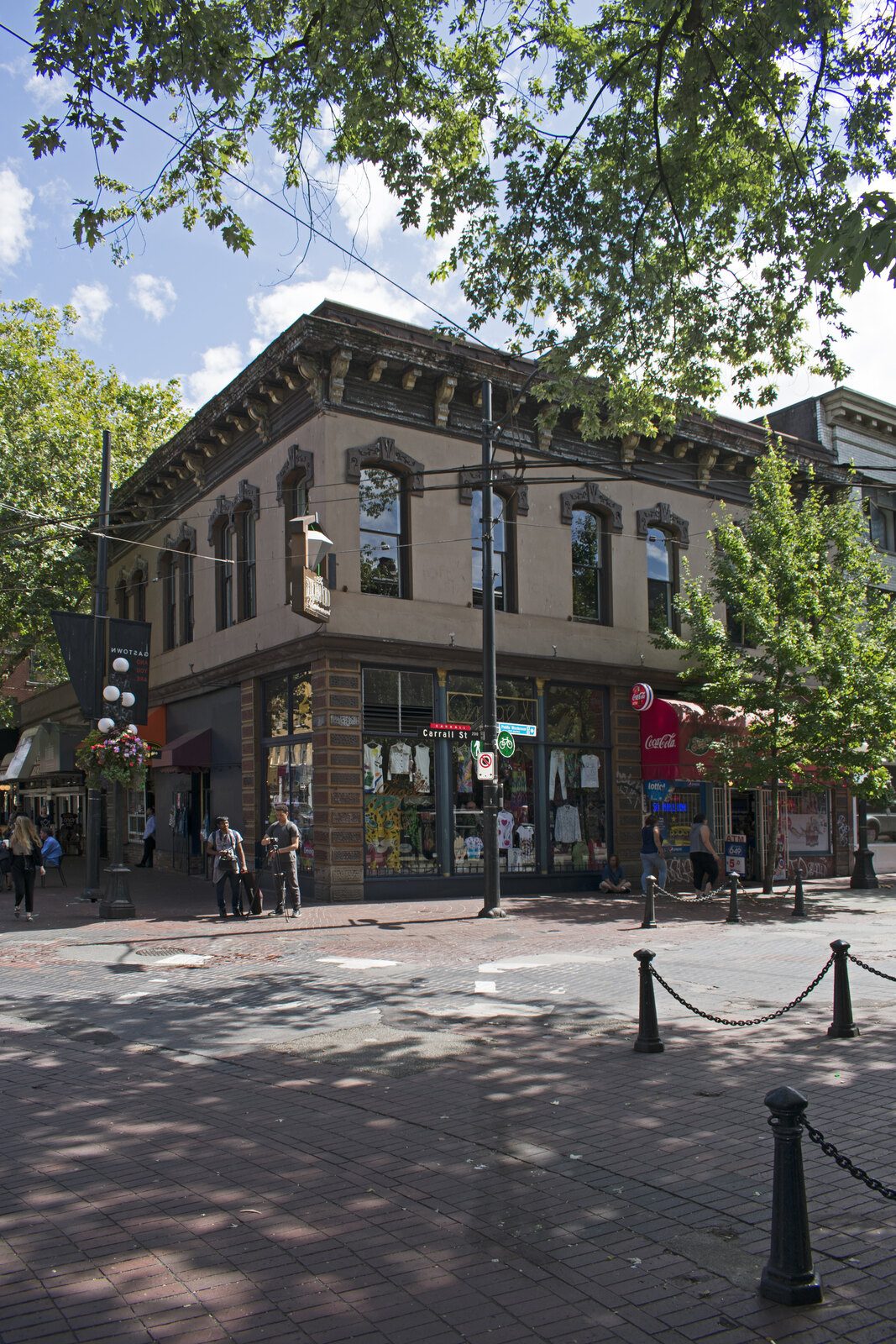
Maple Tree Square is the five-way junction of Water, Carrall, Alexander and Powell. The original maple that gave it the name is long gone; the tree standing there now is a replacement, and the square is a small triangle of brick that most people cross without stopping. The empty base is easy to find.
Two doors' walk gets you the rest of the block's history: Gaoler's Mews, a courtyard on the site of the settlement's first jail, and the corner of Water Street where the steam clock gathers a crowd that mostly believes it is Victorian. The full walking route is on our Gastown guide.
Go early. Between nine and ten in the morning the light comes straight down Water Street from the east, the cobbles are wet from the street cleaners, and you can stand in the square for ten minutes without a tour group arriving.
Frequently asked questions
Who was Gassy Jack?
John Deighton (1830–1875), a Hull-born steamboat pilot and publican who opened a saloon on the south shore of Burrard Inlet in 1867. The settlement that grew around it was nicknamed Gastown after him, and it became Vancouver.
Was the Gastown saloon really built in 24 hours?
There is no source for the twenty-four-hour figure. What the record supports is that idle sawmill workers built it in exchange for all the whisky they could drink in one sitting. The speed is legend; the payment is documented.
Why was the Gassy Jack statue removed?
It was toppled and covered in paint on 14 February 2022 during the Memorial March for Missing and Murdered Indigenous Women and Girls. The objection centres on Deighton's second marriage, to a Sḵwx̱wú7mesh girl who told the city archivist in 1940 that she had been about twelve years old at the time.
Is there anything left to see in Maple Tree Square?
The square itself, the empty statue base, a replacement maple, and Gaoler's Mews around the corner on the site of the settlement's first jail. It is a two-minute walk from the Gastown steam clock.
Why is it called Gastown and not Granville?
Granville was the official name given at the 1870 survey. Nobody used it. The nickname taken from Deighton's talkativeness outlasted the survey, the townsite and the man.
Sources
- Dictionary of Canadian Biography — DEIGHTON, JOHN
- Wikipedia — John Deighton (Gassy Jack)
- Wikipedia — Gastown
- Vancouver Heritage Foundation — Heritage Site Finder, Gastown
Where accounts conflict, we say so in the text rather than picking the more dramatic version.
Photo: Ymblanter, CC BY-SA 4.0 · Photo: Ymblanter, CC BY-SA 4.0 · Photo: Anthony Maw, Vancouver, Canada, CC BY 3.0