English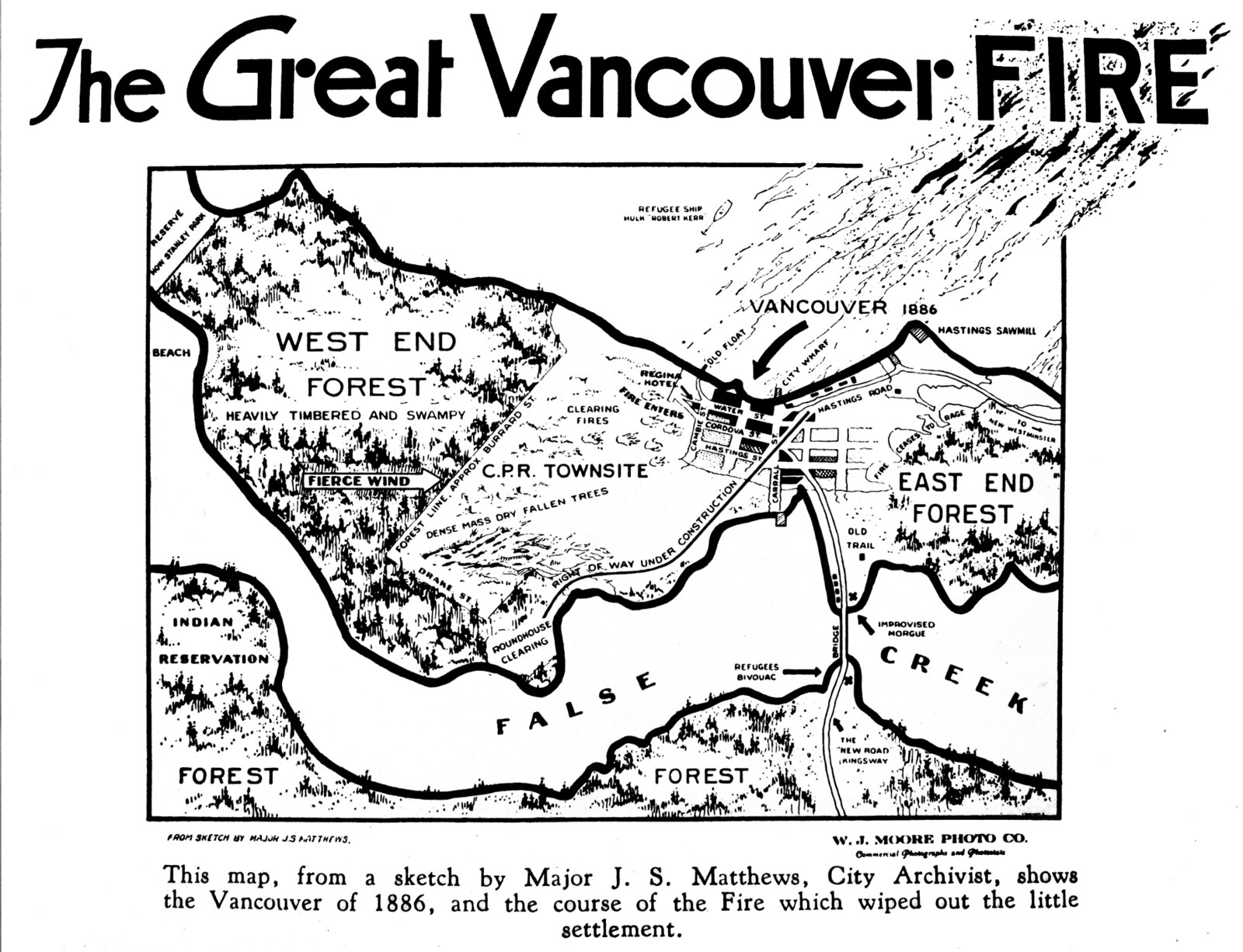
Vancouver was ten weeks old. It had been incorporated on 6 April 1886 — a raw townsite of perhaps a thousand wooden buildings on cleared and half-cleared land, put there because the Canadian Pacific Railway had chosen the inlet for its terminus. On Sunday 13 June it stopped existing, and the whole thing took less time than a commute.
The fires nobody was worried about
There were two of them, and both were deliberate. West of the built-up area, crews were burning slash to clear ground: one fire opening land for the CPR roundhouse, another making room for the city to expand westward. Burning was simply how land was cleared. Nobody considered it an emergency until the wind came up in the afternoon and pushed both fires into the town at once.
What happened next is the reason this is the founding story rather than an incident. The buildings were green lumber, close together, standing on ground still covered in stumps and dry slash. The fire did not spread through the city so much as arrive across it. Accounts by people who were there put the destruction at between twenty and forty-five minutes. They disagree on the number and agree completely on the scale.
What was lost
Something in the range of six hundred to a thousand buildings — essentially all of them. The exact figure is unknown because the exact figure had never been counted; the city was ten weeks old and its population was heavily transient mill labour.
The death toll is recorded as at least twenty-one, and it is worth stating plainly that "at least" is doing real work in that sentence. People who had no fixed address and no one to report them missing are not in the count. Some of the dead were buried on Deadman's Island, which had already served as a burial ground and would shortly serve as a smallpox quarantine.
A line preserved in the city's own archive is the one everyone quotes, and it earns it: "In 20 minutes Vancouver had been wiped off the earth. In 12 hours it was rising again."
Twelve hours
That second sentence is the part people skip, and it is the part that explains the city you are standing in.
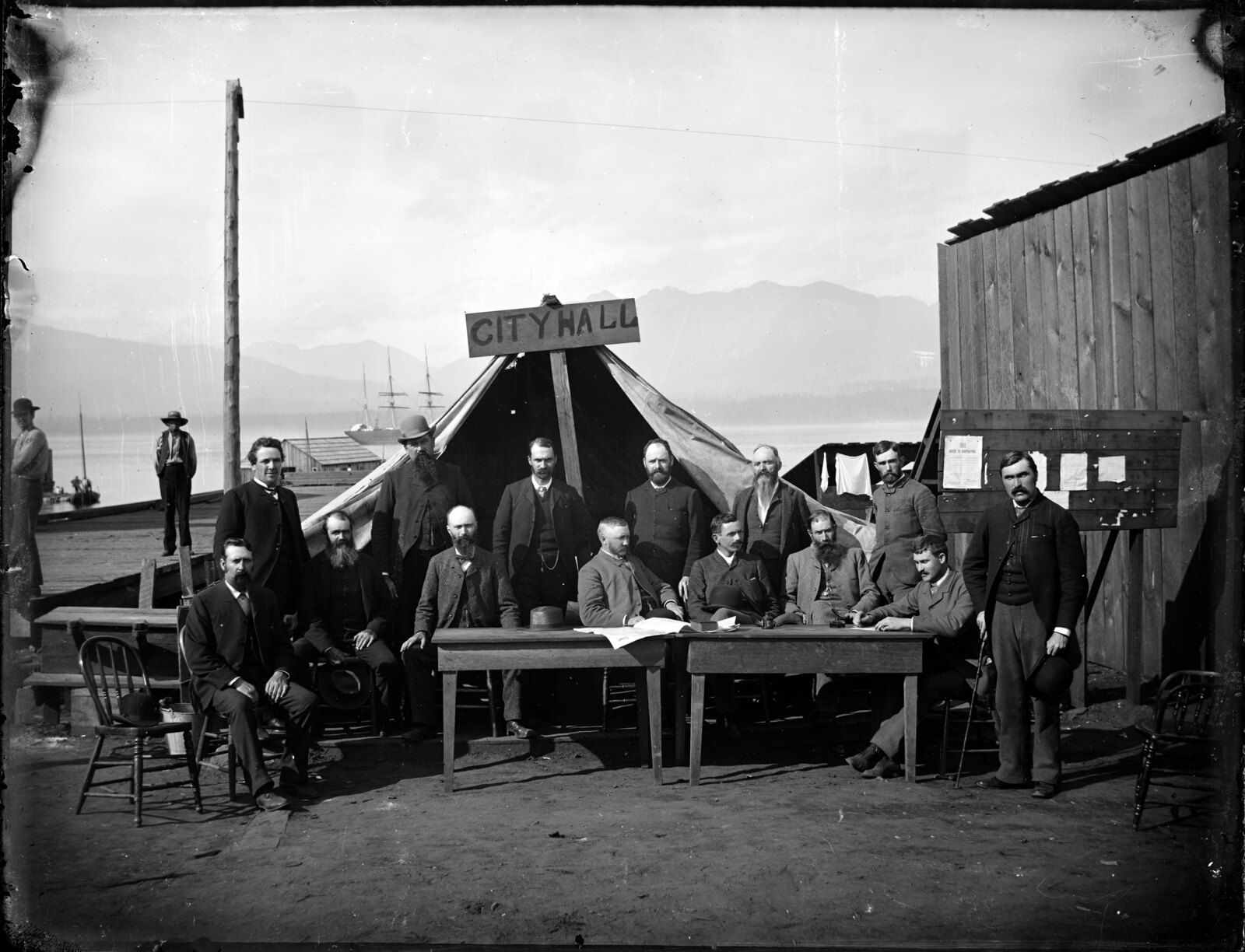
Tents went up on the same lots that evening. A relief committee met while the ground was still hot. New Westminster — the older, established city up the Fraser, which had a long-running rivalry with the upstart on the inlet — sent food, supplies and help within hours. Rebuilding was under way in days, and this time in brick.
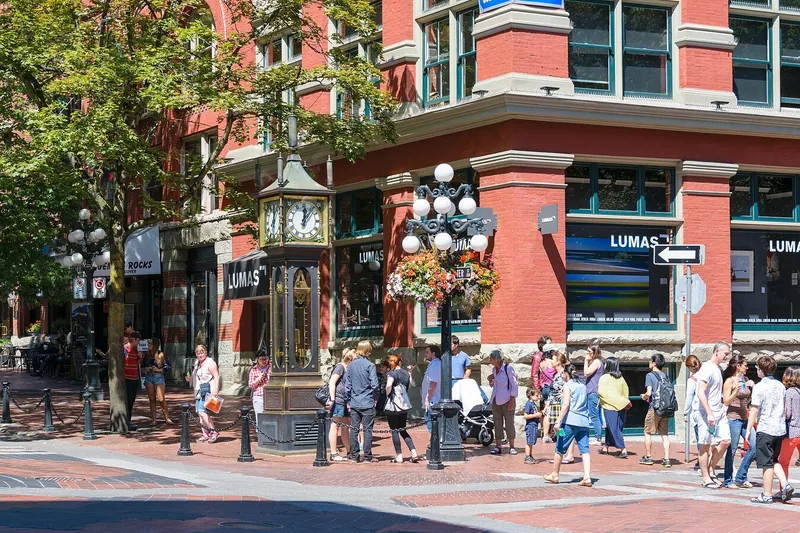
Three institutions date from that week rather than from incorporation: a paid fire department with an actual engine, a police force, and building rules that pushed the commercial core toward masonry. Everything you look at in Gastown today that reads as handsome Victorian brick is post-fire. There is almost no pre-fire Vancouver left standing, because there was almost no pre-fire Vancouver.
The one well-known survivor is the Hastings Mill store, at the far east end and just out of the fire's path. It is still standing — it was moved by barge in 1930 to the foot of Alma Street, where it is now a small museum, and it is the oldest building in the city by a comfortable margin.
What is legend here, and what is not
The fire itself is not a legend. It is one of the best-documented events in the city's early history: newspaper accounts, an inquiry, photographs of the aftermath, survivor testimony collected decades later by the city archivist.
The legend grows in the retelling. You will hear that the fire started from a single carelessly dropped match, or a cooking fire, or a spark from a locomotive. It started from organised land clearing that the city had every reason to expect and no plan to control. That is a duller sentence and a much more useful one, because it makes the fire a decision rather than an accident.
You will also hear round numbers — a thousand buildings, twenty minutes, twenty-one dead — delivered with a confidence the sources do not have. Two of those three are ranges and the third is a floor.
Where to see it
There is no monument to the fire, which is odd for an event this size. What there is:
Maple Tree Square, at Water and Carrall, is the centre of the old townsite and the point most of the aftermath photographs were taken from. Stand there and everything in your sight line went up after June 1886.
The Vancouver Archives hold the photographic record and much of it is digitised and free to browse before you go — the aftermath images, taken within days, are more effective than any plaque. And the Old Hastings Mill Store Museum at Alma and Point Grey Road is the only building in the city that was standing that Sunday morning and is still standing now.
For the neighbourhood that grew back on the ashes, our Gastown guide has the walking route.
Frequently asked questions
When was the Great Vancouver Fire?
Sunday 13 June 1886, ten weeks after the city was incorporated on 6 April 1886.
How did the Great Vancouver Fire start?
Not by accident. Two deliberate land-clearing fires west of the townsite — one opening ground for the CPR roundhouse, one for westward expansion — were pushed into the city when the wind rose.
How long did it take Vancouver to burn?
Eyewitness accounts range from about twenty minutes to about forty-five. They differ on the figure and agree that essentially the entire townsite — somewhere between six hundred and a thousand wooden buildings — was gone.
How many people died in the 1886 fire?
At least twenty-one. The real number is unknown: the population was largely transient mill labour with no one to report them missing.
Is any pre-fire Vancouver still standing?
Effectively one building. The Hastings Mill store survived at the east end, was barged to the foot of Alma Street in 1930, and is now the Old Hastings Mill Store Museum — the oldest building in the city.
Sources
- Wikipedia — Great Vancouver Fire
- The Canadian Encyclopedia — Vancouver Fire of 1886
- City of Vancouver Archives — photographic record of the fire and aftermath
Where accounts conflict, we say so in the text rather than picking the more dramatic version.
Photo: Major Mathews/W. J. Moore, Public domain · Photo: Vancouver Public Library Historical Photographs, No restrictions